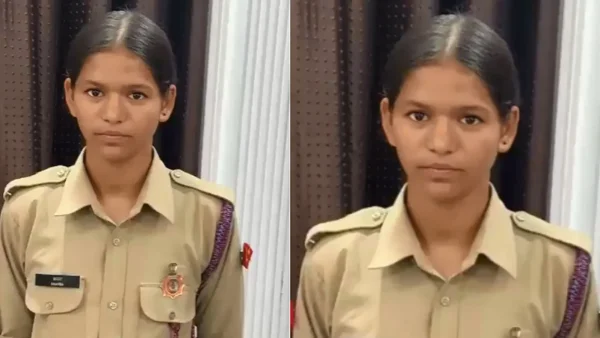
A young taekwondo athlete from Uttarakhand has reportedly alleged that she was asked to pay ₹1.5 lakh after winning gold at the national level and being selected for an international opportunity.
Her allegation has triggered a much larger question: What happens when sporting talent wins on the mat but money allegedly decides who gets to move forward?
For an athlete who has spent years training, competing and representing her state, selection for an international event should be a moment of celebration. Instead, the player says the alleged demand left her believing that her dream was over.
The allegation, however, must be independently investigated before anyone is declared guilty.
A Gold Medal Should Open Doors—Not a Price List
Winning at the national level is no small achievement.
Behind a medal are years of:
training,
discipline,
coaching,
travel,
injuries,
financial sacrifice,
early mornings and late nights.
For athletes from modest backgrounds, the cost of reaching the national stage can itself be enormous.
So when an athlete alleges that ₹1.5 lakh was demanded for an international opportunity, the issue goes beyond one individual.
If true, it raises questions about whether access to sporting opportunities is being influenced by money rather than merit. That is precisely why such allegations cannot simply be brushed aside.
The Most Important Question: Who Allegedly Asked for the Money?
This is where the investigation needs to begin.
The authorities should establish:
Who made the alleged demand?
Was it an official, coach, intermediary, association representative or someone else?
What exactly was the ₹1.5 lakh supposedly for?
Was it an official participation fee, travel expense or an alleged unofficial payment?
Was any written or verbal proof provided?
Messages, recordings, bank details, witnesses or other evidence could help investigators establish what happened.
What were the official selection rules?
The athlete’s selection should be checked against the applicable federation and event criteria.
Were other athletes asked for similar payments?
If multiple athletes report the same experience, the allegation becomes a potentially systemic issue rather than an isolated complaint.
The Chief Minister’s Response Also Matters
The controversy has drawn attention to an interaction involving Uttarakhand Chief Minister Pushkar Singh Dhami, in which the athlete reportedly sought help.
Critics have questioned whether the response adequately addressed the alleged corruption.
That criticism should be examined carefully.
A political leader does not necessarily have to determine guilt on the spot. But when a young athlete alleges that an official demanded a bribe, the appropriate institutional response should be:
“We will investigate.”
Not simply:
“Don’t worry.”
Reassurance is useful.
Accountability is better.
Don’t Turn the Athlete Into the Problem
One particularly troubling aspect of the controversy is the perception that the athlete was made to feel responsible for the situation.
That would be the wrong approach if she genuinely reported a corruption complaint.
A young sportsperson who alleges wrongdoing should not have to wonder:
“Did I do something wrong by speaking up?”
The first responsibility should be to ensure that the complaint is heard safely and investigated fairly.
If the allegation is ultimately proven false, that can be established through due process.
But dismissing a complaint before investigation risks discouraging other athletes from speaking out.
The Bigger Problem: India’s Athletes Already Fight Enough Battles
Indian athletes often face challenges that have nothing to do with competition itself.
They struggle with:
inadequate training facilities,
limited sponsorship,
expensive equipment,
travel costs,
coaching expenses,
inconsistent financial support,
selection controversies.
The last thing an athlete needs is the perception that money is another hurdle between a medal and an international opportunity.
A country cannot simultaneously tell young people to pursue sport and then allow allegations of pay-to-play practices to undermine their faith in the system.
If the Allegation Is True, It Is Not Just About ₹1.5 Lakh
The amount may be ₹1.5 lakh.
But the potential damage is much larger.
Imagine a talented athlete deciding:
“Why should I train for years if selection depends on money?”
That thought can destroy careers before they even begin.
It also creates an unfair advantage for athletes who can afford unofficial payments while disadvantaging those whose families cannot.
Sport is supposed to be a competition of ability—not a competition of bank balances.
What Should the Uttarakhand Government Do?
1. Order an Independent Inquiry
The allegation should be investigated by an authority independent of anyone who may be connected to the selection process.
2. Protect the Athlete
The player should not face retaliation, discrimination or loss of sporting opportunities merely because she complained.
3. Examine the Selection Records
Officials should verify how the international selection was made and whether the applicable rules were followed.
4. Audit Any Payments
If money was demanded, investigators should establish whether there were bank transfers, cash payments, intermediaries or other financial evidence.
5. Create a Confidential Sports Complaint System
Athletes should have a safe mechanism to report:
bribery,
harassment,
selection manipulation,
financial misconduct,
intimidation.
6. Publish Selection Criteria
International selections should be based on clearly published criteria wherever possible.
Athletes deserve to know how they qualify and who makes the decision.
And a Little Sarcasm—Because the Situation Deserves
It Athlete:
“I won gold.”
System:
“Congratulations.”
Athlete:
“I got selected internationally.”
System:
“Congratulations.”
Athlete:
“I was allegedly asked for ₹1.5 lakh.”
System:
“Please sit down.”
At this rate, perhaps the next sporting discipline should be 100-metre sprint to the nearest anti-corruption office.
Because apparently winning on the mat isn’t always the final round.
But Let’s Be Fair: Allegation ≠ Proof
There is an important principle that should not be forgotten amid the outrage.
The athlete’s allegation is serious, but an allegation is not proof of corruption.
The person accused must also have the opportunity to respond, and investigators should examine the evidence objectively.
The goal should not be to manufacture another political controversy.
The goal should be to establish the truth. If someone demanded a bribe, they should be held accountable.
If there was a misunderstanding or legitimate fee that was incorrectly described as a bribe, that should also be established.
Either way, transparency benefits everyone.
The Real Test Begins After the Cameras Leave
A young athlete speaking publicly about an alleged ₹1.5-lakh demand should not become just another viral video.
The authorities now have an opportunity to demonstrate what accountability actually means.
Investigate the complaint.
Protect the athlete.
Publish the facts.
Fix whatever went wrong.
And ensure that the next athlete who wins a national gold medal doesn’t have to calculate how much money she needs to reach the international stage.