It is a paradox of sorts for AI data centers: the very workloads that are supposed to bring in new revenue are taking a toll on the equipment required to produce it. Power draw is swinging violently, degrading everything from cooling systems to generators and batteries, with the attendant risk of wider grid trouble and costly downtime.
One should not take this as some theoretical caution. Operators, engineers and regulators are all pointing to evidence of genuine stress, project delays and failures coming sooner than they ought to. Given that investors are already uneasy over the scale of AI spending, the issue at hand is whether or not reliability will be able to match the ambition.
Reliability and money are on the line
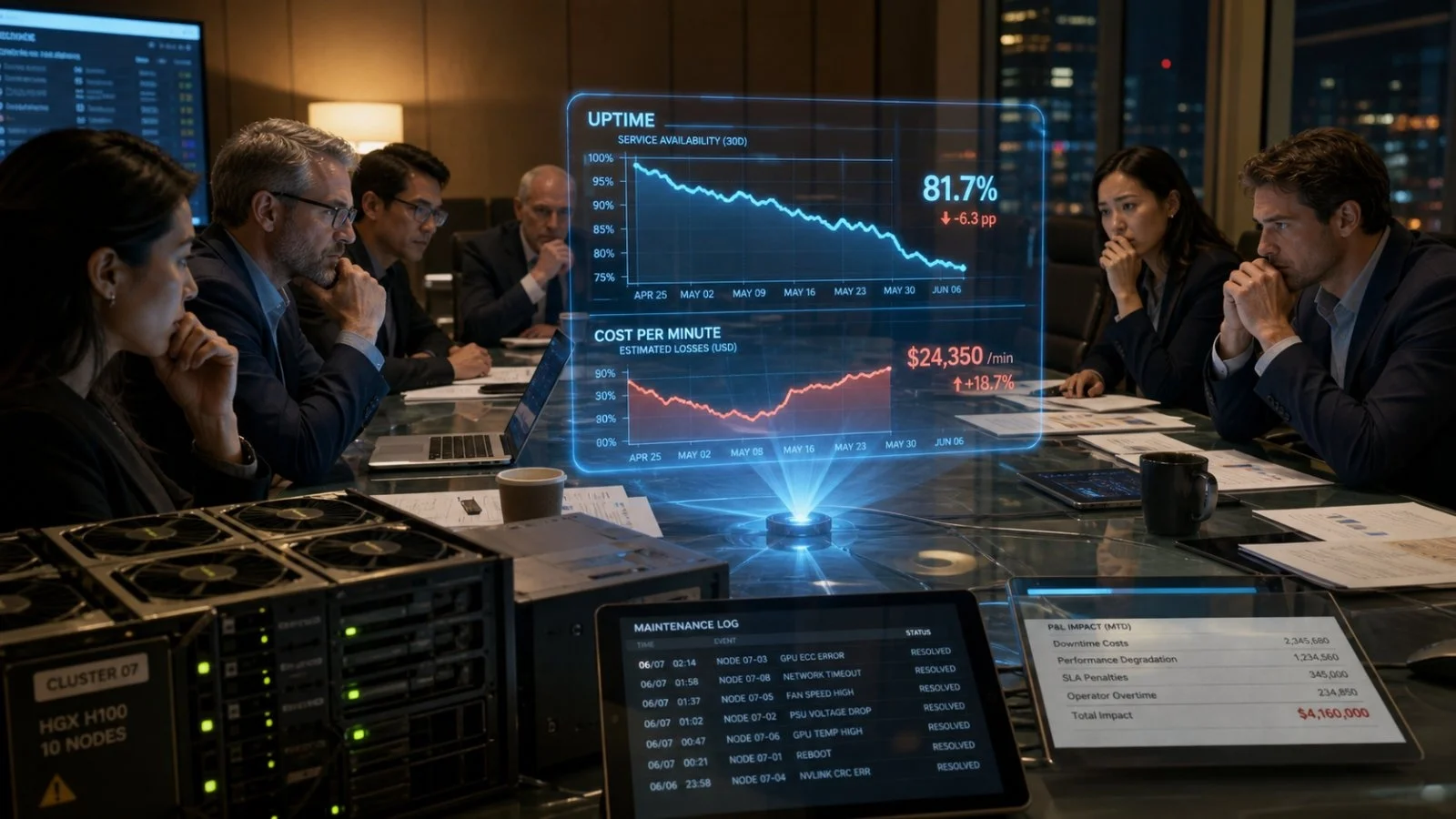
The financing of a data center is predicated on near-continuous operation. Some facilities, however, are recording uptime in the vicinity of 80 per cent, one person involved in the financing put it. Left to fester, this could come back to bite investors in certain projects within the next 12 to 24 months, they said.
Then there is the bill for being down. Jason Hoffman, chief strategy officer at Switch, puts the cost at anywhere from thousands to hundreds of thousands of dollars a minute, depending on the scale of the workload. But the true loss, he would argue, is having compute capacity sit idle when you need it most.
Consequently, plans are being reworked. Chris James, CEO of Joulent, says the 2.67-gigawatt AI campus in West Texas, which his firm is putting in with Chevron, has had to put in extra engineering hours; power delivery is now set for 2028 rather than 2027. He cautions that load, storage, controls and generation have to be engineered as one.
Grid warnings grow louder
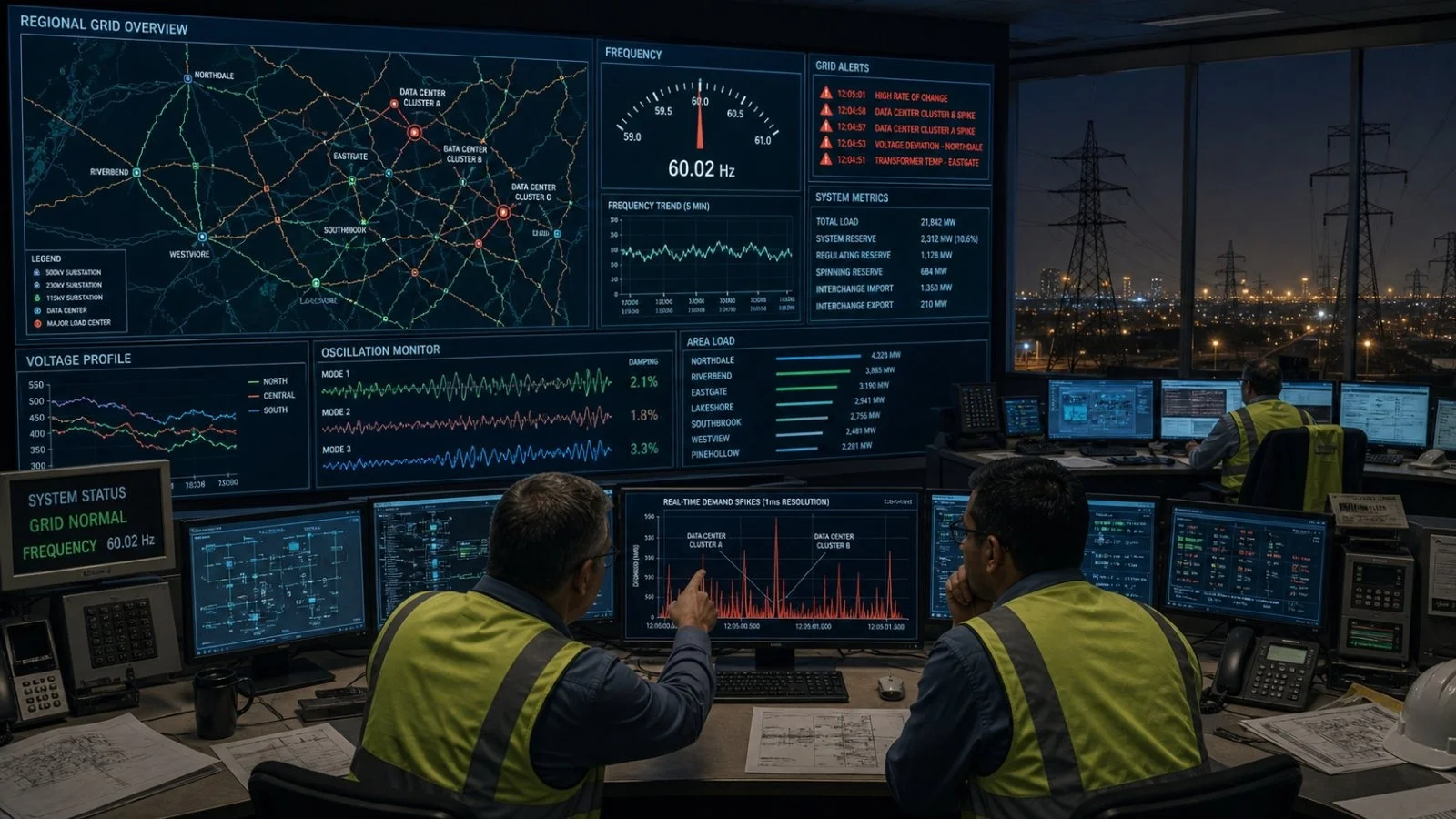
For utilities it is a complicated matter. Fluctuating loads are butting up against a power system that is already hard put by variable renewables, extreme weather and ageing assets. The rapid demand spikes from AI data centers can destabilise frequency and send ripples through the network.
‘These loads are extremely dynamic,’ says Sreemant Roy, a power-quality expert with Schneider Electric in Nashville. ‘If you don’t correct for it, you get grid instability and the potential for blackouts.’ He points to the danger of sub-synchronous oscillations wreaking havoc on other parts of the network.
The North American Electric Reliability Corp. has made no secret of its view that data centers are a top risk for US grids. In an assessment of over 33 gigawatts of operational centers, NERC found the load models for roughly three quarters of them wanting. A rare level-three alert has been issued to big facilities to have their responses in by August 3rd.
The physics of AI workloads
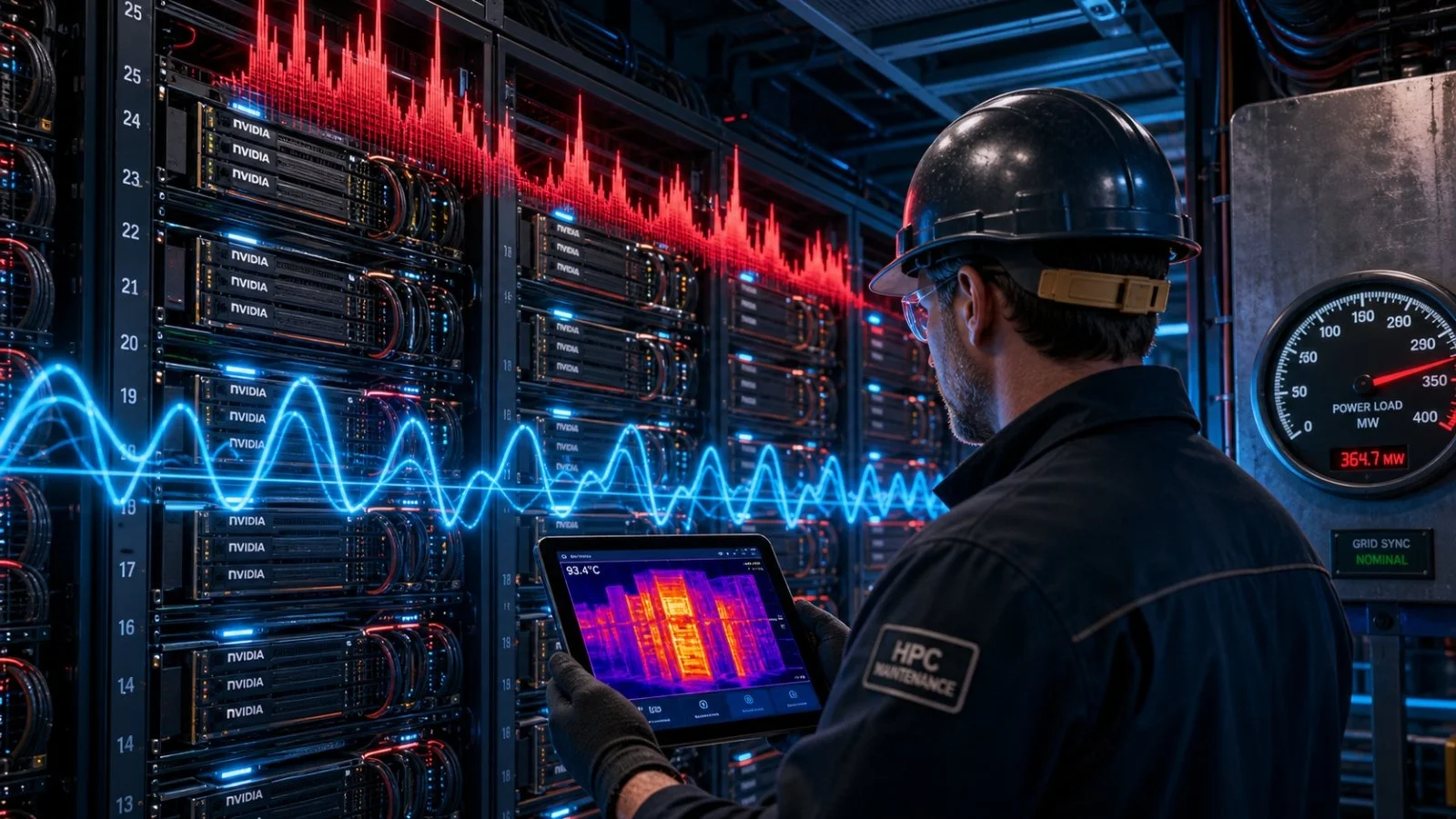
You will find a different shape to the demand these days compared with the steady, heavy draw of a standard data center. AI training brings vast arrays of graphics processing units into sync, making for consumption that is all surges and dips in a matter of milliseconds.
‘Most equipment is not designed for such big swings,’ warns Drew Baglino, the former Tesla man who set up Heron Power Electronics. He says AI can push power use 50% over what was designed for, so a 1 gigawatt site may well pull 1.5 for a time.
Shannon Miller of Mainspring Energy likens a 1 gigawatt center to a city like Boston, only with half the load flickering every few seconds. In the Midwest and Texas you have planned campuses more than five times that size, approaching what New York City uses on average.
Amber Villegas-Williamson of the Uptime Institute makes the point in blunt mechanical terms. ‘AI does create very unusual power demand. It is like over-revving your car wears out the engine faster than keeping a constant speed.’ The sustained stress has a way of shortening the life of critical systems.
Early failures show a mounting equipment toll
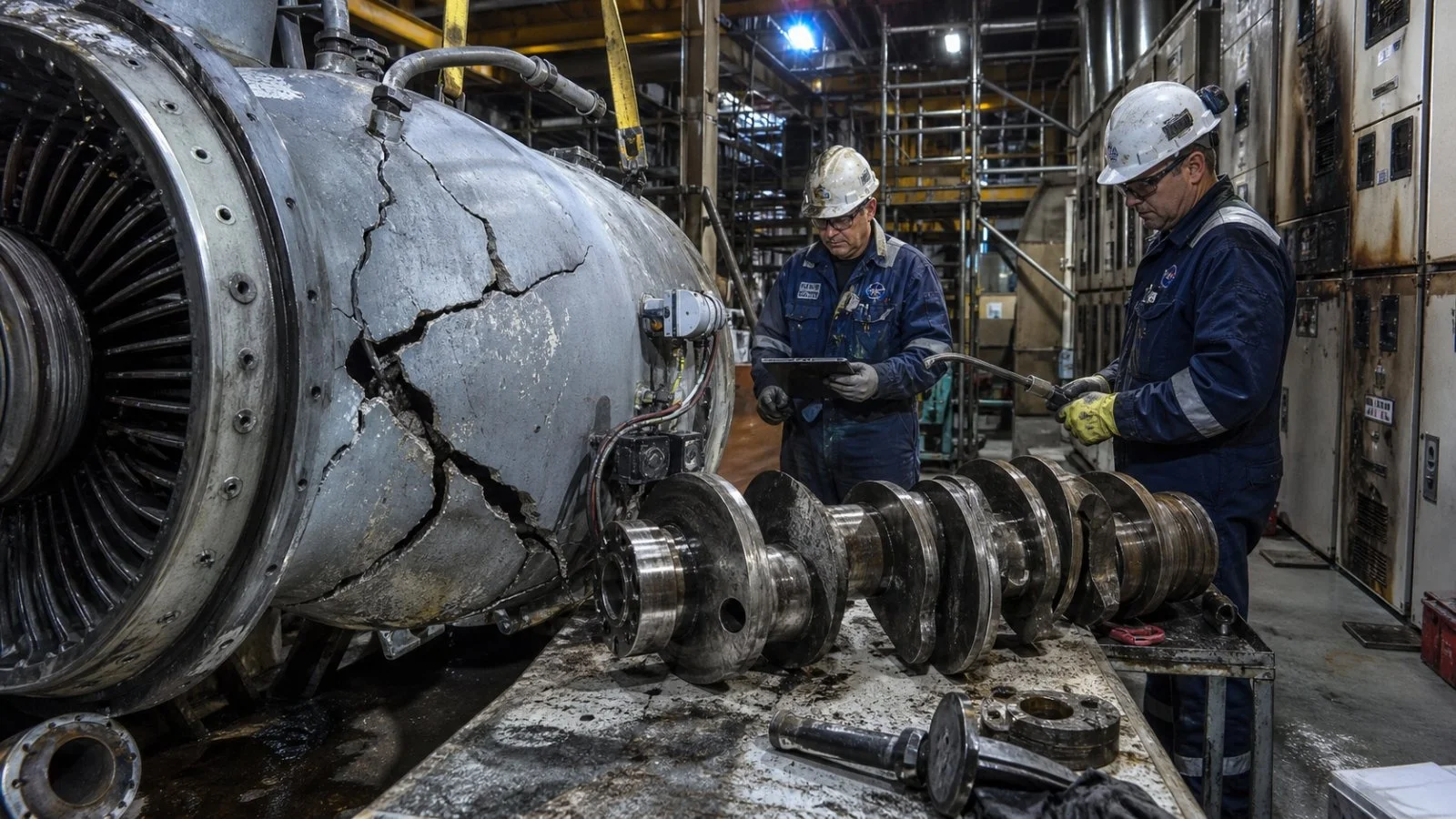
Talk to any of the three dozen or so experts we have spoken to in Europe and the US and the physical consequences are plain. Cranks on small natural gas engines for onsite generation have been known to snap. Turbines have given way. Batteries meant to smooth things out are wearing out in a matter of weeks.
There were reports of cracks in the gas-fired turbines at xAI’s Colossus in Memphis, according to someone in the know. They say batteries were put in to take the strain off the spinning turbines. Andrew Cunningham, GeoPura’s CEO, says he has seen the same thing with turbines at smaller sites in the UK.
The implications go to the compute itself. Jennifer Scanlon, UL Solutions’ CEO, notes that wear and tear can lead to electrical arc flashes and damage to AI chips. Jon Parrella of Terraflow Energy has a way of describing it: like throwing a Ferrari from sixth gear straight into first.
There is equipment to stabilise matters, but the urgency is ahead of adoption.
While flywheels, transformers, capacitors and batteries are all capable of buffering shocks, a number of industry voices contend that not enough of this equipment is making its way into new builds. And for the batteries that have been put in place, some have needed to be swapped out in as little as a few weeks or months.
Villegas-Williamson sees the issue on a global scale, from Europe and the US to the Middle East and Africa. The evidence is plain: when demand is volatile it hastens wear and tear, failures come sooner than any model would have had you believe, and operators are left with hard decisions on how to handle retrofits.
Fixes, trade-offs and what to do next
There are hardware and software answers to be had, but they all come with their own compromises. Some will run side computations to maintain a steady draw on GPUs; critics would call that a waste of electricity given the current power shortages.
Chipmakers are recalibrating. In 2024 Nvidia put out its Blackwell GPUs after working in closer concert with power specialists. “We are building the chips and processors but also using them in our own data centers,” said Dion Harris of Nvidia, speaking of the work to make deployment and power delivery smoother.
Then there are the power electronics specialists trying to keep pace with AI. Baglino has Heron putting together equipment to handle the fluctuations of Nvidia’s 2027 servers. Firms like Mainspring Energy are touting onsite systems to take the edge off grid spikes at the source.
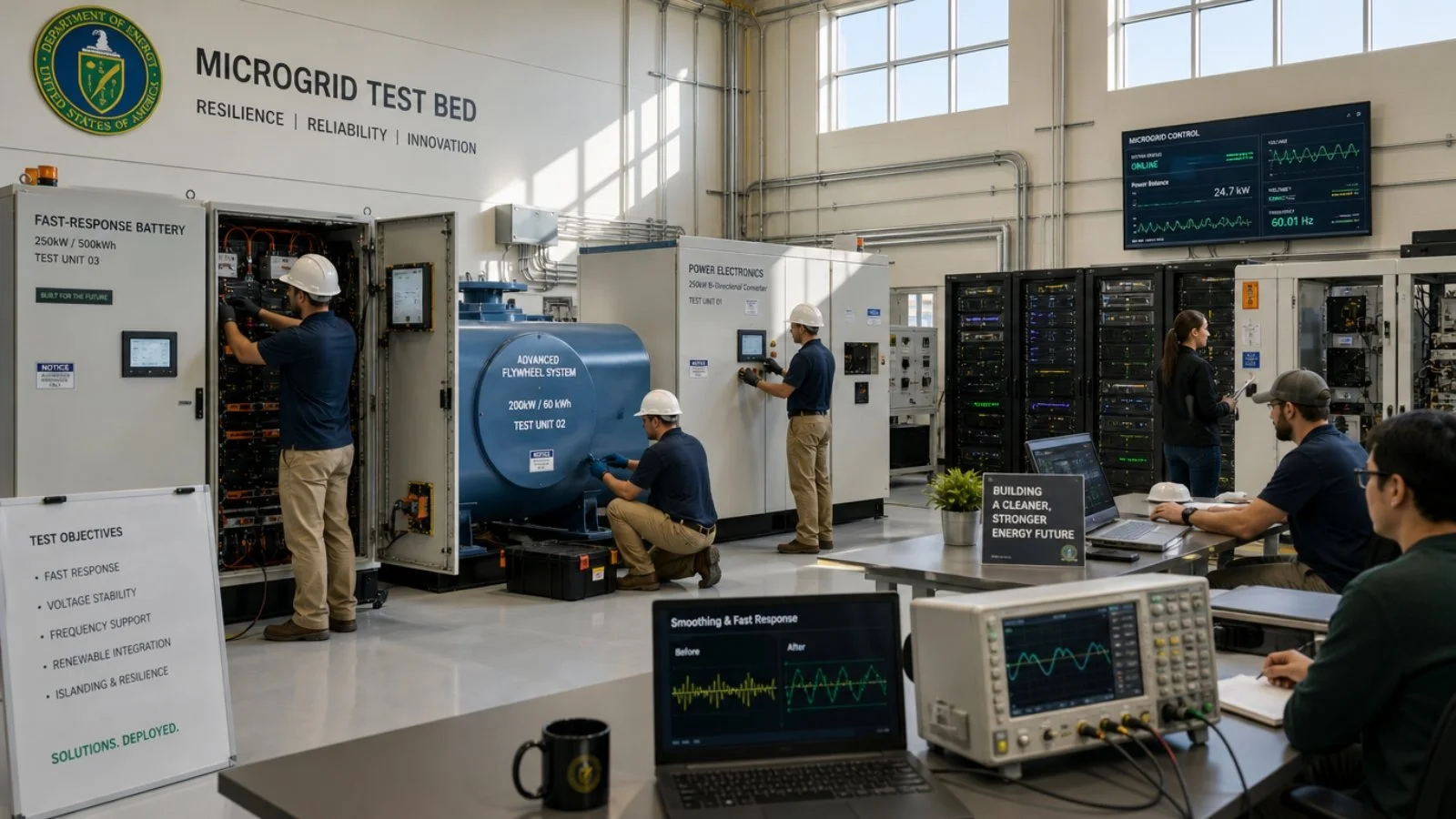
The government is looking into it as well. At a test-bed for the Department of Energy near Denver, the National Laboratory of the Rockies is letting developers put their wares to the test. “You can use onsite generation and GPUs to try out the batteries and controllers that will cut down on harmful oscillations,” said program manager Martha Symko-Davies.
For the investor or operator wanting some practical guardrails, a few items have made it to the top of the boardroom agenda, judging by what engineers have to say:
– To model AI load dynamics right from the initial sketch
– Put in fast-response buffers such as flywheels and batteries
– Engineer for spikes 50 per cent over design load
– Work with utilities on protections and control schemes
– Make allowances in the budget for replacement cycles that may only last months
The way financing is viewed is changing too. With hundreds of billions of dollars in AI buildouts, one has to look closely at depreciation schedules for GPU racks. Should performance fall short of the plan, the story on profitability loses its luster and return timelines lengthen, which makes lenders wary.
Why the urgency cannot wait
In an AI facility, every minute of downtime is revenue and reputation lost. Hoffman points out that the steepest cost is idle capacity at the height of demand. Stack up the outages and you erode revenue certainty while driving up the cost of capital.
It is a matter of public interest as well. A poorly judged surge can compromise other customers on the grid. Roy’s caution regarding sub-synchronous oscillations makes it clear blackouts are no abstraction; a handful of bad actors could undo a region’s reliability.
With variable renewables already dictating supply hour to hour, adding the hyper-variable nature of AI means operators have to juggle two moving targets. That leaves a very thin margin for error.
James maintains that the projects which will stand out over the next decade are those that have load, storage and controls woven in from the start, not cobbled on after the fact. Parrella puts it bluntly: you cannot expect machinery to hold up if you are swinging at it that fast. Turbines and batteries meant for steady work will not endure millisecond jolts.
Grid regulators would do well to heed the message. NERC has found that roughly three quarters of present models are inadequate. The level-three alert and the August 3rd deadline are not something an operator can overlook.
In the end, the AI boom will be measured by physical resilience as much as by any model breakthrough. Financiers count on data centres being online 365 days a year for the returns to materialise. If that does not happen, investors will feel the impact.
The industry knows what it is up against. Whether it is the DOE test-bed or Nvidia’s designs, solutions are coming. What is called for now is the discipline to coordinate with utilities and install proper buffers before the first GPU is even booted up. There is time to put AI on a firmer footing, but with some campuses more than five times the size of a 1 gigawatt baseline now going live, the window is closing. Fail to act and the power problem will begin to eat away at the promise of AI, one outage at a time.