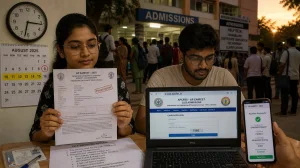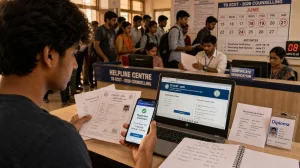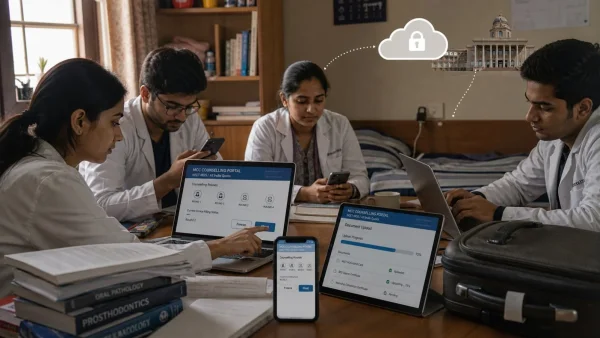
In its latest information bulletin and counselling scheme for NEET MDS 2026, the Medical Counselling Committee has put forward this online-first model to tighten compliance and reduce the need for travel. It is an update of some consequence for dental graduates with plans for seat upgrades and for colleges which are now required to handle all admissions and resignations via the portal. Four All India Quota rounds are in place.
Major changes students will notice
Reporting, resignations and upgrades used to mean a trip to the institute you were allotted; not so in 2026. MCC has made it easier for candidates who are still weighing their options by separating them according to their willingness to upgrade and putting verification in the hands of online uploads.
Freeze vs float explained
If a candidate is content with the allotment, he or she can opt to freeze and is then required to make a physical appearance at the institute. For those wanting an upgrade, there is the option to float: give your consent for upgradation online and let the allotted institute verify your documents without the need to visit at that point.
To put the two choices in brief:
– Freeze: take the seat and report in person to join
– Float: go for an upgrade and put your documents in online
No offline admissions: what colleges must do
MCC is not making any allowances when it comes to process integrity. The brochure is plain that no offline resignations or admissions will be countenanced and warns that any college found doing so could face legal or other consequences.
This rule puts every transaction on a digital record, something that should spare institutions from disputes over eligibility, timelines or resignations.
Eligibility and seat coverage
Any candidate with the right rank in the National Board of Examination’s NEET MDS for an All India Quota seat is eligible to take part. The scope of the counselling is 50% of AIQ seats, the full complement in Deemed Universities that are participating and the relevant Central University and Institute seats.
One can find the particulars of the reforms, the allotment process and eligibility conditions in the bulletin on mcc.nic.in.
Fees and deposits to budget for
There is a non-refundable registration fee to be paid along with a security deposit. MCC notes that the latter may be forfeited if a candidate fails to show for a seat in Round 2 or beyond, or should the admission be cancelled for any number of reasons.
The numbers stand at:
– AIQ – UR/EWS: Rs 1,000 + Rs 25,000 = Rs 26,000
– AIQ – SC/ST/OBC/PwD: Rs 500 + Rs 10,000 = Rs 10,500
– Deemed Universities: Rs 5,000 + Rs 2,00,000 = Rs 2,05,000
A sensible payment plan will avert last-minute forfeiture. Scanned copies of all mandatory papers should be on the MCC portal for prompt verification.
How the rounds will run
We can expect Round 1 through 3 and the AIQ Stray Vacancy Round to be conducted by MCC, though calendar dates are yet to be set out in the bulletin. The routine for each round involves paying fees and registering, locking in one’s choices and an online allotment, with a one-time upload of the necessary documents. Those to be joined will have to report.
Round 1 results come after the lock and allotment, at which time candidates present themselves at the college. Upgrades are on offer from Round 1 to 2 and 2 to 3. Fresh registration is permitted in Round 2 and the AIQ Stray Vacancy Round.
Physical reporting is a must in Round 3 for anyone with an allotment. The AIQ Stray Vacancy Round will wrap up with an online allotment once eligible candidates have registered and filled in their choices.
For the full schedule and any further word from MCC, keep an eye on mcc.nic.in. A good read of the bulletin and an early decision on the freeze or float option, with documents to hand, will make for a straightforward NEET MDS 2026 counselling process.