A year after Operation Sindoor (which was a change in how India approaches defence, following the Pahalgam attacks where nine civilians were killed), the defence industry has been reorganized, and MTAR Technologies is at the heart of this. It has gone from a low price a year ago to a huge increase of 400%. For investors looking at defence companies that are doing well after May 7th, MTAR is the one that really shows how much the market has gone up.
Why MTAR is the market’s standout
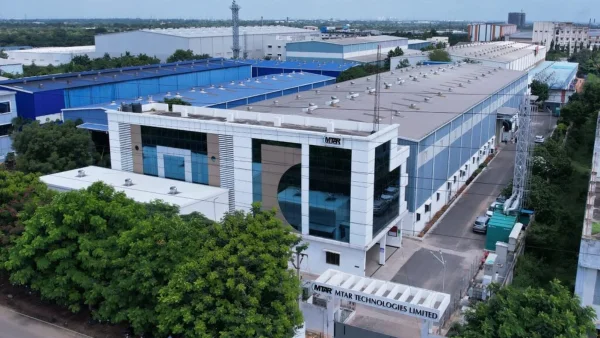
MTAR Technologies makes very important, precise parts for defence and aerospace equipment. On May 7th, 2025 it cost Rs 1,358, but by May 4th, 2026 it had reached a high of Rs 6,787. More recently it was at Rs 6,559, which is still 383% higher than that lowest price.
This increase hasn’t just been one quick jump. So far in 2026, the stock has gone up almost 180%, 175% in the last six months, and 70% in the last month. Investors have seen their money double in the last three months.
People in the market say the price has gone up because of MTAR’s connection to Bloom Energy, the increasing need for power for AI data centers around the world, and a lot of confirmed orders for both nuclear and defence work. People also believe the company will do well in terms of income and profit in the financial years 1026-2028.
From IPO to wealth compounder
In March 2021, MTAR got Rs 596 crore from selling shares to the public (an IPO) at Rs 575 per share (you had to buy at least 26 shares). At its highest price of Rs 6,787, the stock has increased in value by 1,080% since it was first sold to the public. That means someone who bought a “lot” of 26 shares five years ago would now have over 1.6 lakh rupees.
Investors now have a good reason to expect something to happen soon. MTAR will announce its results for the three months and the year ending March 31, 2026 on May 12, 2026. Because people are expecting good news, how well the company does and what they say about the future will be very important for keeping the price going up.
Operation Sindoor changed the market tone
Operation Sindoor, which began after nine people were killed in the Pahalgam attacks, was a change in how India protects itself. The anniversary on May 7th has made people focus on how government policies and what the government buys have helped defence company stocks to increase in value.
Over the last year, the Nifty India Defence Index has increased by 30%. MTAR has been the leader with an almost 350% increase. Axiscades has gone up 180%, and Apollo Micro Systems has gone up over 160%. Dynamatic Tech, Data Patterns and Bharat Forge have all increased by 70% to 90%.
Companies owned by the government have had different results. Garden Reach Shipbuilders did better than expected. Mazagon Dock’s value went down during this time, and Bharat Dynamics didn’t do as well as it could have. BEL (now part of the Nifty 50) has gone up 40%.
Budget and orders are doing the heavy lifting
Government support has been a major factor. This year, the amount of money the government is spending on defence has increased by 15% from last year to almost Rs 8 lakh crore. The money being invested in new equipment has increased by 22%, and most of it is going to buying things made in India, which makes it easier to predict future orders.
This change in direction is shown in the amount of work companies already have on their books. HAL is close to having Rs 1.5 lakh crore of orders. BEL has nearly Rs 80,000 crore. And the three government owned shipbuilders have a total of close to Rs 80,000 crore. Future possibilities include the P75-I submarines and the next generation of corvettes.
Bharat Forge and L&T are ones to watch for potential orders for modern fighting vehicles. BEL is doing well with quick reaction surface-to-air missiles (QRSAM).
What the next phase of defence modernisation looks like
Giridhar Aramane, who used to be the Defence Secretary, says the focus of fighting is changing to be more about things in the air: drones, watching from the air, AI systems and systems that can work on their own in all areas. He thinks the government will spend more on these areas in the coming years.
Zen Technologies represents this change. Ashok Atluri, Chairman and Managing Director, says that using missiles to stop other missiles is becoming too expensive compared to using cheap attack drones. He says “the math for missiles is 100 times more expensive than drones”. Zen has created a drone to intercept other drones, and has also created laser and self-contained systems to stop drones.
However, Aramane says India still has to buy some parts for drones from other countries, such as the systems that provide power, batteries, special materials and some types of sensors. He also says that India is slowly improving its own ability to make these things.
Drones, margins and make-in-India
Zen says the government is helping companies in India to make their own drones and systems to stop drones. Despite spending more on research and development, the company expects to continue to make the same amount of profit on each item, and expects to get more orders in the future, and to be able to see more clearly what will happen with orders in t 2028.
For investors, the message is simple: buying things from companies within India, increasing orders and a change to using technology in the air are what will happen. MTAR’s success shows how quickly a company can become the leader when its plans, government policy and what people want all come together.
This is for information only. You should talk to a financial advisor before investing.