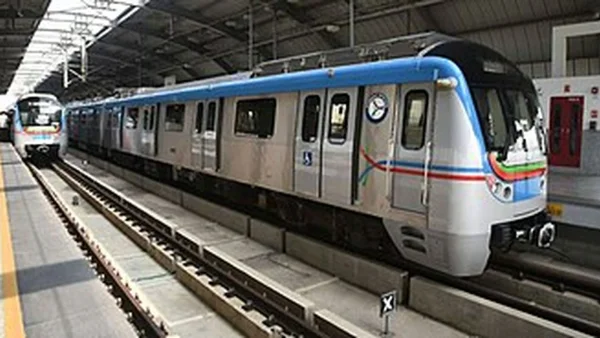
Telangana is working to get the federal government to fully support Hyderabad Metro Rail Phase-II. Chief Minister A. Revanth Reddy has requested a speedy approval of the 122.9 kilometer, seven line, 38,595 crore expansion. A partnership with the national government is what the state believes will speed things up.
Why the pitch now
The state says Hyderabad is growing very rapidly and the first metro line isn’t enough. To keep people moving and the economy doing well, a bigger metro network is needed. The plans for the expansion have already been made into a full, detailed report.
The state government’s recent decision to completely manage the first metro line from L&T is important to this plan. Because the state now has total control of the system, Revanth Reddy believes the later phases will be done more easily and won’t have the problems of the past.
Inside the Delhi meeting
On Wednesday in New Delhi, the Chief Minister explained all of this to Manohar Lal Khattar, the Union Minister of Housing and Urban Affairs. He went over the plan for the second phase and why the national government and the state should do it together, and asked for quick approval.
He also pointed to a very important connection that could be done later. The state wants the line from Rajiv Gandhi International Airport to Bharat Future City to be part of Phase III, and they’ve already given the detailed report to the national government for their review.
Key requests placed on record
The State’s agenda, as conveyed in the meeting, was explicit:
– Approve Hyderabad Metro Rail Phase-II
– Treat Phase-II as a State-Centre joint venture
– Consider RGIA-Bharat Future City in Phase-III
– Expedite clearances already under submission
What Phase-II puts on the table
Phase II, according to the state government, will have seven lines totaling 122.9 kilometers. The project is expected to cost 38,595 crore and the thorough report is already with the Union government for evaluation.
The design of the new lines is meant to fill in the gaps in transport around the areas where the city is expanding. It’s intended to be the main support for the increasing number of people using public transport, and to connect new business areas with established neighborhoods where people live.
Implications for commuters and policy
For people who ride the metro, this means more choices, easier transfers, and better access to a wider area. For those who make decisions about the city, the question is when to do it and how much capacity the new lines will have. Approving the project now means it can be built at the same time as the need for it is becoming obvious.
Asking for a joint venture shows a larger way of thinking about things. If the state and the national government share the risks, they can do more and know what to expect. Plus, the state now having full control of Phase I gives the project the good management it was lacking.
What to watch next
The most important thing now is what the national government says about Phase II and the joint venture idea. An early answer will show when the bidding for the work can start and in what order the seven lines will be built.
Also, what the national government thinks about the Rajiv Gandhi International Airport to Bharat Future City line for Phase III will show how important airport connections and new, modern areas are to them. Hyderabad has submitted the detailed plans for both, and is now waiting for Delhi to give its official permission.