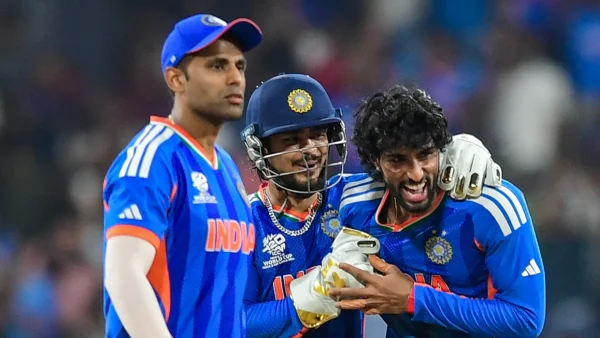
India won the 2026 T20 World Cup fairly easily in the final, and one selection got a lot of people talking. Ishan Kishan, who was added to the squad at the last minute, became a regular in the team and someone who won matches. Suryakumar Yadav later said that both his feelings and the data helped him make the choice.
The decision to pick Kishan based on what he could do and how sure they were about him
Suryakumar Yadav said the choice of Ishan Kishan was ‘totally based on feeling, and a bit on data’ – an honest statement that showed the human side of picking a team. The captain said the team wanted an opener who could start quickly and take control of the game right away.
Suryakumar also remembered calling Kishan before the tournament; it was a short talk that was really about trusting him and believing in him. That call set the mood, and Kishan proved he deserved that trust with powerful, very useful batting during the World Cup matches.
How well Kishan played in the tournament, and his stats
Kishan ended with 317 runs in nine innings at a fantastic strike rate of almost 193, and got three fifties. He became India's second best run-scorer and gave the middle order constant support when the team needed someone to hit quickly at the start of an innings.
After a two-year break from international T20, Kishan had been in great form in domestic cricket, and he brought that form to the world stage. His ability to hit fours and keep up the speed of the scoring made him someone the deep batting line-up could depend on.
How hard it was to leave Jitesh Sharma out, and the team’s balance
Suryakumar said that the last-minute change was hard, and that it was bad for Jitesh Sharma, who had been a good standby wicketkeeper for more than a year. The captain said he was sorry about the choice, showing the personal cost of choosing a team.
Such omissions show the pressure of choosing the best team, where what each player is meant to do is important. Teams must find a balance between how players are performing, whether they fit the role, and what the team needs tactically, as well as keeping players’ spirits up and making sure those who are left out understand why.
How feelings and data analysis come together when a team is picked
Picking a team today combines traditional ‘gut feelings’ with more and more information from analytics, such as strike rates, who the players will be up against, and how they have been doing recently. Captains and coaches are using data more and more to improve their instincts, instead of replacing them – especially when choosing players for very specific T20 jobs.
Suryakumar’s phrase about an ‘X-factor’ player with ‘no baggage’ refers to things that analytics can’t measure. Being mentally free, how a player deals with a match, and timing can change a decision when two players have similar records.
What the choice means for the future, and lessons for future plans
India was the first team to win three T20 World Cups, and winning the 2026 title proved that it’s practical to put together a team that gets results. Brave choices about who to play – such as including Kishan – showed that the right risk can give very good returns on the biggest stage.
In the future, the balance between data and feelings will remain at the heart of how teams are picked. Teams should make the squad stronger overall, but also keep the ability to make difficult choices based on what they are sure about when there is a clear tactical need.