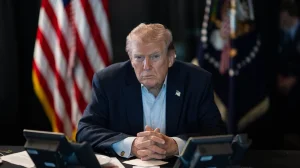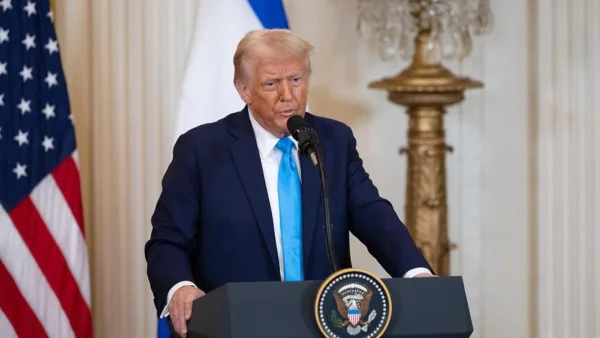
On Tuesday, the tensions around the Strait of Hormuz got even worse when President Trump said his final demand to Iran was to open the very important waterway by t 8 p.m. Eastern Time, or the U.S. would attack their power stations and bridges. He said on social media that if he doesn’t get an answer by his deadline, a whole civilization will be destroyed tonight, which is a huge increase in the level of threat.
Ultimatum Over the Strait of Hormuz
The President said he will not discuss reopening the Strait of Hormuz and that he’d already allowed Iran a lot of extra time. He indicated that if Iran doesn’t do as he asks, the U.S. military will start attacking essential infrastructure all over Iran. He didn’t worry about if these attacks could be considered war crimes.
Iran has said no to a ceasefire that would have lasted 45 days. Instead, they want the war with both the United States and Israel to end completely. They have threatened to cut off oil to the U.S. and their allies for many years if the attacks happen, and they’ve warned the Arab countries in the Gulf that they might not be as careful about what they attack anymore.
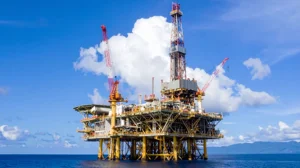
The Strait of Hormuz is a critical point where a lot of the world’s oil travels. If it stays closed for a long time, it will cause problems for the oil market, insurance for ships, and the way goods are delivered. The White House says they are expecting a response by 8 p.m., a yes or a no, and has indicated they have even more abilities to use.
Escalation on Multiple Fronts
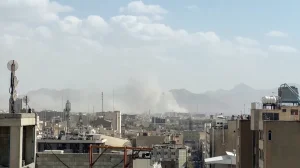
As the 8 p.m. deadline got closer, the fighting got worse. During the night, the U.S. bombed military locations on Kharg Island, which has been bombed before in this conflict. A person from the White House said that these latest bombs weren’t aimed at oil buildings. Analysts looking at pictures from satellites in the last few weeks have shown that earlier attacks hit defenses against planes, radar, and airfields on the island.
Iran launched new missile attacks against Israel and other Arab countries in the Gulf, showing how far this conflict is spreading. The number of deaths is still going up: more than 1,900 people have died in Iran since the war started, and over 1,400 in Israel. Thirteen American soldiers have been killed.
Vice President J.D. Vance said on Tuesday that he believes Iran will respond to the order by 8 p.m. He also said that the U.S. has already beaten Iran's army and that Iran is now trying to hurt the world’s economy by keeping the strait closed.
Legal and Humanitarian Concerns
The idea of many attacks on power plants and bridges immediately brought warnings from leaders in other countries. Antonio Guterres, the Secretary-General of the U.N., said attacking places used by civilians is against international law. These places often have both civilian and military uses, which would raise the chance of causing too much harm to people not involved in the fighting.
If the attacks go ahead, the power stations that keep hospitals, water cleaning facilities, and emergency services running could be stopped. Bridges are essential for people to leave dangerous areas and for getting help to them. Lawyers specializing in law will carefully examine what the sides involved were trying to do, who or what they chose to go after, and if the force they used was sensible in relation to the goal. They’ll also look at what steps were taken to prevent civilians from being harmed.
Groups providing humanitarian aid are telling everyone fighting to make sure there are safe ways for people to get around, and to follow the rules of warfare. Because of the continuing missile and air attacks, these aid organizations are also saying that medicine, fuel, and food could become scarce if ports and the roads to get through the area are still blocked.
Regional Fallout and Global Energy Risks
The American Embassy in Manama told all people working for the U.S. government to stay where they are, and advised Americans in Bahrain to do the same. This security warning told people to get into strong buildings, away from windows, and to have enough food, water and necessary medicine on hand.
Keeping shipping safe is still a central worry. Both U.S. government officials and members of Congress are saying that Iran is attacking ships in and around the Strait of Hormuz, going against what is considered normal international behavior and putting the people on those ships in danger. Senator Marco Rubio said Iran is breaking every rule by attacking commercial vessels, and he labeled Tehran a supporter of terrorists.
Even the idea that there is risk in the Strait of Hormuz can cause shipping costs and insurance rates to go up, make it harder to find tankers, and upset the markets for raw materials. If the Strait were to be closed for a long time, ships would have to take much longer routes, and countries’ emergency supplies would decrease, and that would cause prices to rise and affect factories all over the world.
Political Reactions in Washington
The President’s statements were strongly criticized by Democrats. Chuck Schumer, the leader of the Democrats in the Senate, said Trump’s warning on Tuesday was deeply disturbing and told Republicans to vote against going to war with Iran. He said any member of Congress who won’t oppose what he called a needless war that the U.S. chooses to start will be responsible for all the results.
Republicans have mostly supported being stricter with Iran because of what Iran is doing in the region, though some are saying to be cautious so a larger conflict doesn’t happen. The current government says they want Iran to follow the rules, and aren’t trying to make things worse, but have indicated that getting rid of the current government in Iran is a possibility if Tehran doesn’t do what they are told.
Within the government, people are saying that the recent attacks have been aimed at military things and defenses in the air. They suggest there is still a small chance to calm things down if Iran reopens the waterway and stops attacking ships and Iran’s allies in the area.
What to Watch as the Deadline Nears
A few things will show what happens next. First, will ships start moving safely through the Strait of Hormuz before or shortly after 8 p.m. Eastern Time? Second, is there any private communication that shows a temporary agreement or a way to watch things to avoid mistakes?
Third, how extensive and accurate will any attacks by the U.S. be if the deadline passes and Iran has not done what was asked? What targets the U.S. chooses will show how the government defines legitimate military targets versus civilian areas that should be protected. Fourth, how will Iran act in response, including with missiles, cyberattacks, or through groups they support in other countries of the region?
Warnings about travel and instructions to embassies will give an early indication of how dangerous the Gulf countries are considered to be. Markets will also respond quickly, with the price of oil, companies that ship things, and insurance rates all being quick ways to measure the political risks.
This is the latest on the Iran situation: a dangerous standoff, a final demand, and a region that is very anxious. As the deadline gets closer, whether things will calm down and ships can safely travel through this very important route for energy depends on if both sides can back away from a conflict.