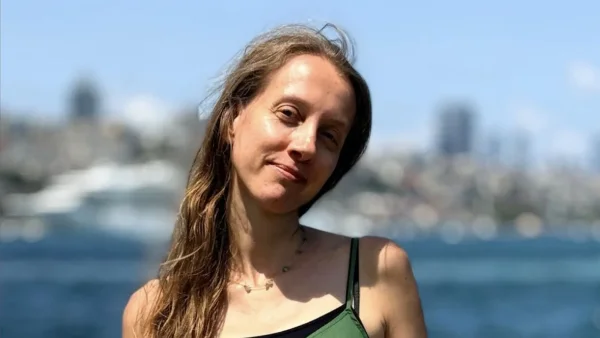
The Iraqi official (who asked to remain unnamed because they weren’t authorized to speak about it to the public) said Kittleson had been held in Baghdad, and was released on Tuesday afternoon. Her current whereabouts haven’t been shared. The U.S. State Department hasn’t yet said anything about this.
Kataib Hezbollah cites outgoing prime minister in decision
Earlier that Tuesday, Kataib Hezbollah said they were freeing Kittleson because of the “good opinions” of the outgoing prime minister, Mohammed Shia al-Sudani. They didn’t say why they decided to do this, but they did say this won’t happen again.
They also said Kittleson had to “immediately leave the country” after being released. Before this announcement, Kataib Hezbollah hadn’t said they were holding her, though people in Iraq and the U.S. government thought they were responsible for the kidnapping.
Back-channel talks and reported exchange terms
In the hours leading up to Kittleson’s release, three Iraqi officials said getting her freed was proving tricky. Someone within the Popular Mobilization Forces (PMF) was trying to get in touch with the people who took her, but contacting the leaders of Kataib Hezbollah was difficult.
One security official said the command structure within the group is disorganized; commanders at the battalion level have disappeared and are afraid of being discovered. Another official added that at one point, the Iraqi negotiator hadn’t gotten the okay from the U.S. government to continue the talks, which made things even more complicated.
Two people within the militia, who wanted to stay anonymous, said Kittleson’s release was connected to the release of several Kataib Hezbollah members who had been arrested by Iraqi authorities. A political person connected to the Coordination Framework said Iraqi officials were willing to let six prisoners go, and most of them are linked to past attacks on a U.S. base in Syria.
How the abduction unfolded and pursuit near al-Haswa
Iraqi officials said two cars were used in Kittleson’s kidnapping. Near the town of al-Haswa in Babil province (southwest of Baghdad), one car crashed during a chase. Kittleson was moved to the second car, which drove away. Officials later confirmed she was being held in Baghdad before her release.
A seasoned freelancer in a high-risk environment
Kittleson is 49, a freelance journalist who has reported from around the Middle East for many years, and especially in Iraq and Syria. She’s spent most of her career living abroad, and Rome has often been her home base. And like many freelancers, she usually has limited resources and doesn’t get the same protections as journalists who work directly for news organizations.
People who know the situation say U.S. officials had warned Kittleson several times about threats to her, but she chose to stay in Iraq. She had just returned to the country before the kidnapping to continue reporting on the political and security situation in the area.
Implications for Iraq security and press freedom
Her release is good news for her family and colleagues, but the details show that journalists in Iraq are still in danger. Militias supported by Iran still have a lot of power, and it’s not always clear where the official security forces end and the militia networks begin, which makes dealing with a crisis and holding people accountable more difficult.
The Popular Mobilization Forces (a group of militias that are supposedly under the control of the Iraqi army) often act as go-betweens in sensitive negotiations. However, the fact that it was hard to reach the leaders of Kataib Hezbollah shows how difficult it is to control groups that work independently and whose chains of command are always changing.
Kataib Hezbollah has been blamed for kidnappings before. Elizabeth Tsurkov, a Princeton University student with Israeli and Russian citizenship, disappeared in Baghdad in 2023. After being freed and given to U.S. officials in 2025, she said Kataib Hezbollah had held her – though the group never admitted it.
Groups that advocate for journalists had asked the U.S. government to officially label Kittleson as “wrongfully detained”, which would free up more resources and get more attention on her case. U.S. officials said they were working together across different agencies, including law enforcement, to try and get her released.
Tensions in the region are still very high, and groups in Iraq have repeatedly attacked things the U.S. is involved in. Because of this, kidnappings can quickly become part of larger political deals, as may be the case with Kittleson’s release being linked to the fate of militia members who are in jail.
For journalists, this situation is a reminder of things they should always do: carefully assess the risks, have safe travel plans, know trustworthy local people, and have a plan for emergencies. For the Iraqi government, it shows they need to have better control over who is in charge and do more to stop politically motivated kidnappings.
Kittleson’s safe return solves one problem, but it brings up a lot of difficult questions. Kataib Hezbollah’s statement that they won’t do something like this again suggests they are becoming more firm in their position. It remains to be seen if this event will cause lasting changes to protect reporters and stop militias from acting with impunity – and that will be a crucial test for Iraq’s leaders and their allies.