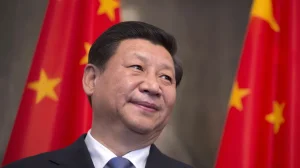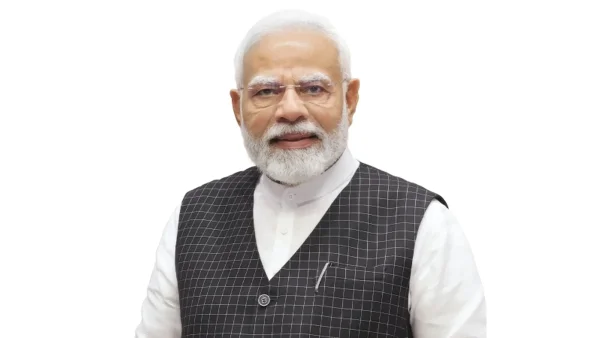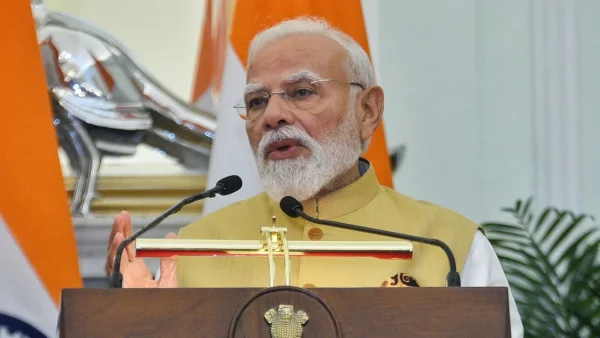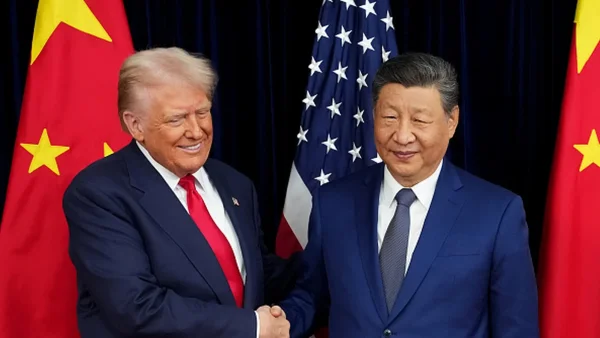
Taiwan has become the biggest and most obvious point of disagreement at the Trump-Xi meeting in Beijing. Experts say any deal between the US and China to improve relations could have effects that last a long time. As both leaders decide what they’ll gain from this, Taiwan is the biggest, most important long-term problem that will decide what happens at and after the meeting.
Experts at the Centre for European Policy Analysis say China is going into the discussions hoping to get the US to change how it talks about Taiwan. Xi Jinping will likely offer economic benefits in exchange for the US changing its statements in a way that gives Taiwan less independence in its relationships with other countries and suggests the US won’t to challenge China.
Things are complicated by politics within both countries. Donald Trump is getting more and more demands from people in the US to allow a $14 billion deal to sell weapons to Taiwan. Taiwan’s own government, meanwhile, has approved a $25 billion budget for defense, aiming to be stronger as China becomes more aggressive in the region.
James Lewis at the think tank said the meeting will likely be very focused on deals, and China will be pushing hard on Taiwan. He warned that the danger is Trump making a quick decision to give something up, even though in the long run, the US needs a strong Taiwan.
The language trap and Reagan’s assurances
Reinhard Butikofer, another expert at the organization, pointed to a definite limit to what should be done: the six promises Ronald Reagan made in t982 to both Congress and Taiwan. Specifically, Reagan said the US would not ask China’s opinion before selling weapons to Taiwan.
He says waiting to make the promised weapons sale to Taiwan while asking China what it thinks is almost breaking that promise. He thinks Congress should pressure the Trump administration to keep all of those promises exactly as they are.
He adds that the danger isn’t just how things are done, but what is agreed to. China wants the US to go beyond saying it doesn’t support Taiwan becoming independent, to actively saying it is against Taiwan’s independence. Butikofer says a change like that would have huge consequences and go against the promises made in 1982.
Chips, AI, and the leverage Beijing wants
Taiwan's power in this situation comes from its computer chips. Almost 90% of the world’s most advanced semiconductors are made on the island, and these chips are vital for things like artificial intelligence and defense systems. As Sarah Cook has pointed out, that makes Taiwan incredibly important for the future of technology and is a key part of China’s plans.
Cook argues that Washington needs to make sure China doesn’t get control of all of the advanced chip making that happens in Taiwan. She emphasizes that many in Washington still see Taiwan as a friend and its successful technology sector helps to make sure democracies have a reliable supply of important technology.
However, the political situation is shifting. People who follow Taiwan closely are warning that if the US and China start using controls over the computer chip industry as something to bargain with, Taiwan’s security could get worse. Sana Hashmi has seen cracks appearing in how the US is approaching the issue, and says if the US does shift its position, China will become stronger and the US and Taiwan will be less secure. Taipei is worried that if the US includes limiting Taiwan’s access to advanced technology in larger negotiations with China, the US will no longer completely forbid China from controlling Taiwan. However, according to Hashmi, the US almost certainly won’t completely change its policies, because those advanced computer chips are vital to US national security.
A quieter Taiwan, a higher alert
Things are tense in Taipei. As the meeting between leaders goes on, people who study this sort of thing have noticed that Washington is moving away from strongly guaranteeing Taiwan's safety, and more towards a strategy of making deals. The fact that people are talking about what the US could get from Xi Jinping, even a very friendly relationship, and using the word “leverage” makes people concerned about a difference between what the US says it will do, and what it intends to do.
Christopher Walker says China is steadily working to bring Taiwan under its control, and will keep doing so unless the US and Taiwan’s friends respond firmly. This is why even small changes in wording are very important from a military point of view.
Strait of Hormuz and the transactional temptation
Is it possible the US will ask China to help keep the Strait of Hormuz safe, in exchange for some kind of deal about Taiwan? The group discussing this thinks the US might be tempted to do that, but it would be a bad deal. Cook says we should be careful, because China has gone back on its promises before.
Butikofer criticized the idea of exchanging Taiwan for unclear promises from China. He believes any change in how things are worded would be a major change, and would go against the guarantees given by President Reagan. He says that if China wants the US to help keep the Strait of Hormuz open for shipping, it should stop giving Iran information and parts for drones.
Lewis pointed out the significant disagreement within the US government about how to deal with China. Those who are tough on China and those who are more focused on the economy have different views on Taiwan, which creates uncertainty about how much the US will give in to China’s demands. Despite this, he thinks there will be discussion, rather than the US quickly agreeing to China’s requests, because the US still wants Taiwan to be strong.
Taiwan’s resilience playbook
Taiwan is preparing for the possibility of attack. The island is investing in making its own drones, increasing the amount of defense equipment it produces within Taiwan, and making the entire population and the country’s important systems more resilient to attack to strengthen its defenses and essential services. This approach is meant to avoid having just one thing that could fail and to continue to deter China.
However, there are limitations. The United States is the only major country that will sell advanced weapons to Taiwan, and is essential to its intelligence gathering, watching what’s happening, and supplying materials. The experts said Taiwan isn’t giving up on having ways to defend itself that don’t rely on matching China weapon for weapon, and understands that US support is still absolutely necessary.
As President Lai Ching-te’s government deals with this situation, its main goal hasn’t changed: to keep the US as an ally, and to expect the US will not leave Taiwan to face a crisis alone.
Signals to watch as the summit unfolds
The outcome depends on wording and actions. Taiwan’s allies will closely examine every word for any changes that give China more power, or limit what Taiwan is able to do. Financial markets will also pay attention to what is said about computer chips, to understand if the rules about controlling advanced technology are firm, or if they are something that can be negotiated.
Here are the summit indicators that matter most for Taipei and its partners:
– Any US shift from not in favour to opposed independence
– Movement on the $14-billion arms package timeline
– References to consulting Beijing on Taiwan arms
– New trade-offs linking chips to broader deals
– Chinese statements on Taiwan’s political status
– Summit language on Strait of Hormuz cooperation
What happens next depends on whether the desire to make quick deals will be more important than long-term interests. If the US reaffirms the promises made in the Reagan era, and goes ahead with the planned sale of equipment, Taiwan will have more time. But if the US uses softer language or delays the sale, China will see an opportunity.
Everyone on all sides understands the basic fact Lewis pointed out: Taiwan is too important to China, both economically and for its place in the world, to simply be returned to China’s control. Ultimately, Taiwan's safety may not be decided by big statements, but by whether those important underlying facts remain true when put to the test.