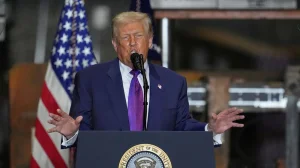
Trump’s missile defense promise now has a surprisingly high price. The CBO’s analysis puts the ‘Golden Dome’ at $1.2 trillion over twenty years, which is much more than the $175 billion the President mentioned in May of last year. This huge difference will probably cause a serious argument about how much it will cost, how big the system will be, and when it will be ready, and he wants it working by January 2029.
This estimate will likely bring taxpayers, companies that do work for the military, and the Pentagon’s planners into conflict. They will need to decide how far to take this defense system that uses space technology and how much the country can continue to pay for it over many years.
What the CBO says
The CBO, which is officially non-partisan (not supporting either political party), released its report on Tuesday, May 12, 2026, and says the $1.2 trillion figure is based on one possible way of doing things, and isn’t a specific judgment of Trump’s actual plan. But the huge number shows how much would be needed to build, put in place, and operate such a complicated system.
And importantly, the CBO points out that the Department of Defense hasn’t said exactly what systems they will use, or how many, so it’s impossible to calculate the cost in the long term with certainty. Even so, the CBO has previously worked out that just the parts in space could cost up to $542 billion over twenty years.
Key numbers at a glance:
– Total cost: USD 1.2 trillion over 20 years
– Initial claim: USD 175 billion
– Space segment: up to USD 542 billion
– Approved so far: roughly USD 24 billion
– Goal: fully operational before January 2029
Funding so far and the clock running
Congress has already approved around $24 billion (through the tax and spending law passed last summer) as a first payment towards the system which Trump ordered in his first week as president. He said at that time that the Golden Dome would be fully functioning before his term ended in January 2029.
Trying to design, test, and get the system working in less than four years (a President’s term) is a tight schedule, and at the same time, people in Washington are arguing more and more about the total cost of the system throughout its lifetime.
What the shield aims to do
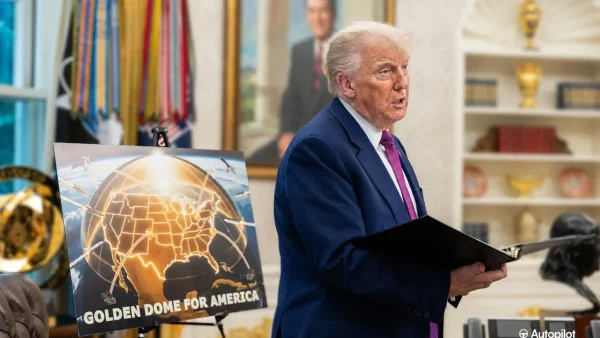
Trump describes the project as a 'Golden Dome for America,’ and says it’s about putting weapons in space. It involves equipment on the ground and in space which will find, follow, and destroy missiles at all stages of an attack. The idea is, at least partly, based on Israel’s multi-layered defense system – often called the Iron Dome.
In his official order, Trump said the danger from the newest, most advanced weapons has gotten stronger and more complicated in the last forty years, because of advances by countries that are either as powerful as the U.S. or almost as powerful.
Debate over affordability and intent
People in charge of the program don’t like the idea of it being called a trillion-dollar project. General Michael A. Guetlein, who is in charge of Golden Dome, told politicians last month that some cost predictions just take the prices of older systems and multiply them to get a big number. He believes this isn’t how this program is being developed.
The Space Force General said, “We are totally concentrating on keeping costs down,” and he emphasized that they are trying to control expenses even as the system’s abilities are being increased.
But others disagree. Senator Jeff Merkley, who asked the CBO to do the analysis, says the project is just a huge amount of money going to defense companies, and being paid for by normal working people. Trump’s earlier estimate of $175 billion makes this criticism even stronger.
What comes next
The CBO’s warning about missing details from the program is putting the Pentagon under pressure to say exactly how many systems they will have, how they will be arranged, and when they will be ready. These decisions will determine if costs stay near the higher estimate or can be reduced.
Future budget meetings are likely to focus on compromises: how much of the system will be in space, which parts are most important, and whether the system can be ready by January 2029 without the price going up even more.