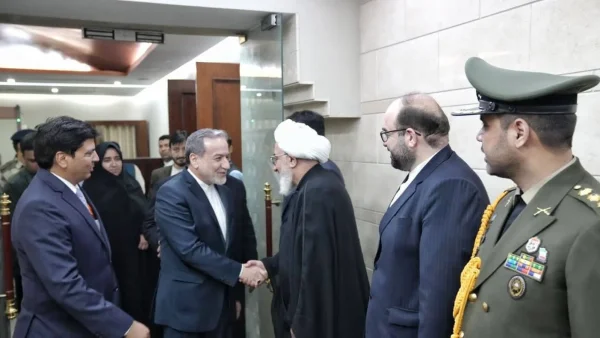
Araghchi arrived in New Delhi on May 14th and 15th for the BRICS Foreign Ministers’ Meeting, putting India at the center of diplomacy in Western Asia. The continuing conflict between the U.S. and Iran, which has caused problems for the world economy and raised the price of oil, is the reason for his visit.
Why Araghchi’s Delhi visit matters
New Delhi has a lot to lose or gain right now. Energy security and good connections are being discussed again, and S Jaishankar, India’s Minister of External Affairs, will meet with Araghchi on Friday for a private discussion. Officials are hoping to keep important supply routes working and to see if BRICS can lessen the economic damage from troubles in Western Asia.
This is Araghchi’s second time in India this year and his first visit since the U.S. and Iran began fighting in Western Asia – an unstable area that has threatened the peace of the entire region. Because of this, Tehran wants BRICS to be more involved, with India leading the way as the current chair.
What the BRICS meet will try to achieve
India is hosting the meeting as part of its 2026 chairmanship. According to people working with the government, the focus will be on keeping the region stable, countries working together, and the economy being able to recover, showing that worries aren’t just about political powers, but also about rising prices, trade routes, and the possibility of financial problems.
Jaishankar and Araghchi have talked on the phone several times since the fighting started, but this week will be the first time they’ve met in person since February 28th. People with knowledge of diplomatic conversations say there have been at least four high-level talks in the past few months, emphasizing the urgency of the situation as problems with security have affected markets and forced leaders to make difficult decisions.
Signals from both sides
New Delhi officially said they were very pleased Araghchi arrived; a spokesperson for the Ministry of External Affairs said he was given a very warm welcome when he landed in the capital. The Iranian Embassy in India also announced the visit, saying it was about working with other BRICS countries.
Tehran has clearly said what it expects. Esmaiel Baghaei, a spokesperson for the Iranian Foreign Ministry, mentioned the good cooperation between countries in BRICS and the Shanghai Cooperation Organisation and said they are looking forward to one-on-one meetings, describing India as a friendly nation.
Key recent positions were outlined as follows:
– India stressed a very warm welcome to Araghchi
– Iran affirmed good cooperation in BRICS and SCO
– Tehran seeks a constructive BRICS role on the conflict
– First in-person Jaishankar-Araghchi meeting since February 28
The broader strategic backdrop
Araghchi wants BRICS, and especially India as the current chair, to be more active in dealing with the issues caused by the conflict. Earlier reports said Iran wants BRICS, under India’s leadership, to play a helpful role as things get worse in the region. This was brought up during his March conversation with Jaishankar.
This visit to New Delhi is part of a larger pattern. During his first visit in May 2025, Araghchi was a co-chair of the 20th India-Iran Joint Commission Meeting. That visit also celebrated the 75th anniversary of the India-Iran Friendship Treaty and included important discussions with President Droupadi Murmu.
What comes next
The first challenge will be for the BRICS foreign ministers to come up with a statement that will calm the markets and make sure all the member countries agree. If they make progress, India and Iran will have more flexibility to talk about energy and connections, especially since there are increasing risks to supplies throughout Western Asia.
This week’s meetings are a preparation for more extensive involvement following India’s BRICS schedule throughout 2026. By going back to New Delhi, Araghchi has shown that Tehran wants to strengthen political, strategic, and economic relationships within a larger group of countries, even though the conflict and its effects are affecting everything that happens.