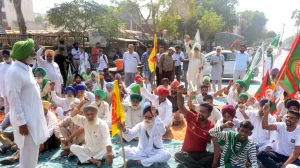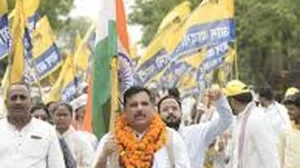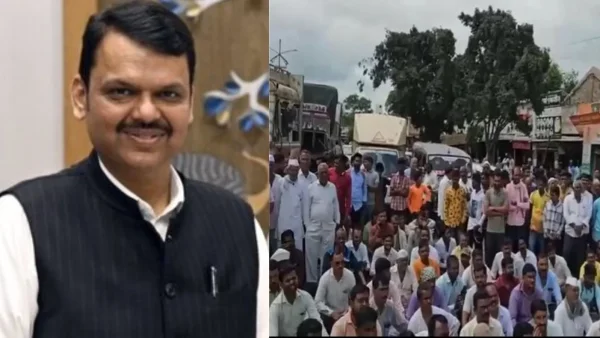
The thousands of farmers and tribal people began their long walk from Nashik to Mumbai on Sunday, in order to get these land, irrigation and forest rights. Government people and people speaking for the protest both said the Maharashtra government invited a group from the walk to discuss things at the Mantralaya in Mumbai later that day.
The protest came after a demonstration at the Dindori office of a local government area, which didn’t result in definite promises. Those organising it – led by the All India Kisan Sabha, which is linked to the CPI(M) – decided to take their requests straight to the state’s capital, on foot.
By Tuesday morning the walkers had covered almost 60 kilometres in two days and were going down Kasara Ghat. They had left Nashik district and entered next-door Thane district, making good progress even though it was hot and the land was hard to walk on.
Those organising the march said they’d made sure the walkers had what they needed – food, grain, wood for fires, and other essential things. Because they kept the march going and got a lot of publicity, the state government invited a group to talk about the protesters’ requests at state level.
The group going to the talks will be made up of J P Gavit – who used to be a member of the state assembly – Ashok Dhawale, who is national president of the All India Kisan Sabha, Ajit Navale, national joint secretary of the Kisan Sabha, and Vinod Nikole, who is a member of the state assembly. The walk includes tribal farmers from the Peth, Surgana, Kalwan and Trimbakeshwar local government areas.
Core Demands on Land Rights, Forest Claims, and Irrigation
The protesters have listed problems about land rights, irrigation and forest claims which haven’t been solved. They want farming on land taken up to four hectares to be officially allowed and land papers to be issued quickly, so people can have official rights and get benefits.
Water Management and Infrastructure Proposals
Farmers from areas which often have no rain asked for big dams to be built on rivers and smaller rivers which flow west. They say this kind of system would collect rainwater, put water back into the ground, and make sure there was water for local farming in dry seasons.
Another major request is for forest rights cases which were turned down in the past. The protesters want rejected claims under the forest rights system to be looked at again and better protection for small landowners who have forest land. They also want crops from forest land to be bought by the government at the minimum prices it guarantees.
Impact of the Protest and Administrative Response
Sitting-in protests in parts of Dindori stopped traffic, and for two days people had to be diverted and there was local traffic congestion. Protest leaders said they had agreed with Ayush Prasad, the Collector of Nashik, that local problems would be dealt with at district level, and requests at state level would be taken up in Mumbai.
The government’s invitation shows it is willing to talk, but real results will depend on the specific promises and when they will happen. Talks with the group could give short-term promises, such as speeding up claims, or longer-term talks about policy on irrigation projects and officially allowing land to be farmed.
From a policy point of view, several steps could solve the main problems. First, making land records clear and digital and issuing them quickly would reduce arguments and allow people to officially get schemes. Second, technical and environmental studies for the dams that are being targeted could balance the need to store water with the ecology of the rivers. Third, making clear and quick ways to look at forest rights claims which were turned down would rebuild trust.
A way of reliably buying crops from forest landholders at the minimum prices the government guarantees needs clear organisation. Those in authority would need to define what crops are allowed, where the buying centres are and how things are moved, to make sure fair prices get to small producers.
Broader Rural Distress and Implications for Agrarian Policy
The walk shows how rural people in parts of Maharashtra are still under stress, where the risk of drought, unclear rights to land and little water for farming make people more at risk. It also shows that organised, ongoing protest is still a way for farming people to ask for big changes to the way things are.
As the group gets ready to meet state leaders, both sides have a short time to turn discussion into steps which can be measured. Government people can use the talks to give times and ways of putting right what is wrong, while protest leaders will be tested on whether solutions they agree to can meet the community’s immediate and long-term needs.
The walk goes on toward Mumbai, and what happens will likely shape what local people expect about land policy, water systems and forest rights in the months to come.