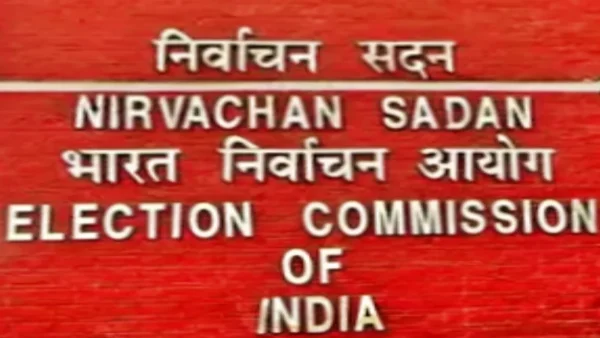
The Election Commission has now given the first detailed information about names taken off the West Bengal voter lists after the judges reviewed them. Of the 6,006,675 names that were flagged for review, 2,716,393 have been removed; this is part of a bigger change to the lists that has greatly lowered the number of registered voters in the state.
Overall impact on West Bengal voter rolls
The final list released at midnight showed the total number of voters at 67.7 million, down from 76.6 million when the Special Intensive Revision (SIR) started. That’s a drop of about 8.9 million voters, or 11.62% of the original list.
Even before this latest review by the judges, around 6.3 million names had already been removed during the earlier parts of the SIR. Adding these to the names removed after the judges looked at them, about 9,083,345 people have been taken off the voter list (according to the Election Commission).
District-level distribution and hotspots
Murshidabad had the most cases for the judges to decide (1,101,145), followed by Malda (828,127), North 24 Parganas (591,252), and South 24 Parganas (522,042). Also, districts along the border like Cooch Behar and Uttar Dinajpur removed a large number of names.
Nadia, which has a lot of Matua people, had the highest percentage of names removed – 77.86%. Hooghly (70.33%), Purba Bardhaman (57.40%), North 24 Parganas (55.08%), and Paschim Bardhaman (53.72%) also had a very high percentage removed.
Large numbers but lower deletion rates in some districts
Districts where many people from minority groups live and which had a lot of cases for the judges to review didn’t actually have as high a percentage of names removed. Malda’s removal rate was 28.91%, Murshidabad 41.33%, North Dinajpur 36.84%, and South 24 Parganas 42.70%. Kolkata North and Kolkata South had 28.97% and 27.31% removed respectively.
These numbers demonstrate that just having a lot of cases doesn’1t mean a proportionally large number of people will be removed. The differences show how the judges ruled in each place, what paperwork was available, and how carefully each case was checked.
Adjudication process, judicial oversight and deadlines
The 705 judges did the reviewing under the direction of the Supreme Court. The SIR began on October 27th of last year, and the final, revised list was published on February 28th. The Supreme Court didn’t give more time for this process before the voter lists were finalized.
According to an official at the Election Commission, people whose names were removed after the review can appeal this to special tribunals. The list for the first round of voting on April 23rd is now set. People who are scheduled to vote on April 29th and who were removed after the review have until April 9th to ask for a hearing at a tribunal, but these tribunals aren’t up and running yet.
Administrative and political implications
Removing so many names is causing problems for election officials and is politically sensitive as the election gets closer. Both the number and percentage of removals are being argued over in the border and minority districts, and people are questioning how people are being documented, how often they move, and how well the checks are being done.
Those running the election will have to get the tribunals, local election offices, and ways to get information to the public working together to make sure people who are allowed to vote can dispute their removal from the list. Politicians will also be looking closely at these changes to the list to see how they might affect how many people vote and how they plan their campaigns.
What affected voters should do next
Anyone who finds their name isn’t on the list should immediately check with their local election office or the official election website. They should get together proof of who they are and where they live, and ask the tribunals or election officials to put their name back on, and do this by the deadline.
Acting quickly is vital. Because the tribunals haven’t begun in many areas, local election officials and the Election Commission need to explain the procedures and provide help so that as few people as possible are prevented from voting in the upcoming election.