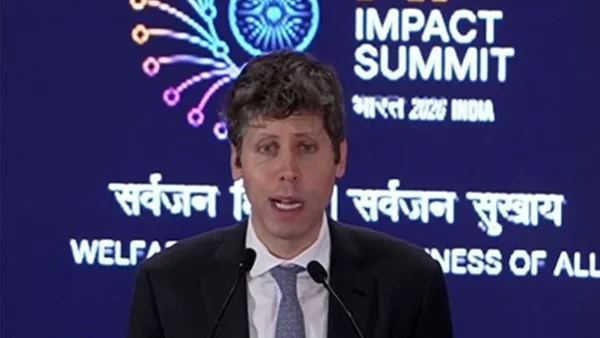
Sam Altman states children don’t require iPads and instead he suggests something much more basic: free, outdoor play. The CEO of OpenAI has said that becoming a father altered his opinion on young children and screens; he would rather his child “play in the dirt” than spend hours on a tablet. His opinion adds to the wider argument around screen time.
A shift in perspective after becoming a parent
Altman has been a prominent voice in the tech world for a long time, but having a child altered his perspective on kids and technology. He admits he was more willing to allow screen time previously. But his own experience made him rethink things, and he now prefers children to be doing things with their hands instead of just thinking about screens.
This isn’re a complete rejection of technology. It’s more a reconsideration of when and what’s most important. Devices can be really useful later on, but in the early stages of development, children benefit from using their senses and exploring. Altman now believes kids should have room to learn from the world around them before they are constantly using screens for fun.
Why unstructured outdoor play still matters
When kids run, climb, dig, and invent games outside, they build abilities that apps can’t easily give them. These activities develop how they move their bodies, their understanding of space, and their ability to solve problems. They also make children curious because they come across changing, unpredictable places where trying things and adjusting to the results is important.
Children usually develop social skills and learn about their feelings during informal play. They can practice understanding others and being able to recover from difficulties by deciding on rules, sharing things, and coping with not getting their way. Altman’s picture of a child playing in the dirt shows how physical activity and getting along with others are combined.
Not anti-technology, a call for moderation
Altman isn’t saying that iPads or programs are inherently harmful. He’s simply saying they should be used in moderation and in the right situation. Technology can help learning, provide ways to be creative and keep families in touch, but it shouldn’t take the place of the essential experiences of childhood, especially when they are very young.
This idea is about finding a balance, and separating actually using something from relying on it. For a lot of parents, the question isn’t whether devices exist, but how, when and why they become part of a child’s day. Altman thinks it’s best to postpone a lot of screen time so children have more time to actively explore.
Practical alternatives to handing a child an iPad
Easy and cheap things can be done instead of using a tablet. Encourage digging in the dirt, playing with water, building with blocks, playing in a sandbox, and going for walks in nature. These activities help their senses grow and make them curious without the need for screens or formal lessons.
Books, making things by hand, and playing games outside with others help with language and getting along with people. Parents can swap toys around and make simple, supervised challenges that help children to think in a creative way. These realistic choices are in line with Altman’s preference for things you can touch over digital entertainment for young children.
Implications for parents and policy makers
What Altman says is adding to the larger discussions about how much screen time is a good idea and how young children grow. People in health and education often suggest that toddlers shouldn’t have too much time with screens that don’t involve them doing something, and that they should have more active, physical play. People who make policy and those who look after children can use these ideas when planning what happens in a typical day and in public programs.
In the end, the argument comes down to finding a middle ground. Devices are going to be part of modern life, but many experts and parents now think it’s better for children to have a solid foundation of playing in the real world first. Altman’s point of view is a reminder that in a world full of technology, the simplest things can often provide the most meaningful and long lasting learning.