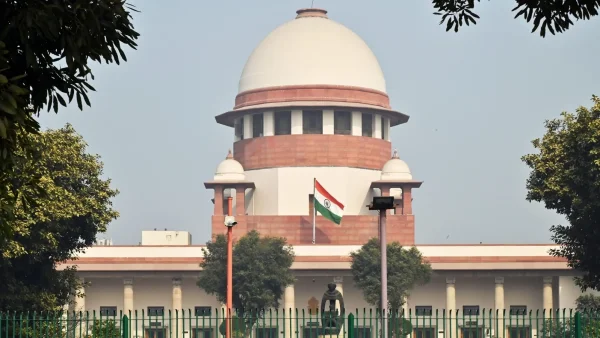
On Monday, the top court made its ruling in the District Mineral Fund case. By ordering Tuteja to stay put outside Chhattisgarh, it has kept the probe moving and put an end to any open-ended detention.
Chief Justice Surya Kant and Justice Joymalya Bagchi were of the view that there was no point in keeping him behind bars any longer, not with a trial of this length in the offing. They saw the mountain of evidence and the witness list as a sign of a long road ahead.
The Bench put on record that some 85 people will have to be examined and nine accused are yet to face the music. Even as co-accused have been let go, the judges made it clear: the charges may be weighty, but they can be sorted at the trial, not over a bail application.
Conditions aimed at insulating the trial
To be on the safe side, the court has put some hard lines in place. Tuteja has to be out of the state for as long as the case runs and be available for the court to check up on. The idea is to make sure no one is swayed from giving a fair account.
Key conditions attached to bail include:
– Stay outside Chhattisgarh throughout the trial
– Provide a new residential address within a week
– Attend court on each and every hearing date
State alleges wider pattern; defence cites prolonged custody
Ravi Sharma, the Additional Advocate General, was having none of it. He painted Tuteja as a recidivist with ties to the liquor, coal and betting rackets. He even put forward some 2019 WhatsApp exchanges to show Tuteja’s hand in other matters.
But for Tuteja, senior advocate Shoeb Alam said all that was beside the point. “He’s been in for two and a half years as an undertrial,” Alam told the court. “He’s a man of his age and he can’t be going around influencing anyone.” The defence also had to make the point that it was the District Collectors who were handing out the contracts.
Alam made a further case for why Tuteja should be free: with so many witnesses and co-accused already on bail, what was the use of holding him? Once you put the right conditions in place, custody becomes a formality.
Allegations under the DMF case
Then there is the prosecution’s side of the story. They have Tuteja down for shenanigans in the Department of Industry, from contract allocation to siphoning off the DMF. They say he put in a word here and there on multi-crore works and put a dent in the exchequer.
In a way, this is how you see the courts weigh in when you have serious allegations on one side and a constitutional right on the other. The order is a line in the sand between being in the dock and being in a cell.
Timeline raised in court
The State had called Tuteja the kingpin back in September 2024, yet didn’t move to arrest him until February 2026, the defence was quick to point out. Alam put it down to evergreening the case, with new FIRs coming in as old ones neared a bail hearing – something the State won’t have.
What comes next
Now the ball is in the courtroom. Tuteja has to be out of Chhattisgarh, file his new address in a week and be there for every date. Step out of line and the court will act. For the State, it means it can put its 85 witnesses on the stand. For Tuteja, it is some respite, but the real work is yet to come.