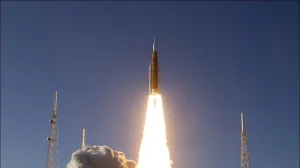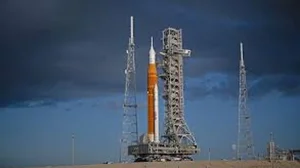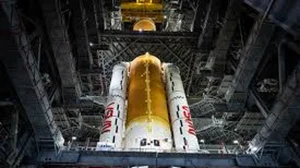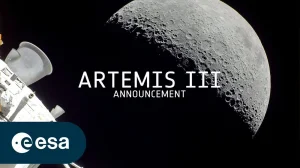
It has been over fifty years since Apollo went past low Earth orbit, and Artemis II will bring human space travel back to the Moon’s area. The Orion spacecraft, with a crew aboard, will spectacularly circle the Moon, and you can see it happen live. This is a major achievement for NASA’s Artemis program and starts a new era of going far out into space.
What is Artemis II and why the flyby matters
Artemis II is the first Artemis mission with a crew; it’s designed to test Orion’s life support, the way it finds its way around, and its communications with astronauts on board. It follows the Artemis I flight, which had no people, and prepares the way for Artemis III, the mission that will land humans on the Moon for the first time in the program.
The four people on the mission are Reid Wiseman, Victor Glover, and Christina Koch from NASA, and Jeremy Hansen from the Canadian Space Agency. Their job is to fly past the Moon, confirm that all the systems work properly when far from Earth, and then come back down safely.
This isn’t a landing on the Moon, but it is crucial. Information gathered from Artemis II will help improve the ways things are done and the equipment used for Artemis III and later missions which are intended to establish a lasting human presence on and around the Moon. It will also be the furthest humans have traveled from Earth since the Apollo missions.
Orion will probably travel thousands of miles past the Moon before turning around and heading for Earth. If everything goes according to plan, Artemis II should go further than Apollo 13, showing how much farther these new explorers will go.
When Artemis II will pass the Moon
The Artemis II flyby of the Moon is planned for April 6, 2026. Live coverage of the approach and departure is expected to last for several hours, with updates in real time, video from inside the Orion, and tracking information.
Important times to be aware of are: the live stream is expected to begin several hours before the spacecraft reaches the Moon on April 6th, coverage of the flyby around 1:00 PM Eastern Time, and closest approach at approximately 7:00 PM Eastern Time (but this time could change).
For time zone conversions: 1:00 PM Eastern Time is 10:00 AM Pacific Time and 5:00 PM Universal Time. 7:00 PM Eastern Time is 4:00 PM Pacific Time and 11:00 PM Universal Time. In India (Indian Standard Time), closest approach is expected in the very early hours of April 7th.
All of these times are estimates and could be altered depending on how things are going. NASA usually puts out countdowns and live updates, so on the day of the event, look at NASA’s official websites for the very latest times.
How to watch the Artemis II live stream
NASA intends to make the Artemis II flyby of the Moon accessible to everyone around the world using its official websites and apps. There will be continuing coverage, comments from experts on the mission, and live video from the Orion spacecraft if possible.
You can watch on NASA TV and the live page on the NASA website, the NASA app for phones and smart TVs, and the agency’s official YouTube channel and other official social media accounts.
If you’d like to watch on a bigger screen, you can connect your laptop or phone to your television or use an app on your smart TV. If you’re watching on your phone, turn on notifications for the NASA app or channel you choose, so you don’t miss the closest approach or other important events during the mission. Put the time for Orion’s closest approach to the Moon in your calendar and set an alarm for 30 to 60 minutes beforehand. Keep up with NASA’s mission blog and their posts on social media for any changes to the schedule at the last minute. If your internet isn’t working very well, lower the quality of the video stream to get a clear, steady sound and picture. Watch on the biggest, brightest screen you can because the views of the Moon and from Orion are really good. Use good speakers or headphones to hear the astronauts and what people at mission control are saying. Have another screen available for the schedule of the mission and to see the altitude, how fast it’s going, and how far away Orion is, all as it happens. Watching with friends or classmates is a good idea; a historic event like this can become a learning experience if you share it.
Orion will follow a very precise route that uses the Moon’s pull to curve its path back towards Earth. This “gravity assist” saves fuel and shows how well Orion works with a crew on board during a long trip.
When Orion goes around the back of the Moon, you can look forward to very detailed pictures of the Moon’s surface, even the side we never see from Earth, video and photos taken by the astronauts and the spacecraft’s cameras, and people giving explanations in real time about what the astronauts are looking at and what engineers are measuring.
There will likely be a short time when you can’t get a signal from Orion, when it goes behind the Moon. This is because the Moon is in the way of the radio waves. During this time, the live audio and video will probably pause. The connection usually comes back as soon as Orion comes out from behind the Moon and connects with NASA’s Deep Space Network.
During the trip around the Moon, the astronauts will check how accurate the navigation is, how well the life support systems are functioning, and how the communications are doing from that distance. They will also study the Moon, make a record of places where future Artemis missions might land, and try to get famous pictures of Earth rising above the Moon’s surface.
Artemis II is a test of living and working in space for a long time. Successfully going around the Moon with a crew will prove that important equipment works, including the systems that control the environment, the guidance and tracking, and will help reduce the dangers for Artemis III and future missions.
The mission shows a bigger plan: to have a permanent base on the Moon, use it to test equipment, and then go to Mars. Being on the Moon for a long time will require life support that doesn’t fail, extremely accurate navigation, communication in space, and very strong safety measures for the astronauts. Artemis II will help make sure all these things are ready.
That the public can watch the Artemis II live stream also begins a new time for people to be involved with space. People all over the world can watch history as it unfolds, get in touch through official ways, and follow the astronauts as they go further than anyone has in many years. For a lot of people, this flight will be the most important space event of their lives.
The trip doesn’t finish at the Moon. After going around the Moon, Orion will return to Earth and splash down in the Pacific Ocean, finishing a mission meant to prove that humans can explore deep space again, and that this can continue. If you’ve ever wanted to know what it’s like to go to the limits of what’s possible, the Artemis II live stream is a perfect place to see it.
As the launch time gets closer, set your reminders, decide where you’ll watch, and be prepared to see Artemis II go around the Moon live. The next part of humans exploring space is about to happen in the sky we all share and you can see it as it happens.