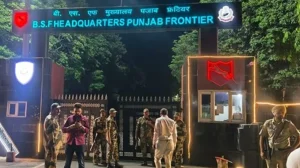
On Monday, a bomb threat email mentioning three schools in Chandigarh, the mayor’s office and the Punjab and Haryana Secretariat, put the city on alert. The message, which the Khalistan National Army claimed to have written, gave a specific time for bombs to go off and said there would be a grenade thrown at Gandhi Bhavan at Chandigarh University.
Immediate response and school evacuations
At St. Stephen’s School in Sector and Ryan International School in Sector 49, and Shivalik Public School, the school staff quickly had the students and teachers leave the buildings. They got everyone out of classrooms and to safe places, and at the same time, worked with the local police to guard the area and control who could come in.
Parents were told about the situation and in some cases asked to come get their kids from school early, which caused traffic jams near the school entrances. Teachers and other staff took attendance to make sure everyone was accounted for, kept the kids calm and while the police carefully checked all the buildings and grounds for anything suspicious.
Security measures and investigation steps
The Chandigarh Police sent bomb experts, dogs and police to the places named in the email, the mayor’s office and the Secretariat. Police said they didn’t find anything concerning during their first search, and they followed the usual procedures to ensure each building was safe before letting anyone go back in.
Police will use technology and look at the email’s details, and get help from experts in cybercrime to find out where the bomb threat email came from. Even if these kinds of claims turn out to be a joke, authorities take them seriously, and say they will prosecute anyone they find to be responsible.
Claims of responsibility and threat details
The email used strong, inflammatory words and said the Khalistan National Army was responsible for the threats. It also mentioned a grenade attack on Gandhi Bhavan at Chandigarh University at 9:11, though it didn’t say whether that was 9:11 am or pm.
Officials point out that just because someone says they will do something in a threatening email, doesn’t mean they actually can. However, threats against the important administrative centers of the city and well-known schools need to be carefully checked out, and investigators will determine how likely they are to be true as part of their investigation.
Impact on community and administrative response
Because of the alert, normal life was interrupted in many areas of Chandigarh as schools stopped their regular activities and government buildings made it harder for people to enter. The mayor’s office and the Punjab and Haryana Secretariat increased the number of security checks inside, limited who could visit and looked over their plans for emergencies to make sure the people who work there are safe.
This incident made parents, school staff and residents more anxious, and showed how important it is to communicate clearly. Authorities said that the safety of the public is the most important thing and asked people to only trust information from official sources, not rumors.
Next steps and safety guidance for institutions
Investigators will continue to use forensic science to study the email and look at security camera recordings, lists of who entered buildings and other digital information to identify who sent it. If the evidence shows a larger threat or that the problem crosses over into other areas, they may get help from security agencies in the region and the nation.
Schools and government buildings should go over their plans for getting people out of the building, keep in touch with the police and train their staff on what to do when they get a bomb threat email. People who receive a suspicious message should not respond to it, should tell the police about it immediately and should follow the advice of officials to protect their communities.