The High Court's decision to cancel the charges against the four men in the 2006 Malegaon blasts also reverses a decision by a special court that had allowed them to go to trial. Nearly two decades after the explosions that killed 31 people and injured 312, the legal process is now at an end.
What the High Court decided
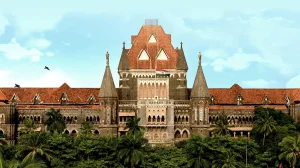
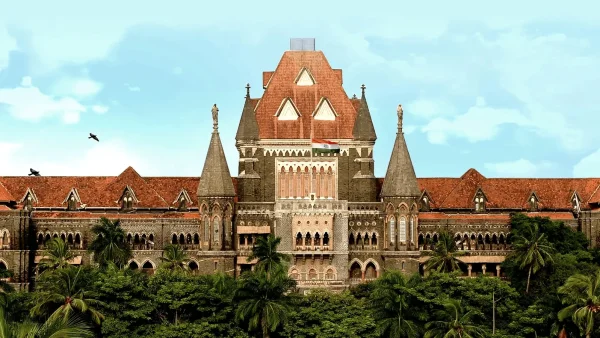
Justices Shree Chandrashekhar (the Chief Justice) and Shyam Chandak allowed appeals from Rajendra Chaudhary, Dhan Singh, Manohar Ram Singh Narwaria, and Lokesh Sharma. They cancelled a special court order from September 2025 that said the men should be charged under the Indian Penal Code and the Unlawful Activities Prevention Act.
Because of this, legal action against all four men is finished. The Justices had previously stopped the trial because they initially thought they had good reason to get involved, and they accepted the fact that the appeals were filed a bit late, because they were within the time allowed by the NIA (National Investigation Agency) Act.
How the case reached this point
On September 8th, 2006, four bombs went off in Malegaon, which is in the Nashik district. Three of these bombs exploded near Hamidia Masjid and Bada Kabrastan after Friday prayers, and the fourth at Mushawarat Chowk. Thirty-one people were killed, and 312 were injured.
The investigation changed hands between different agencies. The Maharashtra ATS (Anti-Terrorism Squad) first arrested nine Muslim men. The CBI (Central Bureau of Investigation) took over in relying on the ATS’s evidence in 2007. Later, the NIA changed the direction of the case, saying the bombing was planned by a right-wing extremist group and arresting the four men who appealed to the High Court. The nine people who were originally accused were released by a special court.
Contradictory theories and key statement
The NIA heavily depended on a statement Aseemanand gave in December 2010. Aseemanand was already in jail for other bombings at the time, and he said Sunil Joshi had claimed his group had done the Malegaon bombing. Later, Aseemanand said he had been forced into making that statement.
Courts in the Samjhauta Express, Mecca Masjid, and Ajmer Sharif cases didn’t believe Aseemanand’s confession and let the accused go. But the NIA still used it to add to the charges against the four men who appealed, Joshi (who is now dead), and others who are supposedly still hiding.
Why the appeals succeeded
The four men said there wasn’t anyone who saw them at the scene of the bombing and that there were inconsistencies in why other accused people were released. In January, the High Court said there was at least a reasonable chance they were right to intervene and paused the trial until the appeals were decided.
The appeals made these important points:
– There’s no one who actually saw the four men do anything wrong.
– The case relies on a confession that was taken back and has been dismissed in other cases.
– There are contradictions in why other accused people were released.
– The prosecution doesn’t have enough evidence.
What remains unresolved
There are other appeals related to how the charges were decided and the release of some of the other accused that are still waiting to be dealt with. The ATS’s attempt to reverse the 2016 release of the nine men originally arrested hasn’t been heard since 2019 and is still pending.
The four men were arrested in 2013 and were in jail for roughly six years, before being released on bail in 2019, after the court said they’d been in jail for too long without a trial. Now, with Wednesday’s ruling, they are officially no longer accused in the case.
Context from the 2008 Malegaon case
This ruling comes less than a year after a special NIA court found all seven people accused in the separate 2008 Malegaon blast case not guilty. The court said there wasn’t enough proof to convict them, including Sadhvi Pragya Singh Thakur and Lt Col Prasad Purohit.
What comes next
A full copy of the High Court’s detailed decision will be available later. With the charges against the last four accused now cancelled and the first nine already released, there is currently no one being prosecuted in the 2006 Malegaon case.
Whether anything from the investigation will be looked at again will be decided by the pending appeals. For the time being, the families of the victims and the town of Malegaon are still without anyone being convicted in a case that has lasted for nineteen years and involved three different investigation agencies.