Families who have gone through this say it will cost a minimum of 46 lakh rupees to as much as 70 lakh rupees, and the expense is due to coaching, the endless travel required to get the ‘norms’ needed for the title, and the fact that it is hard to get sponsors, so the parents end up paying.
What it really costs to reach GM
Mrinal Ghosh from Kolkata worked out the truth of this very quickly. Over fifteen years, his family spent approximately 46 lakh rupees on his son, Aronyak Ghosh’s, journey to becoming a grandmaster, and they put every rupee he won in prize money back into funding his progress.
He believes 46 lakh is likely the smallest amount anyone in India has spent to reach GM. Even that involved a lot of giving up things for his family, as they are middle class. And the spending doesn’t stop once a player is a GM, because getting to a higher level requires even more money.
Monomita Chakraborty, mother of Mayank Chakraborty (India’s 94th grandmaster), says parents should have at least 70 lakh rupees available from when their child starts playing chess to when they get the GM title; she says this is a fairly careful estimate.
Here’s a breakdown of how much families are dealing with:
– 46 lakh rupees over 15 years for Aronyak Ghosh
– Monomita says at least re70 lakh rupees to aim for GM
– In 2025, FM Aarav Sarbalia’s costs will be 25-30 lakh rupees
– 6 to 8 trips to Europe will cost 15 to 20 lakh rupees each year
– The pursuit of the GM title nearly doubles that travel bill
– Once a player is above 2600 in rating, they spend 4 to 5 lakh rupees each month
Why an allegedly cheap sport becomes expensive
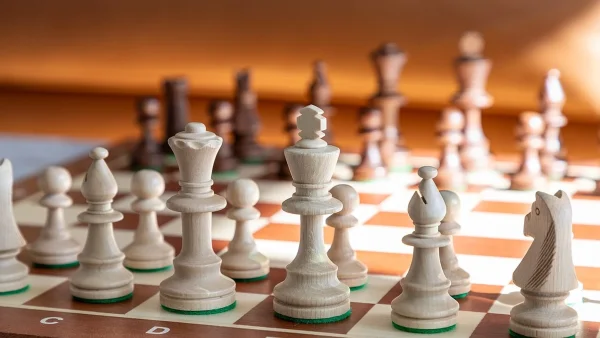
Chess might seem cheap – there’s no stadium to rent and not much equipment to buy. However, reaching GM level needs a team of experts, lots of long-distance travel, and paying to get into strong competitions, which quickly makes it a very expensive sport.
The first big expense is coaching. An hour with a grandmaster coach is around 10,000 to 20,000 rupees. And most coaches don’t just do one-off sessions, they make you sign up for a certain number of hours. The really good coaches are so busy that families often employ several of them just to get enough time with a coach.
Coaching, partners, and seconds add up
And it’s not just coaches. Players also pay other strong players to be ‘training partners’ so they can play good practice games. These partners also charge by the hour. Then there are ‘seconds’ – good players who help with preparing for the opening moves and the overall plan of the game. Some coaches or seconds also get a percentage of any prize money.
Mrinal estimates that players with a rating of over t2600 spend roughly 4 to 5 lakh rupees a month on chess. Things get a little easier after someone becomes a GM as some competition organizers will pay for their lodging, and sometimes even their flights. But before that, most of the costs fall to the parents.
Parents keep mentioning these as the main costs:
– Paying by the hour for a grandmaster to coach
– Employing strong players for practice games
– Using ‘seconds’ to help with opening strategy
– Constantly travelling to tournaments to get the needed ‘norms’.
The norm chase and the Europe bill
The amount of travel for the ‘norms’ is a big factor in how much the whole thing will cost. Sreekar Chennapragada says players now go to Europe about six to eight times each year to achieve the ratings needed for titles (called norms), and this costs 15 to 20 lakh rupees, including travel and a coach. To get a Grandmaster norm, that cost nearly doubles.
This frequent travelling to foreign tournaments has really increased in the last ten years. Around 2015 or 2016, players rated over 2100 began doing it regularly. And since COVID-19, even players with ratings of 1700 to 1800 are going overseas to improve their ratings and get norms, which means more people at all levels are having to travel.
Because they don’t have much money, some players like Mayank and Aronyak have played a lot of tournaments within India. However, families emphasize that Grandmaster norms are almost always earned in other countries. Recognizing this problem, organizations such as the Pravaha Foundation and Chola Chess have begun organizing Grandmaster norm events in India.
A year in a prodigy’s life
Looking at a promising player’s schedule shows how quickly costs increase. Yatin, the father of 12-year-old FIDE Master Aarav Sarbalia, thinks they spent 25 to 30 lakh rupees in 2025 just on trying to help Aarav achieve his goal. Aarav is currently two levels below Grandmaster.
They spent roughly four months of the last year playing in tournaments abroad. When sponsors didn’t materialize, the family started making videos for Instagram, with the hope of eventually earning money from it to help pay the growing costs of pursuing these norms.
The sponsorship gap and what comes next
That difficulty in getting money is a common complaint. Parents, including Mrinal and Monomita, say it’s still hard to find sponsors even when a player is clearly talented. Monomita also points out that a one-time payment from the Sports Authority of India for becoming an International Master or Grandmaster is no longer available.
Families deal with the expenses by being resourceful, and often very careful with their money. Monomita says they stay in very simple, shared apartments in Europe, frequently a long way from the center of the city, and when they can, they bring food from home. She also says costs go up even more in the Nordic countries.
Even after becoming Grandmasters, it’s still a difficult climb to the top. Mrinal explains that his son has a rating of about t2550, and getting to 2650 would be so expensive that he’s afraid to even think about it. That next step needs a better coach, stronger training, and more chances to play internationally.
Many people think chess is a cheap game, but looking at how a player progresses shows that isn’t true. At the highest levels, chess requires a lot of services: time with top players, consistent opportunities to play against strong opponents, and travelling around the world to get those norms. Most of the money goes into these things.
Once a player does get the Grandmaster title, there’s some financial help because tournament organizers often pay for accommodation and sometimes flights. But up to that point, the journey is almost completely funded by the parents who have to use their savings, any prize money their child wins, and make difficult decisions in order to support their child’s ambitions.
As Indian chess gets more and more new stars, the situation is clear. There’s a lot of promising young talent, but the expenses go up very quickly. Unless more companies start sponsoring players and more norm tournaments are held in India, families will continue to be responsible for the largest share of the costs of India’s success in chess.
What happens next will decide how many people can realistically aim to become Grandmasters. Having more Grandmaster norm tournaments in India would lower travel expenses. More reliable sponsorships could provide a stable base for a coach and support staff. For now, the truthful answer to the question of how much it costs is worrying.
Most families hoping for a Grandmaster title should expect to spend 70 lakh rupees or more. For a few, like the Ghosh family, it might be a little less. But for many, like Aarav’s family, they’ve already spent more than that before their child gets to be a Grandmaster. The ability to play chess well is increasing, and so are the bills.