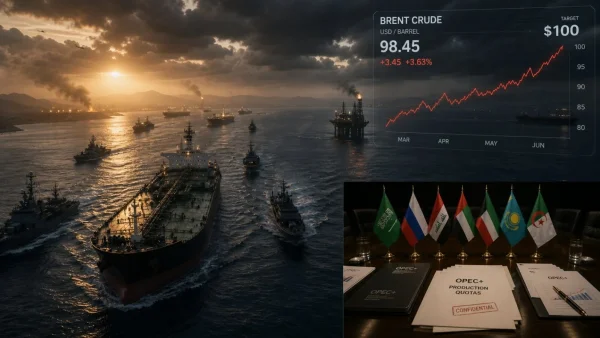
The producer alliance has left its October policy as is, even as the Strait of Hormuz is put under strain by the war in Iran and Brent crude creeps up on the $100 level. It was a clear signal that incremental changes are being put aside in favour of stability and an impending reset of production numbers.
Why OPEC+ held steady
There is little leverage in paper targets when the conflict is disrupting physical exports, the group maintains. New quotas must be settled before any further moves are made.
“OPEC+ has very limited power over the physical oil market at present,” noted Jorge Leon of Rystad Energy. “They can put new production targets on paper but there is no guarantee those barrels will be produced or make it to market.”
Leon put it down to a structural problem; disruptions have eroded the group’s ability to turn policy into supply. As such, the emphasis is off monthly fine-tuning and on the more significant 2027 debate.
Prices jump as supply risks rise
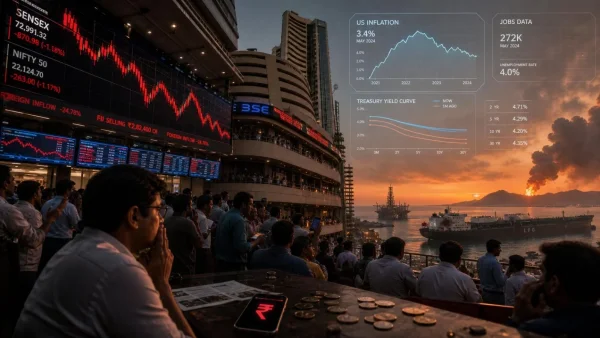
Nerves in the market were frayed by the resumption of military hostilities between the US and Iran in the seventh month of their dispute. Fears over what is transiting the Strait of Hormuz saw oil prices put on more than 7% in a week.
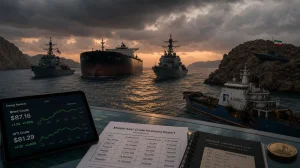
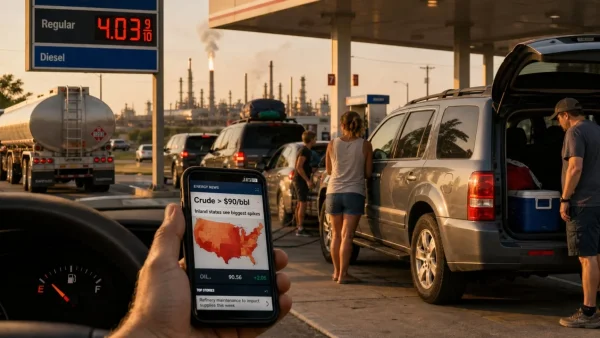
At Friday’s close, Brent crude futures were up 76 cents to $96.28 a barrel, a weekly gain of nearly 8%. West Texas Intermediate posted an 18 cent increase to settle at $91.48, up almost 10% for the week, while US diesel hit record levels.
Inside the October call
On Sunday the seven core members of OPEC+ got together: Saudi Arabia, Russia, Iraq, Kuwait, Algeria, Kazakhstan and Oman. They are the ones that have been calling the shots on monthly output of late. The United Arab Emirates was part of it until its departure from OPEC in May. The next session is set for October 4th.
This decision follows the September production boost, which wrapped up a staggered reversal of the 1.65 million-barrel-per-day cut from 2023. Yet the war has seen the alliance producing well short of its marks, limiting any quick addition of supply.
Officials were at pains to point out that one cannot take fresh steps on output without first agreeing on new quota baselines. It is a matter of making sure 2027 allocations are based on what each member can actually do, not on what they might like to do.
The road to 2027 quotas
For the majority of the 21-country bloc, another tranche of cuts will be in effect through to the end of 2026. OPEC+ intends to review capacity and establish 2027 baselines as the basis for individual quotas before those are lifted.
One expects the discussion on baselines later in 2026; some sources say the group may hold off on more increases in the fourth quarter. The statement issued on Sunday did not go beyond October, a wait-and-see approach for the near term.
Ahead of the next meeting, these are the markers to watch:
– Oil moving through the Strait of Hormuz
– The risk of $100 for Brent, currently at $96.28
– How the quota baseline review is faring
– The discrepancy between what is targeted and what is produced
What it means now
A steady hand preserves credibility for producers in a volatile physical market. Importers face the prospect of higher costs if the situation worsens, given the tight balances and disrupted routes.
When the seven countries sit down on October 4th they will still have three open questions: whether flows have calmed, how fast barrels can get to buyers and when to move on from crisis mode to the 2027 quota structure. For the time being, with Brent at $96.28, the pressure on prices is upward.