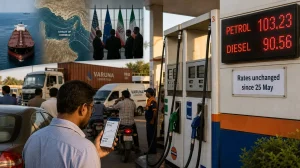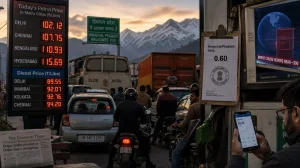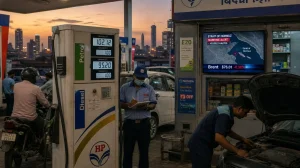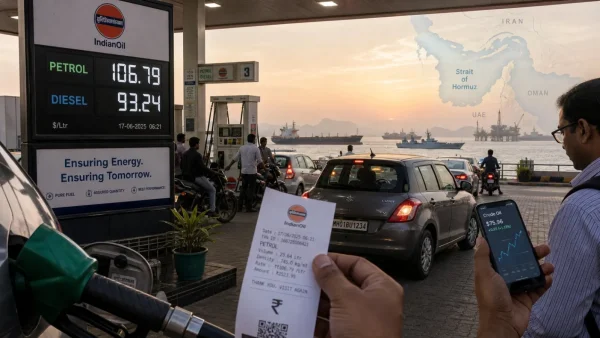
For motorists in India, pump prices were steady when the day began on 23rd August, even with Brent crude on the up and tensions in the Strait of Hormuz running high. One need only look at Delhi, Mumbai or Bengaluru to see that petrol and diesel have been largely untouched; it is an indication the OMCs are putting price stability first in these volatile times.
What changed at the pump on 23rd August
At the 6:00 AM revision there was little movement in the major centres. In Delhi, for instance, petrol is Rs 102.12 and diesel Rs 95.20. The figures in Mumbai were Rs 111.31 for petrol and Rs 97.97 for diesel. Kolkata came in at Rs 113.51 and Rs 99.82.
Chennai had petrol at Rs 107.78 and diesel at Rs 99.56, while in Bengaluru one would find petrol at Rs 110.82 and diesel at Rs 98.77. Hyderabad is pricier at Rs 115.69 and Rs 103.82, which is in line with local costs and state levies.
Then there are the other standouts: Jaipur at Rs 112.66 (petrol) and Rs 97.78 (diesel), and Thiruvananthapuram at Rs 115.49 and Rs 104.40. Chandigarh is lower still at Rs 101.54 and Rs 89.47. These are set by a dynamic formula; the last time there was a significant change across the country was 25th May.
Global crude jumps but OMCs cushion volatility
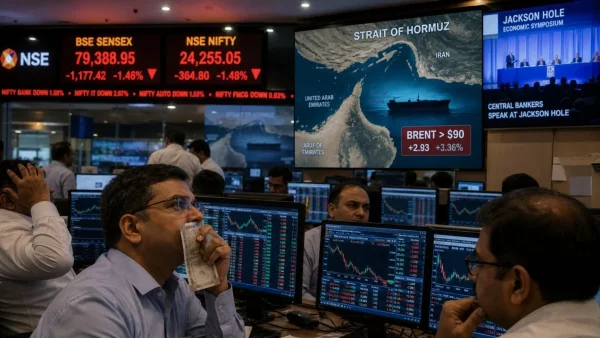
Brent crude put in a 6.39% gain over the week, closing Friday at 94.39 dollars a barrel, a 61 cent or 0.65% rise. US crude was up 5.66 per cent, with West Texas Intermediate finishing at 87.06 dollars a barrel, 23 cents higher.
Yet the state-owned retailers have seen fit to hold the line on retail prices, insulating the consumer from any whiplash caused by the West Asia conflict. It is a strategy born of a desire to manage inflation at home, regardless of what the crude benchmarks say about supply risk.
Hormuz flashpoint: dialogue push vs supply assurances
With talks at an impasse, Iranian President Masoud Pezeshkian has appealed for a logical, dialogued solution, Al Jazeera reports via IRNA. He made clear the Islamic republic has not given ground on any part of its Memorandum of Understanding.
Mohsen Rezaei of the Supreme National Security Council was more blunt, warning off neighbours from siding with the US. “The Hormuz is closed,” he said, adding it will not be so until Washington amends its behaviour and honours its word.
US Energy Secretary Chris Wright took to X to make his point on the same day, touting the work of the US Navy in keeping the Persian Gulf open. He noted the seven-day average through the Strait is now in excess of 8 million barrels, and with pipelines factored in, some 20 million barrels are making their way out of the region.
India widens supply options with Mauritius deal
In order to fortify supply security, India has entered into a five-year pact with Indian Oil Corporation to cover all of Mauritius’ import needs for petrol, diesel and aviation turbine fuel. A timely measure given the disruptions stemming from West Asia.
Petroleum Minister Hardeep Singh Puri put his signature to the agreement during an official trip to Mauritius on 20th and 21st August. An MoU between the two governments will see further cooperation in the oil and gas sector, from training and capacity building to biofuels.
Why prices differ, and what to watch next
One finds variation in retail prices from state to state owing to the way central and state taxes are applied to the cost of supply. Local demand and transportation factors come into play as well.
The rupee-dollar rate is of course a consideration. As long as India is importing the bulk of its crude, a softening of the rupee will put pressure on costs, something the OMCs may only be able to absorb for so long.
For those following the city-wise numbers today:
– Delhi: Rs 102.12 / Rs 95.20
– Mumbai: Rs 111.31 / Rs 97.97
– Kolkata: Rs 113.51 / Rs 99.82
– Bengaluru: Rs 110.82 / Rs 98.77
– Hyderabad: Rs 115.69 / Rs 103.82
India’s position is evident as the week draws to a close amid crude gains and mixed messages from the Hormuz: diversify the supply and keep domestic pricing calm. From here, it is a matter of watching the rupee, the momentum in crude and whether the OMCs deviate from the course set on 25th May.