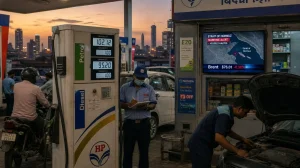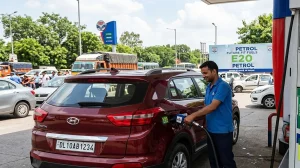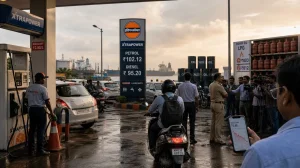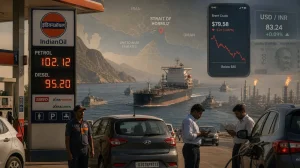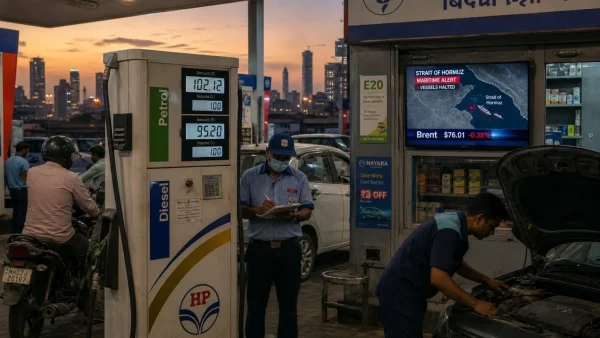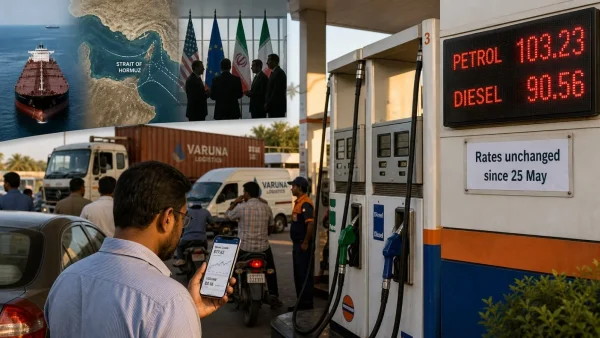
On 11 July, the price tag at the pump was the same as before, all over the country. This comes after a lull in crude prices following some new US-Iran dialogue that made it seem as though things in the Strait of Hormuz were de-escalating. For those in the logistics business or the daily driver, the message is one of consistency while the rest of the world hovers near where it was last week.
Prices hold as crude cools off
The numbers are in line with what the public sector companies put in place on 25 May – a hike of Rs2.61 for a litre of petrol and Rs2.71 for diesel. Nothing has been done to alter that since, a clear sign of an intent to put a damper on volatility no matter what is happening overseas.
There was a softening in the mood around crude as diplomacy made a comeback. You can see it in the Brent figures: $75.99 a barrel, a 0.41% dip, or $76.01, down 0.38%. Traffic through the Hormuz was light on Friday, but the atmosphere was better as the talks went on, after a near-standoff on 9 July.
Under the surface, however, it is still a tense situation. “The June deal to stop the fighting is over,” was how President Donald Trump put it, and the technical side of things is still being worked out. A team from Qatar has made its way to Iran for the next set of conversations, so there is some optimism left for normalising the flow.
City-by-city snapshot for 11 July
You will find a good deal of variance in the top markets. New Delhi is at Rs102.12 for petrol and Rs95.20 for diesel. Over in Mumbai, it is a bit steeper: Rs111.21 for the former and Rs97.83 for the latter, putting the city well over the Rs110 mark for petrol.
Kolkata and Chennai have been holding their ground. In Kolkata, it is Rs113.51 for petrol and Rs99.82 for diesel; in Chennai, you are looking at Rs107.76 and Rs99.55. Bengaluru is no different, with a premium showing of Rs111.68 for petrol and Rs99.56 for diesel in these major southern and eastern hubs.
NCR and northern-eastern trends
In and around the capital, Gurugram has petrol at Rs102.97 and diesel at Rs95.64. Noida is a shade lower at Rs101.96 and Rs95.44. Then there is Chandigarh, where the diesel is an anomaly at Rs89.47 and petrol at Rs101.54, a case of local tax policy at work.
Jaipur is at Rs112.69 for petrol and Rs97.78 for diesel. Lucknow comes in at Rs101.86 and Rs95.36. Patna is on the higher side, as is its way, with Rs113.37 for petrol and Rs99.36 for diesel, putting it ahead of a few of its neighbours.
South and east: premium persists
It is still more of an investment for fuel in some pockets of the south. Hyderabad is at Rs115.69 for petrol and Rs103.82 for diesel. Thiruvananthapuram is in a similar vein with Rs115.49 and a diesel figure of Rs104.40, well into the triple digits.
Then there is Bhubaneswar, where the price for a litre of petrol has put in at Rs108.97 and diesel at Rs100.68.
The trend in these cities is easy to spot: you will find petrol in excess of Rs110 in a number of big markets, though diesel is mostly under the Rs100 line, with Hyderabad, Thiruvananthapuram and Bhubaneswar being the exceptions.
OMCs and the private sector
State-owned OMCs have left pump rates as they are since 25 May, even as international prices have come down on better geopolitical news. It is a way of shielding the consumer from any whiplash while they keep an eye on crude, the currency and their own stockpiles.
There is some movement from the private side, too. Last week, Nayara Energy, with Rosneft behind it, cut its prices by Rs5 on petrol and Rs3 on diesel at close to 7,000 of its outlets. The company does not have the same footprint as the public sector giants, but that kind of price differentiation can put some pressure on local rivals in certain areas.
It is not just about the numbers; policy has a role. Since India is a net importer of crude, the rupee-dollar rate can make or break the impact of what is happening in global markets. A small move in forex can be enough to alter the calculus for a price revision.
Ethanol programme: the ministry’s view
The Petroleum Ministry has been at pains to present the ethanol blending programme as a well-considered, step-by-step process. According to the ministry, this is no new idea: pilots were in the works in 2001, a formal plan was put forward in 2004 and E5 was out in several states by 2006.
In the early days, with production tied to sugarcane, capacity was capped at roughly 400 crore litres a year, which made higher blending hard to justify. The National Policy on Biofuels of May 2018 was a change of course, one that has allowed for more feedstock and a bigger operation.
The ministry sees this as a matter of long-term resilience – to wean off imports, blunt price shocks and back the farm economy. It may not be as apparent to the buyer as a lower price tag, but the intent is there.
What to look for
For the moment, the risk to fuel prices is tied to the situation at sea and how talks are going. Washington is after a public word that ship traffic in Hormuz is back to normal. Traders will likely hold on to a risk premium until they see that.
If shipping lanes open up, the softness in crude could give OMCs some leeway to make a move. Any new trouble would be a test of their nerve. But changes will be based on where the market is heading, not on a single day’s action.
Key indicators in the near term:
– Vessel movements in the Strait of Hormuz
– How Brent is settling and the day-to-day swings
– The rupee against the dollar
– OMC stock and margins
– How the private pumps are reacting
The story at the forecourt for now is one of stasis. Petrol and diesel are where they were on 25 May and crude is in the mid-$70s. Should the diplomatic efforts bear fruit and shipping recovers, that quiet may well be reflected in the pricing at home.