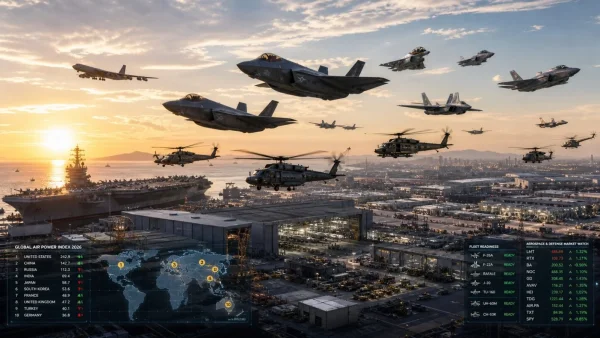
For those in the defence and aerospace sector, the message for 2026 is unambiguous: the edge in air power goes to the ones with modern hardware and the industry to back it up, not simply the largest stockpiles. You can see it in the new WDMMA numbers, which put the United States in four of the top five positions and have India in sixth, just ahead of China.
The TruVal Rating, the standard by which this list is made, is all about quality and balance, not head counts. We are talking about a directory that covers 129 air services in 103 countries and some 48,082 aircraft, with models that get a once-over every year. It is a fair way to tell where the capital and the means of production are truly sitting.
What to keep in mind for the 2026 top tier
Look at the top of the pack and you will see a pattern, but with some nuance. The US is in control of the major segments, yet if you look at the individual services, there is a better read on where the contracts and the bottlenecks are heading in the coming years.
These days, the procurement side of things is as much of a leading indicator as anything for the suppliers. The order books for F-35s, the latest in heavy-lift and strategic bombers, and trainers will be at the heart of the next round of spending. Then there is the matter of readiness; the ranking’s model shows how support and maintenance can make or break the availability of several hundred aircraft in the field.
Some of the key signals for the decade to come:
– A boost in domestic output for better ratings and resilience
– Large pipelines to close out capability shortfalls
– How readiness affects the combat power on hand
– Why a well-rounded fleet is worth more than the sum of its parts
United States: the full picture and a top-five stranglehold
You cannot put the USAF in any comparison without it being the reference point. Its 5,004 aircraft and a TVR of 242.9 set the tone. WDMMA has 2,045 of them for combat and 1,325 for training. On the horizon is 2,227 in future buys, with 1,454 F-35As and 351 T-7As making up the bulk of it.
The 1,610 fighters are the mainstay, and 762 F-16Cs, 302 F-35As, 218 F-15Es and 183 F-22As are at the centre of it. For tankers, there are 453, 376 of them KC-135R/T and 77 KC-46As. Run the numbers at 70 per cent readiness and WDMMA has 3,503 in play; at 80 per cent, 4,003.
The Navy’s carrier wing is where the US extends its influence, with a different make-up. The 2,504 aircraft under the Navy’s wing give it a TVR of 142.4. Of the 451 fighters, 421 are F/A-18E/F Super Hornets and only 30 are F-35Cs. The plan is to add 544 more, 204 of them F-35C and 30 P-8A Poseidons.
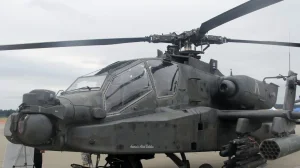
It is not just about size. The Army, at number four, is defined by its rotary assets. With 4,333 aircraft and a TVR of 112.6, helicopters are 4,071 of them. The UH-60L/M Black Hawk is the most common at 2,299, followed by 824 AH-64D/E Apaches and 449 CH-47D/F Chinooks. The 226 on order are for the most part UH-60L/Ms.
Rounding out the US’s top-five showing is the Marine Corps. Their 1,211 aircraft and 85.3 TVR are put to work with 713 helicopters and tiltrotors, 277 MV-22 Ospreys and 141 CH-53E among them. The pipeline is 738 deep, with 346 F-35B/C and 198 CH-53K in the lead.
In Asia: India moves past China, Japan holds its ground
The IAF is in at six, with 1,716 aircraft and a 69.4 TVR. It is a steady inventory of 542 for combat, 800 in general support and 374 to train with.
With 349 in the pipeline, future procurement is a given, and it is put where it counts: on home-grown programmes. That means 73 Tejas Mk.1 and 70 HTT-40s are on the way.
India’s fighter inventory is still built around the 259 Su-30MKI heavyweights. The 28 EH and 8 DH Rafale, along with 31 Tejas Mk.1, round out the complement. On the rotary side, there are 498 in the mix, 222 of them Mi-17V-5 and 95 HAL Dhruv. When you run the numbers at 70 percent readiness, 1,201 aircraft are in play; at 80 percent, that figure is 1,373.
Then there is China, sitting at number seven with a TVR of 63.8 and a raw total of 3,733 for the PLAAF. Fighters are the bulk of it at 1,975, 588 J-10 and 210 J-20 to be exact. There are 209 H-6 bombers, the only ones of their kind in the fleet. Airlift is handled by 270 transports, 50 Y-20 and 20 IL-76MD among them, while tankers are a sparse 26. WDMMA has nothing on the books for future buys in this entry. Readiness puts 2,613 up and running at 70 percent, or 2,986 at 80.
Japan is in the eighth spot, 58.1 TVR and 756 aircraft. The 328 trainers in the system are a mark of a force that wants to be ready. You have 253 fighters – 155 F-15J, 62 F-2A, 36 F-35A/B – and 186 more coming down the line, 134 of them F-35A. The 44 transports and 8 tankers are as they should be. An investor would see in Japan’s order book a measured move into the fifth generation, not a tear-down of the existing fleet. Availability is 529 at 70 percent, 605 at 80.
Technology concentration in smaller forces
Israel is ninth, and it is a case of how top-tier hardware can make a small inventory count. The IAF has 605 aircraft for a 56.3 TVR. Of the 272 fighters, 175 are F-16s and 58 are F-15s. Upcoming orders cover 132, from 50 F-15IA to 36 F-35I and 8 KC-46. Helos are 127 (49 UH-60A/L, 22 CH-53) and there are 153 trainers. With 424 available at 70 percent and 484 at 80, the new crop of fighters and tankers will be a step up in what the force can do.
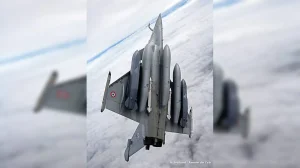
France makes the top ten by being well-structured rather than large. The Air and Space Force has 511 in the field for a 55.3 TVR. The 192 fighters are a good bet, 100 of them Rafale B/C and 66 Mirage 2000D. There are 97 transports (24 A400M, 14 C-130H), 17 tankers (12 A330 MRTT Phenix) and 126 trainers. Another 198 are in the works, 117 Rafale and 40 H160M Guepard. At 70 percent, 358 are on hand; 409 at 80.
Russia’s mass versus modernization
At three, Russia has 3,677 aircraft and a 114.2 TVR. 1,320 are for combat, 2,095 for support. Sustainment is key here: 2,574 are available at 70 percent, 2,942 at 80.
The 1,008 fighters don’t tell the whole story. The Su-57 is only 25 of them. The real punch comes from 273 Su-24M/MR and 163 Su-34M. Bombers come to 120, a mix of Tu-22, Tu-95 and 15 Tu-160M. Tankers are few and far between at 20 IL-78. But the 1,551 helicopters are the big piece, 788 Mi-8MTPR-1 and 137 Ka-52 and 112 Mi-28A/N/NM for the fight. With 395 airframes in the pipeline for future procurement, there is a clear intent to put new life into strike and attack inventories. The numbers tell the story: 76 Su-57s, 50 Tu-160s and 105 Mi-28s are among the key pieces of that plan.
The 2026 top 10 at a glance
Here is a rundown of the services that make up the 2026 upper echelon, in alphabetical order with their WDMMA figures:
– Chinese Air Force: 3,733 units (TVR 63.8)
– French Air and Space Force: 511 (TVR 55.3)
– Indian Air Force: 1,716 (TVR 69.4)
– Israeli Air Force: 605 (TVR 56.3)
– Japan Air Self-Defense Force: 756 (TVR 58.1)
– Russian Air Force: 3,677 (TVR 114.2)
– United States Air Force: 5,004 (TVR 242.9)
– United States Army: 4,333 (TVR 112.6)
– United States Marine Corps: 1,211 (TVR 85.3)
– United States Navy: 2,504 (TVR 142.4)
One can see from this why the U.S. has four of the top five slots. It is an industrial ecosystem that puts together everything from stealth fighters and strategic bombers to carrier aviation and the largest rotary-wing force on the planet.
In Asia the picture is different. India’s sixth-place finish over China is a testament to what WDMMA makes of a well-balanced fleet, homegrown industry and what is on order. Then you have Japan in eighth, where a solid training infrastructure and a steady hand with fifth-gen integration pay off.
Over in Europe and the Middle East, France and Israel are case studies in how to use modern fighters, tankers and the like to put a modest-sized force in the running. As long as deliveries do not slip, they should be able to hold their ground.
But it is what comes next that is of consequence. WDMMA is built to recognize where the momentum and the means are. In that sense, the order books for F-35s, Rafales, CH-53Ks, A330 MRTTs and T-7A trainers are as good as any market indicator.
Readiness is the other variable. The models will show that a 10-point move in serviceability is worth a few fighter wings. For those in the policy or investment side of things, the state of spares and depot throughput is a matter of capability, not just an accounting exercise.
We have left drones out of this for the most part, given the way the reporting is done. It is a limitation, but it does not change the overall view. The 2026 powerhouses are the ones with the right platforms, the industrial support to back them up and a plan to get them in the air.
Where those three come together is where the edge is. When they don’t, the risk is plain to see.