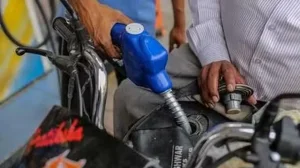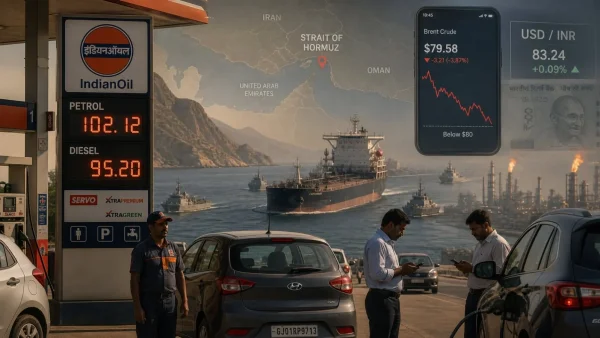
When drivers in India turned on their engines on 22 June, they found the same old numbers. It’s been like that for just under a month, a respite from the kind of increases we had in May. In Delhi, that means 102.12 for a litre of petrol and 95.20 for diesel, no matter what the market is making of the shipping risks in West Asia or the ebb and flow of crude.
What changed at the pump
The OMCs put the brakes on any new price changes on 22 June, which is a holdover from the last time they made an adjustment on 25 May. Back then, they put 2.61 on the tab for petrol and 2.71 for diesel – the fourth time around in as many weeks to make up for some of the costs coming in from abroad.
If you look at the whole stretch from 15 May, the total has come to nearly 7.5 per litre. The industry puts it at about 7.8% more for petrol and 8.6% for diesel, so we are looking at the steepest rates we’ve had since May 2022.
There is some strategy to this. The OMCs have been quick to raise prices to even out the books, but now they are in a holding pattern. With the pressure from crude and other variables cooling off a bit from where they were, they have decided to let things be.
Where prices stand in key cities
It is still pricey in a number of big cities; in some you will see petrol over 110. Diesel is for the most part under 100, though not in all of the south. You can see how the top centres are doing here:
– Delhi: Petrol 102.12, Diesel 95.20
– Mumbai: Petrol 111.21, Diesel 97.83
– Kolkata: Petrol 113.51, Diesel 99.82
– Chennai: Petrol 107.87, Diesel 99.65
– Bengaluru: Petrol 110.89, Diesel 98.80
– Hyderabad: Petrol 115.69, Diesel 103.82
In places like Bengaluru, Hyderabad and Kolkata, you are still paying over 110 for a litre of petrol. For diesel, 100 is the ceiling in most spots, with the exception of Hyderabad at 103.82. And in Thiruvananthapuram, it is 115.49 for petrol and 104.40 for diesel.
The reason for the disparity is simple: you have central and state taxes to factor in, along with local transport and the usual give and take of supply and demand. That is why two towns next to each other can have quite a different story at the pump on any given day.
Why the pause matters now
We are seeing this lull while there is still plenty of risk in the West Asian supply lanes. Take the Strait of Hormuz, for instance – it is a must-have for roughly 20% of the world’s oil and gas. You have a disruption in the region and it constricts the flow, putting upward pressure on global barrels. Eventually, that makes its way to the Indian pump with some delay.
India is no stranger to this kind of exposure. Because of the war, 40% of our crude, 65% of our natural gas and 90% of the LPG we get from the Gulf has been put in jeopardy. Put that with strong worldwide demand and you can see what’s been behind the recent round of price changes at home.
For the most part, OMCs set their retail numbers by looking at what’s happening with international products and the rupee. A soft rupee means more expensive landed crude, and when there’s noise on the global side, it dictates how and when we pass those costs on.
Crude swings and diplomacy
We are seeing some let-up in the tension. Word is that the US and Iran are making headway in peace talks, so oil has given back some of its value. Brent has gone under $80, erasing a 2.2% move, and WTI is in the $76 neighbourhood.
Should a deal be done and the Strait of Hormuz is wide open again, you could have 80 million barrels of crude come to market. Add in a pullback in buying from China and you have enough to put refiners in a position where they don’t have to push as hard on prices.
Government signals and supply lines
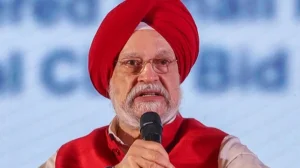
Union Oil Minister Hardeep Singh Puri has been in a good mood about it; he’s put out word that we should see fuel go down in the months ahead and has vouched for having ‘enough in the tank’ for now. He also points to more coming in from the US and Canada to make up for any shortfalls.
But he was quick to add that if the war widens, all bets are off. As for moving product, the shipping minister says three of our own tankers with over 860,000 metric tons of oil have made it through the Strait without a hitch.
The government’s line to the consumer is that we are focused on keeping the supply chain and inventories in order, but the price tag is still tied to the market. It’s a flexible approach.
What to watch next
If you’re in the industry, you’re watching the big three: crude, the currency and local taxes. We haven’t had a change in retail since 25 May, but a firm move in either direction on the rupee or in the barrel could end the quiet.
In the weeks to come, keep an eye on:
– Where the US-Iran dialogue is heading
– Whether Brent can stay under $80
– The ebb and flow of the rupee
– Any rethinking of state taxes
– How OMCs and refiners are pricing in
And don’t forget that you will always see a spread between cities as long as the states tax differently. That’s what you’ll find in Delhi or Chandigarh versus Kolkata or Hyderabad, even when the rest of the country is flat.
Right now, it’s simple math. After four increases in May, capping off on the 25th, we’ve had a month of no change. It gives us time for the supply side to work with the demand side. If the world moves, India will. If it doesn’t, then this calm may not last.