While the US is letting Nvidia sell the H200s into China, Beijing is getting ready to monitor exactly what Nvidia sells within its own country. This shows that China does want these advanced AI chips, but only in a way that helps China develop its own technology quickly and protects important areas of the economy.
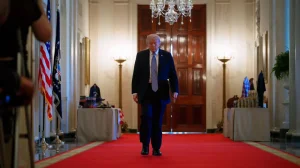
Donald Trump said the US will allow Nvidia to send H200 processors to specific, approved customers in China, with security measures in place. He was clear that Nvidia’s newest, most powerful Blackwell chips are not included in this, and he thinks other American chip companies might be able to sell some of their products to China soon.
The H200 chip is in a tricky position. It’s Nvidia’s second best AI chip, better than older chips used in data centers and commonly used for both training and running AI (inference), but not as good as the Blackwell. Many Chinese companies will find the H200 to be a significant improvement, and it’s likely to be easier to get approval for than more advanced chips.
China isn’t simply allowing open access. Officials are discussing ways to limit who can get them, to encourage people to use chips made in China instead, and to keep track of what the chips are being used for. The National Development and Reform Commission and the Ministry of Industry and Information Technology are in charge of this.
One idea is to have a system where anyone wanting to buy an H200 chip must apply, explain why they can’t use a chip from a Chinese company and say what they will use the H200 for. This would allow China to control purchases without completely banning the H200.
They are also considering even more careful checks of chips coming into the country to stop them being diverted (sent elsewhere) or incorrectly described. Another plan is to give data centers that use Chinese-made chips a break on their energy bills, making imported chips more expensive overall.
They are also thinking of stopping government departments, state-owned companies and research labs that get public money from buying H200 systems, and instead making them use Chinese chips and software.
Despite these restrictions, there’s a lot of need for these chips. Internet companies, cloud computing companies, top universities, and labs funded by the government have all been trying to get computing power. Institutions connected to the military and cybersecurity are also looking for a reliable supply of this power as AI is used for more and more research and in projects that have both civilian and military uses.
Even before this change in policy, H200s were getting into China through unofficial routes and by renting them for a short period of time. AI labs and universities have said they have small clusters of H200s to train their models, and there have been offers for renting computing power equivalent to H200s to get around the import restrictions and not having enough stock.
Chinese data center companies are planning large computing centers that will use both Chinese and imported chips. Recent requests for proposals show plans for racks holding hundreds of H200s along with Nvidia chips for normal consumers and servers using Huawei’s Ascend t910C. Plans in Jiangsu, Xinjiang, and Hubei show projects with hundreds of graphics cards being installed in the next few months.
Nvidia could make billions of dollars from even these limited sales to China, even without including the Blackwell. They already have a huge number of orders for their best chips around the world, and China has one of the largest demands for AI. How quickly they can get the chips to customers, how much they will cost, and when they will be delivered are the most important things for Nvidia in the short term.
There’s still a high risk of not following the rules. US export licenses can have restrictions on who the end user is, what they will do with the chips, tracking the serial numbers of the chips, and stopping them being sold on. China’s permission system will add another step, increasing the cost for companies that resell and put together systems. Any secondary sales or renting of computing power will be looked at very carefully.
China’s plans are to give its own chipmakers time to catch up while still letting AI projects continue. The chips made in China are improving and the software that works with them is becoming more developed, but for training very large models Nvidia’s hardware and CUDA tools are still the best. The government will use financial incentives and rules about what it buys to reduce this difference.
The political situation could change. If the US government believes chips are being leaked to people or organizations that are restricted, or being used by the military, then the restrictions could become tighter. However, if the security measures work and the economy in China benefits, then they might continue to allow some sales of these mid-range chips, but with much more monitoring.
Important things to observe will be the final rules China makes about permissions, any specific bans for certain industries, how carefully customs officials check imports, and how they monitor the renting of computing power. In the US, look at the conditions of the licenses, lists of who the chips can be sold to, and whether there are limits or performance requirements on future chips.
In short, China wants to have very strict control over the H200s it imports while also building its own AI chip industry. Nvidia gets access to a very important market, but every chip that is sent will be monitored, recorded, and compared to China’s goals for its own technology, on both sides of the Pacific Ocean.