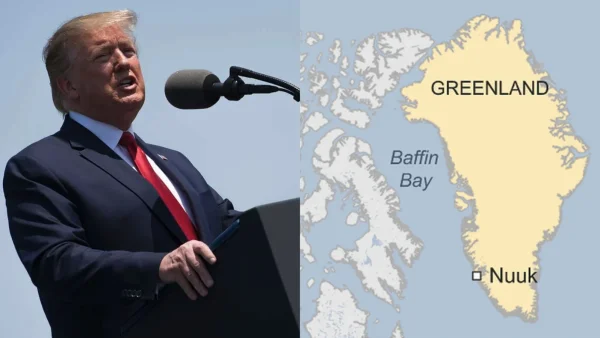
The White House stated that President Trump and his people who advise him on security matters are really talking about a possible purchase of Greenland – which once again began a long discussion about strategy for the Arctic, its resources, and how we get along with our allies. Karoline Leavitt, the press secretary, verified that discussions were happening, but made clear that diplomacy was what the administration would rather do.
The White House on why security matters, and what choices are available
Leavitt explained that Greenland would be a strategic benefit, and would help to prevent the increasing activity of Russia and China in the Arctic. She said the president thinks that the U.S. having control would make the country safer; she noted that where the island is, and what resources it has, are the main things making it interesting.
When people asked about reports that the president would not rule out using the military, Leavitt answered that "all options are always open to President Trump.” But she also said that the president’s first choice “has always been diplomacy”, showing that the administration intends to talk before doing anything forceful.
Diplomacy with Denmark, and what this means for NATO
Greenland is a territory of Denmark which governs itself, and its status is linked to NATO promises. Secretary of State Marco Rubio said he was planning to meet Danish people in government next week, in response to Denmark asking for talks after the White House repeated its interest in the island.
People who study these things say that any attempt to get Greenland would bring up hard legal, diplomatic and political questions. Purchasing land from an ally has not happened in recent times, and could damage NATO teamwork if it isn’t done openly and with respect.
Why Greenland is important: resources and the Arctic
Trump has mentioned Greenland’s mineral wealth and its Arctic location as reasons for the U.S. being interested. The Arctic is changing world politics: ice melting opens new routes for ships, and access to oil and gas and minerals, which draws more attention from Moscow and Beijing.
Having control of, or a stronger presence in, Greenland could let the United States watch Arctic approaches more closely, and put in place buildings and equipment for defense and watching what goes on. Those benefits would have to be balanced against the diplomatic costs to Denmark and other countries in Europe.
What the administration is saying to the public
The president once more said he supported NATO in a message on Truth Social, saying the United States remains the main support of the alliance. This public comfort came while his administration continued to show it was willing to look at strong ways to get a strategic advantage in the far north.
Leavitt said she hadn’t heard the president question Denmark’s legal right to Greenland. However, the administration’s style – putting together talk of taking over with references to military choices – has worried some allies and caused requests for talks right away.
What is practical, and what happens next
A purchase would need complex talks between two countries, legal arrangements within Denmark’s system of laws, and the views of the people of Greenland, given its self-governing status. The planned meeting between the U.S. secretary of state and Danish officials will likely be about making intentions clear, and reducing the chance of misunderstanding.
At the moment, what is known publicly is that the White House is looking at strategic questions about the Arctic while trying to assure partners that the U.S. still supports collective defense. How these talks go could change Arctic diplomacy and test alliances in a region of increasing strategic competition.
In short
The administration has put Greenland firmly on its list of things to do, citing Arctic security and resource interests. Diplomacy is what is officially said to be the first choice, but the constant reminder that “all options are on the table” has made this into a diplomatic problem that officials will need to manage with care in the coming weeks.