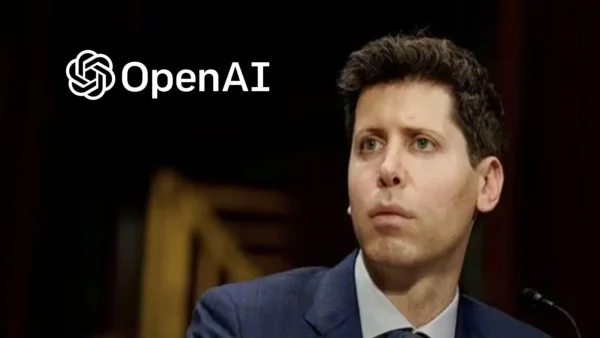
Sam Altman is an OpenAI CEO who attests that these model AIs with high proficiency and usage them widely are the same ones that create a dangerous situation. He, therefore, is the person who posts a high-profile job vacancy along with such a warning and a high salary of $555,000 to confront the growing risk scenario.
Thus, the story is about an organization that is shaping up for an unlikely or unexpected situation that is on the way to happen. The only thing left to be done is to evaluate and cope with the future better through special [AIs;] Frontier AI skills by the new hire and the help of domain experts in cybersecurity, biosecurity, and machine learning self-improving schemes, at the same time.
In late 2022, the launch of ChatGPT was mainly about its being useful and able to reach millions. It became possible for the models to think, program, and communicate almost exactly as real people would. The improvement in this matter leads to an increase in the possible harm factors since these range from disclosing crucial security weaknesses to affecting users’ behavior and thus changing theoretical threats to practical ones.
Safety departments seem to be going out of existence.
At OpenAI, the safety defense system inside has been having a continuous setback. Units created to manage very critical risks were finally changed or disappeared which in turn made the organization miss more than one person fill-in in key moments. This situation gives rise to doubts as to whether the governance and the processes are able to keep pace with the imminently expanding product development and commercial forces.
Legal challenges highlight issues with psychological health
However, OpenAI states that the company is working to enhance the program’s capability to recognize and react to distress signals. Nevertheless, the legal actions emphasize actual effects experienced in the world, for which stronger measures of mitigation and responsibility are required.
The cybersecurity and dual-use dilemma
One of the key points of the matter in policy is the dual use: the same model advancements that are beneficial to the defenders may also be applied for the wrongdoers’ purposes. Altman, for his part, was quite open about the need ‘to empower cybersecurity defenders with state-of-the-art capabilities all the while ensuring that these capabilities are not accessible t attackers. This very trade-off may bring about a more complex task in the making of release decisions and testing regimes.
Biosecurity and self-improving models
Not only should preparedness give thought to biosecurity risks, but also the possibility of an improvement in the models and their continuous development. These particular issue has no relation to any kind of previous situation, so qualitatively the oversight, evaluation and cross-sector coordination are even more difficult. The new leader will be required to present technical adversarial scenario frameworks in the future.
A glaring discrepancy within the development process
As more OpenAI gears up its manufacturing and marketing operations, so do the dangers of the extremes of the risks posed. The company’s market capitalization and recent sources of fresh capital portray investor´s enthusiasm for the technology, although, opponents are prompted to question the cumulative technological risk factor in the process? Such ambivalence becomes the anchor of the company’s internal and external discussions.
Policy and governance implications
The preparedness of Altman has served as a basis for initiating the process of making AI safety more operational within and among companies in different regions. Apart from this, for the proper safety management of the highly-impactful systems, the regulatory bodies, researchers, industry actors need to have more explicit standards for such as testing, incident reporting, and cross-border cooperation which will lead to a management of responsible high-impact systems within the company.
The things the Chief of Preparedness must direct apply
More than just technical know-how, the position necessitates the mastery of policy, crisis, and ethics, all of which are not of little importance. The workaround will mean making the model par with the security measures that can be applied universally, creating the guides for the use of the technologies in a wrong manner, and unifying the views coming from cybersecurity, public health, and human-centered design.
The Purpose of Honesty and Responsibility at Work
Advanced AI technology poses both an opportunity and a challenge to the companies. On the one hand, it allows businesses to achieve their goals more efficiently and in the shortest possible time. On the other hand, the rapid development of AI has exposed companies to significant risks in terms of security and privacy.
In order to ensure that AI technology is fully embraced and not feared for the mentioned aspects, companies should adhere to some general rules of safety and privacy to protect the interests of clients and to make the system available and trustworthy for the end-users.
Pragmatic risk management is the road ahead. Slowing down some launches, getting better at monitoring and making ready are not things against innovation – they are reassurance for technologies that grow fast and are the lives of millions. The hire of Altman means that the big companies regard preparedness as ever so important and so necessary to survive for long.