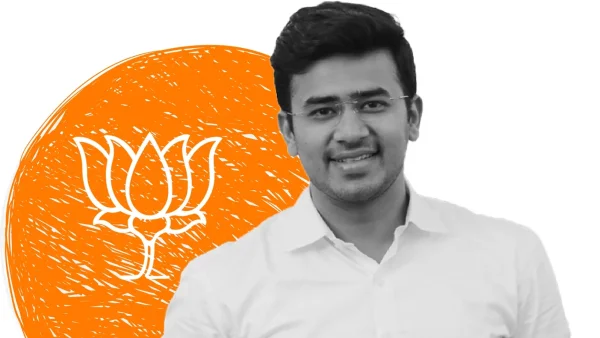
It is no secret that a sparring session in Bengaluru has set the country talking about the Prime Minister’s way with the media. After Tejasvi Surya put forward his view that the social media age has made the traditional press conference a thing of the past, a video of him doing so did the rounds, and you could count on some pointed responses from the other side of the aisle.
Campus question goes viral
It happened at an open house with students at Jain College in VV Puram on 18th June. One of them put it to him: why hasn’t the PM been to a press conference in over a decade? “A great way to start,” said Surya, before he made his case for the government’s side of things.
His point was simple: when you can put your message in front of the people without any middlemen, what’s the point of a formal sit-down? In his eyes, a press meet is just a wall between the leader and the public, and as such, ‘redundant’. Besides, he noted, the PM is in touch with the country every day.
Surya’s rationale for skipping press meets
Surya sees direct contact as the only way to go if you want to be heard by voters. He has a way of making a speech sound like something from another era, while the 24/7 digital world is where the action is.
Put in the MP’s own terms, here is what he was getting at:
– You get to the people unfiltered via social media
– A press conference is an obstacle you don’t need
– There is nothing new about a speech or the like
– The PM is out there on the platforms daily
Opposition response and online pushback
The opposition was on top of it in no time. Supriya Shrinate of the Congress put the clip out there, had a bit of fun with her ‘cerelac baby’ quip for good measure, and let on that the kid from Gen Z had put him in his place.
For his part, Surya put up some photos from the college later on, lauding the drive of the young ones. He let the clip speak for itself, though.
PM Modi’s media record under the lens
This brings up the old conundrum: how does the Prime Minister see fit to deal with the press? He has done his share of interviews since 2014, but a proper press conference is not in the cards.
There was one time in 2019 that stands out. Then-BJP chief Amit Shah was the one fielding questions at a media event, with the PM right there but not in on the Q and A.
Oslo episode renews scrutiny
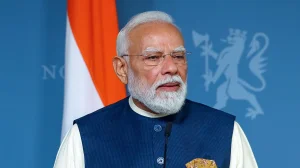
Then you have the matter of Oslo in May 2026. The PM was there with his Norwegian counterpart, Jonas Gahr Store, for what was put down as a ‘press meet’ after a joint statement. But no questions were on the docket.
One of the local reporters made a move to ask the PM why he wouldn’t oblige, given she was from the freest press in the world and whether he was worthy of the trust. He was out of there. Indian officials would have it that it was a statement, not an open forum.
If you are keeping tabs, the timeline looks like this:
– May 2014: In office, and in for an interview
– 2019: A media session, with Amit Shah at the helm
– May 2026: A statement in Oslo, no questions asked
Why this debate matters now
What you have in Bengaluru is a microcosm of a larger trend. The gatekeepers are being left out of the loop. Surya is talking about reach; his critics will tell you a press room is where you are held to account.
One way or another, it is a sign of times where both the student body and the parties are seeing how far they can push on the issue of who is allowed to put a question to a leader.