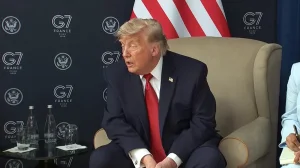
You don’t have to look far for the pressure from the White House. With under a week left to the big NATO meeting in Ankara, President Donald Trump has called what the U.S. does for the alliance ‘ridiculous’ and ‘one sided.’ It’s a line of attack that puts the heat on European leaders and is sure to color the talks on July 7-8 when 32 members are in the room.
A late-stage challenge to NATO support
Trump sees the transatlantic tie-up as lopsided: Washington is giving more than it’s getting. He’s put it out there that the partnership ‘is not reciprocal,’ which makes you wonder what the U.S. is really getting out of NATO as heads of state make their plans for the road ahead.
His message is for Europe to handle its own defense, and he says we’ve already started to pull back. In doing so, he’s made burden-sharing the main event of alliance politics once again. Allies can expect to be put under a microscope over their checkbooks and what kind of access they’re willing to give.
Trump’s message and tone
On Truth Social, he put it in writing: ‘They were not there for us!!!’ and made the case that we are shouldering the heaviest end of the stick. He even put up a chart of NATO numbers to show how the U.S. is outspending some of the other members by a wide margin, his way of saying American taxpayers are being made to pay an unfair price.
Pressure on allied spending and burden-sharing
There was an accord last year, with some prodding from Trump, to have allies put five percent of GDP toward defense by 2035. If they hold to it, it will be a sea change for European budgets and how they buy in, but it also means years of wrangling in parliaments.
But Trump’s words say he doesn’t have time for a slow build. If Europe wants to be in the lead, well, Washington will want to see it before it gives its backing. You can bet there will be more finger-pointing and public score-keeping on national contributions, which only adds to the at-home troubles for European officials.
Key developments to track:
– The July 7-8 date in Ankara
– 32 member states on hand
– A move by Washington to ratchet down some of its commitments
– The 2035 goal of five percent of GDP in spending
Friction over bases and the Iran war
He has had no patience with some of our European friends for how they’ve handled the Iran situation, in particular those who have put limits on our use of their bases. To him, that kind of thing erodes the reason for us to be the ones making the security guarantees.
Let’s be honest, base access is where you find out if an alliance is in sync. Put up some roadblocks and you’ve got slower deployments, a logistics headache and extra cost. By making a point of it, Trump is tying what happens on the ground to the larger question of who is in charge and who is paying in NATO.
Ankara summit outlook and long-term questions
When the 32 of them are in the room in Ankara on July 7-8, they’ll have to deal with this face to face. The conversation will be driven by Trump’s insistence that the whole thing is ‘one sided,’ and they’ll have to talk about what they can do and whether they can be trusted to do it.
NATO has been around since 1949 and has done a lot to keep Europe steady and the Soviets where they were. But that history is up for review now, with some pointed talk over the cost of it all and whether it’s a fair exchange, as Trump would have it.
It will come down to whether the allies can put some meat on the bones of the rhetoric. They will be in the Turkish capital with an old dilemma: put in the money and share the load, or let the doubts about the alliance run deeper.