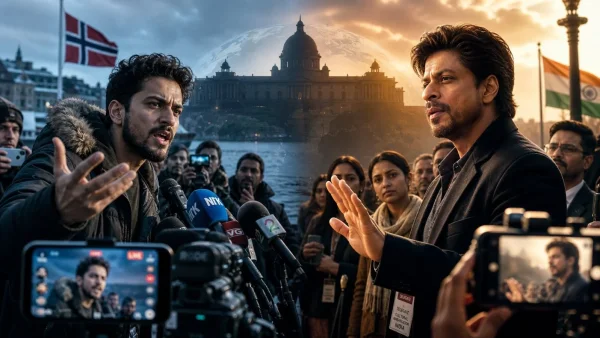
When Gul Panag put the boot in to Dhruv Rathee for his suggestion that the Prime Minister be ‘humiliated’ on the world stage, it was only a matter of time before India’s most popular online row got under way: at what point does dissent overstep when the nation’s reputation is at stake? It is a tangle of hard feelings and a very live issue of whether to put dignity or accountability first.
You could say this is more than two well-known names going at it. It is about where we as a country put the line between a good, hard-hitting critique and something that erodes our own institutions, particularly when you are not in India.
Why Gul Panag pushed back
Panag made her position plain. “Not cool,” she put it. “You can have a problem with a Prime Minister, you can protest, have your say and cast your vote. That is democracy.”
Then she went on to say, “But to make a joke of the man, the office and what he stands for on some foreign turf? I don’t see that as the right kind of dissent. It puts a dent in him, the institution and, in the end, us.”
Public reaction and stakes
Her words have been seen by 113,000 and counting. The comments section has everything from kudos to second-guessing, with one person appreciating her for “standing up for the country” and another not sure which way to go.
What Dhruv Rathee called for
It all started with a post from the YouTuber on May 19. “Modi should be made to look foolish wherever he is,” he wrote. “In 12 years as PM he has not done a press conference. Where is the transparency?”
Rathee was after some outside pressure. “I’d like to see some of the European press put him on the spot, as Helle Lyng did,” he said. “Make him squirm until he has to be accountable. You’ll be doing India a favour.” Some will tell you he was asking for answers; others will call it an invitation to put someone down.
Norway moment that set the stage
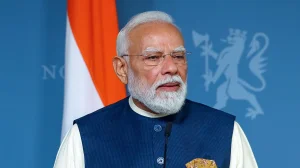
The whole thing can be put down to a moment in Oslo. A journalist had tried to get in a word with Modi as he and the Norwegian PM were finishing up. “Why don’t you take some questions from the freest press in the world?” she asked.
He made no move and left. Afterward, Helle Lyng put it on record: “I was not expecting him to, but he would not take my question.” She put in a little context too, noting that while Norway is top of the World Press Freedom Index, India is way back at 157. That was enough to give Rathee his opening and make a short video into a cause for argument.
For those who feel the PM's office is something you don’t chide, Panag hit the mark. “You put it how we should have heard it,” one fan wrote.
Then there is the other side, for whom shutting out the media means you have to be questioned somewhere. As one put it: “I’m just not sure whose side to be on.”
Why this clash matters
And that is why it has taken off. It is a matter of pride, but also of the old democratic custom of a leader facing unfiltered questions. With the figures and the Oslo incident to work with, you have all the ingredients for a spat.
To a connected audience, a clip from abroad is here in an instant. What happens in Oslo is no longer about Norway; it is about how we put ourselves forward and how our leaders stand up to it.
Panag will have you believe humiliation is a losing game. Rathee says you have to be confrontational to get results. They are both part of the same system; on the internet they run head-on.
Here is what each side is really saying, stripped to the essentials:
– Dissent is fine; do not mock the PM’s office abroad.
– Sustained media access is a basic democratic demand.
– Foreign journalists should ask unscripted questions.
– The public is split between dignity and pressure.
What comes next
With her response on the 22nd, Panag has made her case: have your differences, but don’t muck about with the office when you are overseas. Rathee, for his part, is still calling for some pointed inquiries.
We will see if any more big names want to have their say and if either of them softens their tone. For now, the divide is obvious. One wants to be in the Prime Minister’s face; the other doesn’t want to be the butt of the joke. In the middle is the reality of any modern democracy: you need both a sense of self-respect and some answers, and you can’t have one without the other.
After a week in which an unheeded question in a Scandinavian capital made waves, it is less of a debate and more of a trial.