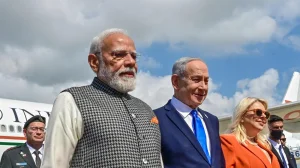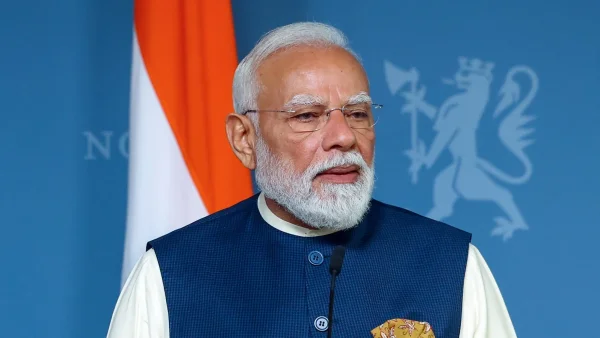
It’s a short video that has made for a political hot button back in India. You can see on it how, after some joint words with Prime Minister Jonas Gahr Store, Modi made to leave without so much as a word to the media. It was all part of a very full itinerary for this fourth stop on his five-country run, which has already taken in the UAE, the Netherlands and Sweden.
Why the moment matters
Helle Lyng, a Norwegian commentator, put it in a post: “Modi didn’t take my question.” She made a point of the disparity in press freedom, with Norway at the top of the World Press Freedom Index and India way down at 157. “It is our job to ask those in power,” she wrote.
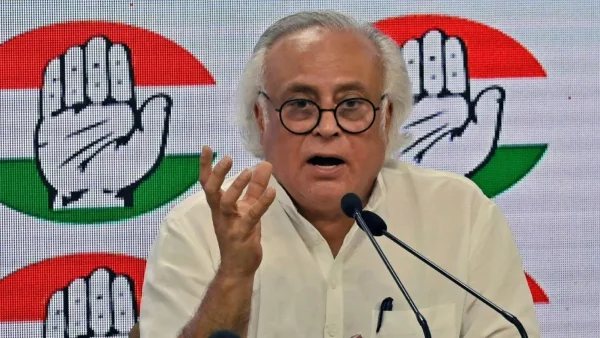
That kind of thing doesn’t go unchallenged in New Delhi. Congress’s Rahul Gandhi was quick to chime in, saying the PM was ‘running from a few questions’. “When you have nothing to hide, you have nothing to be afraid of,” he said. “What does it do to India’s image when the world sees a PM who is compromised and in a panic?”
For the opposition, the clip is just the latest in a line of grievances about how the press is treated here. The numbers don’t lie, and they make for an easy comparison.
But if you talk to the people who were there, there are some practicalities to consider. Some say it was a matter of language or the way things were set up; whether it was meant to be a formal Q&A or something more off-the-cuff was never quite clear.
What the two leaders announced
Put the brouhaha aside and the two prime ministers had work to do. They put their names to a Green Strategic Partnership, making clean energy and the like the centrepiece of what they want to build between the two countries.
Key deliverables agreed by both sides include:
– Ties elevated to a Green Strategic Partnership.
– Trade value to double by 2030.
– Target USD 100 billion investments under TEPA.
– Creation of one million jobs in India.
There are hard targets on the table, too. They want to see the value of current trade in double by 2030 and have been encouraging companies to look at the India-EFTA agreement for new ventures.
Sectors on the table
The scope is wide. You have the blue economy and green shipping, then there’s shipbuilding, AI, cyber security, seafarer training and aquaculture. On the tech side, they’re looking to work together on carbon capture and offshore wind, with more Norwegian money going into Indian clean energy. There’s also the research end of things: renewables, health, IT and the like.
Even in higher education, they plan to get closer with joint degrees and more movement for students and staff. Modi has even put out an invite for Norway to be part of Bharat Innovates 2026 in France, and put forward the idea of a Start-up Innovation Hub and a hackathon.
Security and multilateral alignments
Strategically, they ran through the usual: UNCLOS, the Indo-Pacific Oceans Initiative, and some Arctic logistics. The Norwegian PM made sure to back India for a permanent seat on a reformed UN Security Council. They also made common cause against terrorism and left the door open for more defence and digital cooperation, with a new Joint Working Group to be put in place.
What comes next
Now we’ll have to wait and see if the rest of the tour is any more open with the press. For now, the onus is on the ministries to put some flesh on the bones of these agreements and make them happen.