The Delhi government has announced the launch of the Pink Saheli smart card which will be assigned to all the females traveling with DTC buses and availing the freedom to travel for free. The card will gradually take place of the non-secured paper tickets that have been in use since 2019.
What exactly is the Pink Saheli card?
Exclusive to the Delhi residents that are females and their age is 12 and above, the Pink Saheli card is a smart travel card. Once they have the card, they will touch it on the Electronic ticketing machines (ETMs) that conductors carry, when traveling, and hence get free rides. The scheme has been so successful that it has been able to reduce abuse and has enabled efficient handling of passenger statistics.
How do I apply for it and where do I get it?
The transportation branch has chosen two independent providers for the cards, and the banks will take care of the validation counters. To provide the service, there will be counters placed at the district magistrate (DM) and sub-divisional magistrate (SDM) offices, bus depots, and Common Service Centres (CSCs). Identity proof of the people applying for the registration must be the Aadhaar card issued in Delhi.
The public will be served better once the system gets in place at different places and these positions appointed. Hence, direct registrations, through the Aadhaar/Intel Smart Cards/ICARD/IRIS, will be the preferred method because of the one-to-one approach. The people will feel the effect of the new system when the machines are installed in various locations. Hence, both the banks and the third-party service providers need to establish partnerships with the government.
Luxury goods merchants are starting to use the same type of model as the city government. They are assuming a retail floor with individual kiosks and a service desk, anchored by the administrative office. The administrative office will handle speakers, printing, and other things, along with selling. The authorities will decide the price, but the store owns the information. They mostly do their own marketing, but will also profit from sales in the store. They will soon be joined by retailers! But city governments are still afraid to question the financial model!
Other kinds of smart chip cards
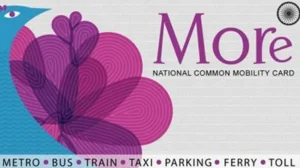
Together with Pink Saheli, a couple of bank options will be providing other types of smart cards as well. One of these will be intended for bus pass holders of more than a dozen categories in which senior citizens, persons with disabilities, sportspersons, war widows, and national award winners are included. A general-purpose prepaid card that requires full KYC with name and photograph and which will be similar to a metro card will be the third card.
I learned from the information I got that the commuters might have to pay a minimum of Rs 120 for the prepaid card to be issued, and the card will be reloadable. Interoperability with the metro is being considered but has not yet been decided.
Why digital transformation is important
Digitizing the idea of free bus travel will eventually pass through checking the accountability and the more precise usage analytics for almost 2 crore women travelling by bus every month. The digital records are expected to allow the policy-makers to monitor the demand, allocate the resources, and eliminate the fraud connected to the paper tickets. For the riders, the switch guarantees quicker boarding and less manual procedures to go through.
Operational and policy challenges
Shifting from paper to smart cards is a big step and there are a number of practical challenges to overcome. To make sure that the city center of a huge city is serviced with smart cards fast and without any lines means a lot of things. The city will need a lot of people in the staffing, teams to carry out the outreach, and then user training too. Even the rural and elderly locations may all need some sort of handholding for doing their KYC or handling the counters. The new requirement of Aadhaar for Delhi itself always brings about the issue of privacy and exclusion on a larger scale, hence the authorities will have to put in place not only the most concrete, but also the most effective safeguards in a way that personal data is not only kept confidential but also there are various methods of verifying one’s identity legally and without being so inconvenient to the user.
There is also a big question in the technical area to make the ETMs and back-end systems to work without any hitches on all buses, train conductors and maintain synchronicity with the other transportation modes if the service is offered. A step-by-step start and pilot testing might help in making the early problems smaller plus be one of the factors to help win the passengers’ trust.
Finally, there are also the financial and the authority implications.
The program is still a substantial financial support to the urban transport system. By making things digital, it may also be a means for the GoI to have more control over expenses, the conduct of audits of performance and having a strict budget. Banks and dealerships are going to run the show, but the government will be the one to make sure that women applying for the loan will not be troubled by any difficulties like this one.
What is there to know for the passenger
In point of fact, they
[the women]
need to be well-prepared with the necessary documents that must include their aadhaar card and the supporting documents from Delhi. Look out for the local DM, SDM, bus depots and CSCs’ locations and the hours that they operate and keep yourself updated by the scheduling of the various counters. When the card is activated, do not forget to validate it over the ETM for each trip.
The Pink Saheli smart card is a blend of advanced technology and customer service and it is totally oriented towards the objectives set forth. The overall good governance of the public sector is the main thrust behind the project.fluency is a significant factor in the project’s success, there should be a clear line of communication, and who can use the project should be protected most respectively ones.