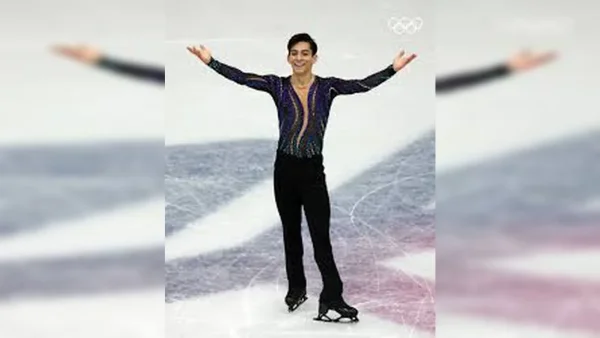
Donovan Carrillo has established a milestone at the 2026 Winter Olympics in Milan-Cortina, stepping into the men’s free skate and also writing history for being the first Mexican figure skater even to reach two Olympic finals. The 26-year-old from Guadalajara stood out as the only Latin-American contestant to represent people competing in the men’s competition this winter.
Early life and unorthodox training
Father Figure was only eight years old when he began skating, living in Guadalajara and getting ambitious early. In his case, the Rinkz nightclub stopped, but due to its closure, he moved to León, following his coach under often curious and makeshift circumstances.
He could use smaller, often poorly-lit ice surfaces in shopping centres and share ice time with many aged public skaters. The music was not the best, and neither were the facilities, but it was that exact limitation that brought an unusual degree of adaptability and ingenuity toward most other elite skaters.
Short program: fight and grit
Carrillo scored 75.56 in the short program and ended up 23rd among the 39 participants, just in time to make the cut for the free skate. After a failed triple axel, Carrillo immediately carried an on an awful lot of energy and poise thus there was a sliver of a chance to place ahead of the even regulars in the skating world.
The performance was more about “just surviving through” than “competitively perfecting” since Carrillo did not even dominate the performance with his some merest fact of line skating through. His available composure and visible pride stood in direct conflict with his under-dogs status of representing Mexico and others who had joined the rush for recognition begun in Beijing.
FREE SKATE: PERSONALITY, QUADS, AND ELVIS MEDLEY
On the subject of the season, Carrillo paved the way for 143.50 points to earn the season’s best (219.06 total score); his skate was a completely decked-out mega-performance to hits by Elvis Presley, like Jailhouse Rock and A Little Less Conversation, which played to the adoration of the audience.
On the first pulsing measure of his free skate performance at Milan, he actually completed two quadruple jumps. He just missed a quad toe loop but gave 0 GOE. The programme combined showmanship and an attempt to level up…and it came across strongly for supporters who’d traveled all the way to Milan to follow it.
The New Milestone While Also Giving An Olympic Legacy
XXCarrillo’s qualifying for the free skate in Milano-Cortina meant he was the first Mexican male skater to do so in two Olympic competitions. He broke a 30-year figure-skating Olympic drought for Mexicans in Beijing, settling for 22nd all told and putting a mark in the sand from hereon for Latin American men in the sport.
This line of continuity—from local rinks to Olympic Arenas–flies very high. Carrillo’s billing did catch the less populated winter countries’ attention of figure skating and signal that hard work really can shake some sporting narratives.
Public Perception & National Pride
Ulises Carrillo finished a strong performance with good reason: his reputation had reached its crunch time. This time, the skating arena was abuzz with chanting for Mexico and shouting, and without a single delay Carrillo voiced his jubilation to the cheering masses of spectators: "¡Por Mexico! Dreams do come true!” he said at every scream to drown out the deafening sound of applause. The national leaders voiced their hearty appreciation by considering Mexico’s skating pridefully.
Carrillo remarked that there had been an emotional lift from his Mexican compatriots in the stands, their presence made him feel like he had been skating at home. The bond between athlete and audience has remained central to his story, and it is an important bridge while moving on from these Games.
What Comes next for Carrillo
Carrillo, aged 26, still has a few more years ahead of him as an athlete where experience should translate to deeper performance quality. The athlete has not stopped walking the performance improvement route; he intends to keep improving the score by throwing in quads, as well as applying triple axels, while building reliability in performance consistency.
His journey affords a blueprint for skaters from nontraditional winter-sport nations, studying the sport each day, thinking outside the box to find the right solutions that can deliver historic results on the world stage. Carrillo has redrawn expectations for Mexican figure skating.