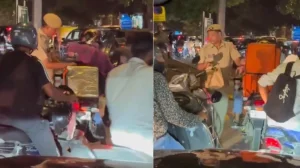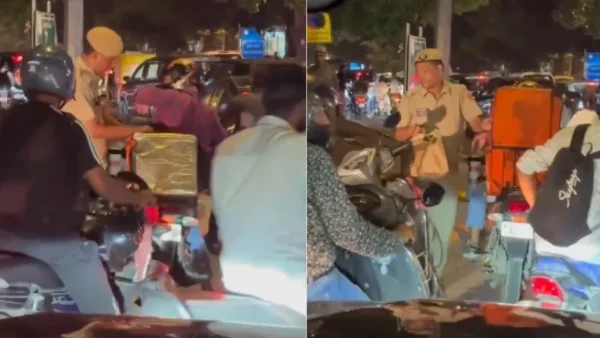
A viral video circulating on social media has drawn attention to a changing trend in public demonstrations: the growing use of delivery platforms to transport protest materials directly to demonstration sites.
The clip, shared on X (formerly Twitter), appears to show posters being delivered to a protest location through a delivery service. While the specific circumstances shown in the video have not been independently verified, the post has sparked wider conversations about how smartphones, digital payments, and on-demand delivery networks are reshaping modern protests.
The viral moment has shifted the focus from traditional street demonstrations to the logistics that increasingly support them. The Digital Protest Has Arrived
From Placards to Doorstep Deliveries
Not long ago, organizing a protest often required volunteers to manually transport banners, posters, food, water, and other essential supplies.
Today, many of those tasks can be handled through a smartphone.
Food delivery platforms, courier services, digital wallets, and instant messaging apps are increasingly being used by supporters to coordinate resources, allowing people to contribute even if they are not physically present at the protest site.
The viral poster delivery has become another example of how technology is changing the mechanics of civic participation. Support Beyond the Streets
Online Supporters Can Contribute in Real Time
Digital platforms have transformed the way demonstrations are supported.
People located miles away can now:
Order food and drinking water for participants.
Send posters, banners, and protest materials.
Coordinate logistics through messaging applications.
Contribute financially using digital payment platforms.
Share live updates across social media.
For many supporters, participation no longer requires being physically present. A few taps on a smartphone can become a form of civic engagement.
Social Media Calls It ‘The New Age Protest’
The viral clip generated thousands of reactions online.
Among the discussions:
Some users described delivery apps as the “new logistics backbone” of public demonstrations.
Others joked that protest supplies can now be tracked with the same convenience as a food order.
Several commentators suggested that digital platforms have fundamentally changed how protests are organised and sustained.
Others cautioned that one viral clip should not be viewed as evidence of a widespread trend without broader reporting.
These reactions reflect opinions circulating on social media and should not be treated as verified facts. The specific circumstances shown in the viral video have not been independently confirmed. Technology Is Changing Civic Participation
The Smartphone Has Become a Protest Tool
Technology has altered nearly every aspect of civic engagement.
Beyond social media campaigns and livestreams, digital tools now influence how demonstrations are organised, funded, and supplied.
Whether it is arranging transportation, coordinating volunteers, collecting donations, or ordering essential materials, much of the logistical work that once happened offline now takes place through mobile applications.
The result is a new model of public participation that combines physical demonstrations with digital infrastructure. The Bigger Picture
A Protest Is No Longer Limited to Those Standing on the Street
The viral poster delivery highlights a broader transformation.
Modern demonstrations increasingly extend beyond the people gathered at a protest site. They now involve remote supporters, digital payment systems, delivery networks, and online communities working together in real time.
Technology has blurred the line between being physically present and actively participating. The Strong Closing Angle
The Future of Protests May Be as Digital as They Are Physical
Whether the package contains posters, food, water, or medical supplies, one trend is becoming increasingly visible: the infrastructure of public protest is evolving.
The streets may still be where demonstrations are seen, but smartphones are increasingly where they are organised, funded, and sustained.