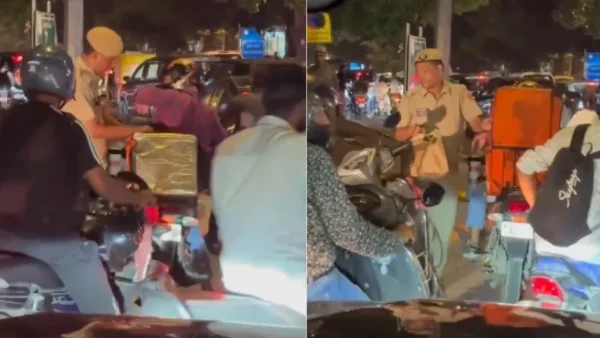
A viral video circulating on social media has sparked controversy after a Swiggy delivery partner allegedly claimed that food ordered by online supporters for student protesters was intercepted by a Delhi Police officer and did not reach its intended recipients.
The video, widely shared on X (formerly Twitter), alleges that the delivery executive was stopped while transporting food to a protest site. According to the accompanying claim, the officer checked whether the order was meant for student protesters before allegedly taking possession of the food.
At the time of publication, these allegations have not been independently verified, and Delhi Police had not publicly responded to the specific claims referenced in the viral post. The Viral Allegation
Delivery Partner Claims Food Was Stopped En Route
According to the social media post, the delivery partner was carrying a food order purchased by online supporters for students participating in a protest.
The viral post alleges that a police officer questioned the destination of the delivery and, after learning it was intended for protesters, prevented the food from reaching them.
The complete circumstances surrounding the incident—including what happened before and after the video was recorded—remain unclear. Online Support for Protesters Under the Spotlight
Food Deliveries Become Part of the Larger Debate
In recent protests across the country, supporters have often used food delivery platforms to send meals and drinking water to demonstrators.
These deliveries have become a visible form of public solidarity, particularly during prolonged sit-ins where access to basic necessities can be challenging.
The viral allegation has therefore raised broader questions about whether such supplies can reach peaceful protesters without interference. Rumours & Online Chatter
Social Media Divided Over the Viral Clip
The video has generated intense discussion online.
Among the reactions:
Some users alleged that the incident reflected an abuse of authority and called for disciplinary action if the claims are substantiated.
Others demanded that Delhi Police release its version of events or any available body-camera, CCTV, or other footage to establish what occurred.
Some commentators cautioned that short viral videos often capture only part of an incident and urged people not to draw conclusions before all the facts are known.
Several users argued that an independent verification of the video would help separate fact from speculation.
These reactions represent opinions and allegations circulating on social media. They should not be treated as established facts without independent verification. Why Transparency Matters
Evidence Protects Everyone
Incidents involving viral allegations against public authorities often attract significant public attention.
In such cases, a prompt and transparent clarification serves two important purposes: it protects citizens if misconduct has occurred, and it also protects public officials if the allegations are inaccurate or incomplete.
Clear communication, preservation of evidence, and impartial inquiry are essential to maintaining confidence in public institutions. The Bigger Issue
One Viral Video, Many Public Questions
Whether the allegations are ultimately substantiated, clarified, or disproven, the episode has reignited debate about the relationship between law enforcement and peaceful demonstrations.
It also raises broader questions about access to essential supplies during public protests, the responsibilities of authorities in managing such situations, and the importance of accountability whenever serious allegations emerge. The Strong Closing Question
Public Trust Depends on Facts, Not Assumptions
The viral clip has prompted widespread discussion, but the most important question remains unanswered:
What actually happened?
That answer cannot come from social media alone.
If the allegations are supported by evidence, accountability is essential. If they are not, a transparent explanation is equally important.
In a democracy, public confidence is strengthened not by rumours or viral clips, but by timely facts, fair investigations, and institutions that are willing to answer difficult questions openly.