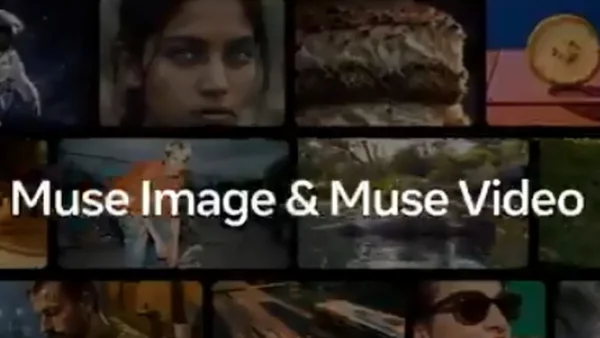
Meta is moving to bake generative AI into its social apps at scale. With Muse Image now powering creation and editing across Instagram, WhatsApp and the Meta AI app, the company is pushing for leadership against OpenAI and Google while navigating a fast-forming privacy debate around public Instagram photos.
Why Meta is pushing Muse now
At the heart of this rollout is Meta Superintelligence Labs, the company’s dedicated AI division. In an official post, AI at Meta introduced Muse Image and Muse Video and called Muse Image its most advanced image generation model yet, highlighting faithful instruction following and precise edits.
The strategy is clear: normalise AI-native creativity inside feeds, chats and stories that already command daily attention. Meta says Muse Image is free for everyday use through Meta AI, with higher usage limits and additional features available via subscription plans.
This approach mirrors rivals’ playbooks while exploiting Meta’s distribution advantage. The company is positioning Muse as a system that can handle detailed requests, from images with readable text to functional QR codes, akin to what tools like Gemini and ChatGPT enable.
What Muse can do across Meta apps
Muse is designed to generate visuals from text prompts and to edit existing images with written instructions. Rather than overwhelm new users, Meta is seeding a library of preset prompts to spark ideas and guide different editing styles.
Instagram is the visible test bed. Meta is offering more than 30 AI-powered effects for Instagram Stories, and these come with editable transformations that can be fine-tuned. Users in select countries can also generate images directly inside Meta AI chatbots on WhatsApp.
Here are the capabilities Meta is foregrounding with Muse Image:
– Create images from plain-language prompts
– Edit photos using short text instructions
– Produce images with readable text
– Generate working QR codes
Commerce and advertising integrations
The bet is not only on expression but also conversion. Muse will integrate with Facebook Marketplace so people can visualise furniture and home decor in different settings before buying. Businesses can produce ad-ready assets inside the same ecosystem.
Meta plans to make Muse Image available to advertisers and agencies through its Advantage+ creative tools in the coming weeks. The company says it will gradually expand support to more countries and additional platforms, including Messenger and Facebook.
Privacy pushback around Instagram photos
One capability is already contentious. Muse allows users to tag public Instagram accounts and generate new AI images based on that person’s existing photos. Critics argue many people may not realise publicly shared images can be repurposed via AI.
Meta acknowledges the risk surface is changing and says people remain in control through settings. However, the company also notes that users will not be notified when their content is used in AI-generated creations, raising discoverability and consent questions.
Meta’s stated position on the feature includes:
– People may be able to create content using your Instagram content
– You will not be notified about such AI-generated content
The company frames this as consistent with public sharing norms, but the lack of notifications could blunt transparency. Expect governance and defaults, not just capabilities, to shape user trust over the coming months.
A broader AI play beyond still images
Muse is not a one-off. Meta confirmed that Muse Video, an AI-powered video generation model, is already under development, signalling a pipeline that extends beyond still imagery and deeper into short-form video workflows native to its platforms.
The image model also builds on the company’s AI assistant, Muse Spark, with a clear pivot from text-based conversations to media creation. Recent releases such as the Creator assistant and Pocket, an app for building video games using natural language prompts, underline how much of Meta’s product roadmap now hinges on AI tooling.
For consumers, the trade-off is convenience for control. Creative presets, editable filters and features that can, for example, place you in front of famous landmarks or remove unwanted people are appealing. But the Instagram photo feature ensures privacy will shadow the rollout as much as novelty.
For advertisers and creators, the upside is immediate. A free on-ramp, more than 30 effects for Stories, Marketplace visualisation, and Advantage+ integrations point to faster production cycles and lower costs. The long game is distribution: if Muse becomes the default creative layer inside Meta’s apps, it could set the cadence for how billions make and monetise media.