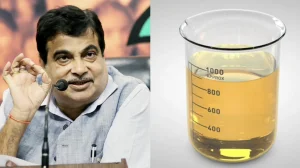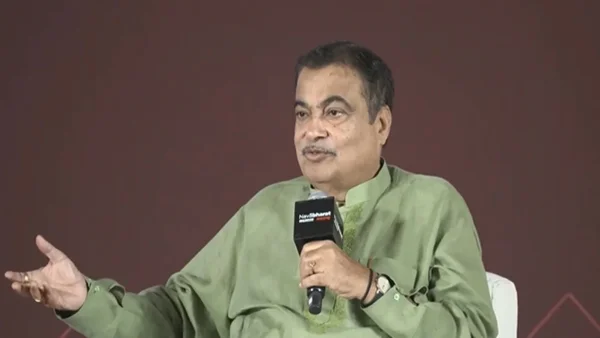
A statement made by Union Road Transport and Highways Minister Nitin Gadkari in 2023 has resurfaced on social media after a more recent government explanation suggested that ethanol can, in some circumstances, cost more than petrol, meaning that blending ethanol into petrol does not automatically reduce retail fuel prices.
The comparison has reignited debate over India’s ethanol-blending programme, with many consumers asking whether expectations around cheaper fuel were overly optimistic or whether economic conditions have changed since the earlier remarks.
While the two statements are being widely compared online, they were made in different contexts, and the government’s broader biofuel policy has multiple objectives beyond reducing pump prices. The 2023 Statement That Returned to the Spotlight
A Vision of Affordable Fuel
In 2023, Nitin Gadkari spoke about the potential of ethanol and alternative fuels to reduce India’s dependence on imported crude oil. His remarks were widely shared, with many interpreting them as suggesting that petrol prices could eventually fall dramatically through greater ethanol use.
The statement became one of the most frequently cited references in discussions about fuel affordability and India’s transition toward cleaner energy.
For many motorists, it created hope that alternative fuels might one day translate into significantly lower costs at the petrol pump. Government’s 2026 Explanation
Why Ethanol Doesn’t Always Make Petrol Cheaper
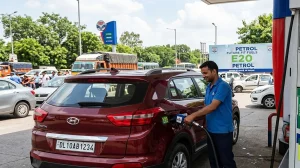
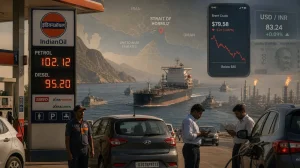
More recently, the government explained that ethanol is not necessarily cheaper than petrol, and therefore blending the two fuels does not automatically reduce the final retail price paid by consumers.
Officials have pointed out that fuel prices are influenced by several factors, including:
Global crude oil prices.
Ethanol procurement costs.
Transportation and refining expenses.
Central and state taxes.
Oil marketing companies’ pricing mechanisms.
As a result, the price at the fuel station reflects a combination of market and policy factors rather than the cost of ethanol alone. What Changed Between 2023 and 2026?
Public Expectations Meet Economic Reality
The comparison between the earlier remarks and the government’s later explanation has prompted a broader public discussion.
Some analysts suggest that the 2023 remarks reflected a long-term vision for a mature biofuel economy, where higher domestic ethanol production and technological advances could potentially lower costs.
Others argue that changing market conditions, production costs, and the economics of fuel blending mean such expectations cannot be viewed as fixed guarantees.
The debate has therefore shifted from whether ethanol should be promoted to whether public expectations were aligned with the economic realities of implementing such a policy. Rumours & Online Chatter
Social Media Divided Over the Fuel Debate
The resurfaced remarks have generated widespread reactions online.
Among the discussions:
Some users claim the government’s recent explanation contradicts earlier expectations of significantly cheaper petrol.
Others argue that the 2023 remarks reflected an aspirational long-term objective rather than a promise of immediate fuel prices.
Several commentators have called for clearer public communication about what ethanol blending can realistically achieve.
Others note that fuel pricing is influenced by multiple variables and cannot be attributed solely to ethanol costs.
These reactions represent opinions circulating on social media and should not be treated as official government positions or verified factual conclusions. Beyond the Price at the Pump
India’s Ethanol Policy Has Multiple Objectives
The ethanol blending programme is designed to pursue several policy goals, including:
Reducing dependence on imported crude oil.
Supporting domestic biofuel production.
Providing additional income opportunities for farmers.
Lowering emissions.
Improving long-term energy security.
Lower fuel prices are often discussed in relation to the programme, but they are only one part of a broader policy framework. The Bigger Question
How Should Governments Communicate Long-Term Economic Goals?
The renewed discussion surrounding Gadkari’s earlier remarks highlights a broader challenge in public policy.
Ambitious goals can inspire confidence and encourage investment, but they can also create expectations that may be difficult to fulfil if economic conditions evolve differently than anticipated.
Whether the earlier statement was viewed as a projection, a policy vision, or a firm expectation, many consumers are now asking for greater clarity on how ethanol blending affects fuel prices in practice. The Bottom Line The comparison between Nitin Gadkari’s 2023 remarks and the government’s 2026 explanation has reopened an important conversation—not only about ethanol, but about how large-scale economic policies are communicated to the public.
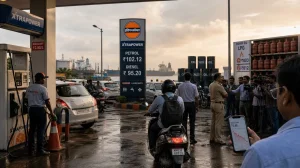
For millions of motorists, the success of any fuel policy will ultimately be measured not by speeches or projections, but by one simple number displayed every time they stop at a petrol pump: the price per litre.