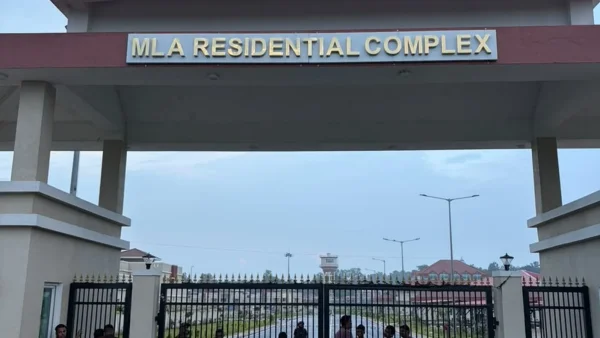
A group of students visiting an MLA residential complex has reportedly been struck by the sharp contrast between the facilities available inside a VIP government area and the conditions experienced by ordinary citizens.
The visit has prompted a larger debate about public infrastructure, political privilege, examination integrity and how taxpayers’ money is spent.
The students’ experience raises a simple question:
If the government can provide excellent roads, cleanliness, security and well-maintained surroundings for politicians, why can’t similar standards be provided to the people who pay for them?
The VIP Zone Question
Government residences for elected representatives are intended to facilitate their work and provide appropriate accommodation.
There is nothing inherently wrong with providing public officials with secure housing or decent facilities.
The controversy begins when there appears to be a dramatic difference between VIP infrastructure and the neighbourhoods where ordinary citizens live.
A taxpayer may encounter:
Broken roads
Overflowing drains
Poor sanitation
Traffic congestion
Inadequate public transport
Government schools requiring repairs
Limited public facilities
Yet, within a protected government residential area, the same city can suddenly look remarkably different.
Why should quality public infrastructure stop at the VIP gate?
And Then There Is the Examination Question
The students’ visit has also been linked to concerns about fair examinations and the broader frustration among young people over competitive exams.
Students spend years preparing for government examinations, often investing significant amounts of money, time and emotional energy.
When allegations of paper leaks, cheating, delayed examinations or irregularities emerge, the consequences can be enormous.
A politician can contest another election.
A student cannot necessarily recover two or three years of preparation.
That is why examination integrity should be treated as a governance priority rather than merely another administrative issue.
Questions the Students—and Every Taxpayer—Can Ask
1. How Much Does MLA Accommodation Cost?
What is the construction, renovation and maintenance cost of government residences?
How much does the government spend annually on:
Maintenance?
Electricity?
Water?
Security?
Landscaping?
Roads?
Cleaning?
Repairs?
And how much of that comes directly from taxpayers?
2. Are Similar Facilities Available to Ordinary Citizens?
If a government can maintain spotless roads and public spaces around political residences, why can’t comparable standards be maintained around:
Government schools?
Colleges?
Hospitals?
Residential colonies?
Markets?
Public transport areas?
Is cleanliness a constitutional right—or a VIP privilege?
3. What Is the Government Doing About Examination Security?
Students deserve answers on:
Paper-leak prevention
Secure printing and transportation
Digital question-paper security
Examination-centre monitoring
CCTV coverage
Recruitment of invigilators
Accountability for leaked papers
Compensation or re-examination when students are affected
Most importantly:
Who is held responsible when an examination system fails?
4. Why Do Students Have to Protest to Be Heard?
A healthy education system should allow students to concentrate on studying.
They shouldn’t repeatedly have to take to the streets simply to demand:
“Please conduct our examination fairly.”
When young people lose faith in competitive examinations, the damage extends beyond one test.
It affects confidence in the entire recruitment system.
5. Are Politicians Being Held to the Same Accountability Standards?
An elected representative is a public servant in the broad democratic sense.
Their privileges exist because the institution of government requires them—not because they are personally entitled to luxury.
So citizens have every right to ask:
*What measurable improvements has an MLA delivered to the people of the constituency?
Not just:
How impressive is the MLA’s residence?
The Taxpayer Paradox
There is something deeply ironic about this situation.
The ordinary citizen pays:
Income tax.
GST.
Fuel taxes.
Property-related taxes.
Fees and charges.
That money helps finance government infrastructure.
Yet the person paying for the system may receive poorer public services than the person occupying the government-funded residence.
The person who finances the road is stuck in traffic on a broken road. The person representing the citizen may travel down a perfectly maintained one. That is the contradiction citizens are increasingly questioning.
But Let’s Be Fair: Government Housing Isn’t Automatically a Scam
It is important not to turn legitimate government accommodation into a blanket corruption allegation.
MLAs and other public officials need appropriate working and residential facilities, particularly for security and administrative reasons.
The issue is not:
“Why do politicians have government houses?”
The better question is:
“Are these facilities reasonable, transparent and proportionate—and are ordinary citizens receiving comparable public infrastructure?” That distinction matters.
Where Does the Money Go?
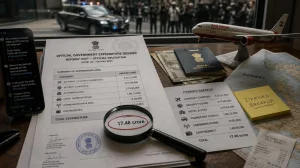
Governments should publish expenditure on official residences in a transparent manner.
Citizens should be able to find out:
How much was spent?
Who received the contract?
What work was carried out?
Was the work tendered?
Was it completed on time?
Was an audit conducted?
If public money is being spent properly, transparency should not be a problem.
The Sarcasm Writes Itself
Student:
“Sir, can we get roads like this near our college?”
Government:
“Absolutely.”
Student:
“When?”
Government:
“Please wait.”
Student:
“How long?”
Government:
“Until you become an MLA.”
Maybe the fastest route to good roads is not a public complaint.
Maybe it’s a government residence.
What Should the Government Do?
Make Public Infrastructure Standards Universal
If a city can maintain excellent roads and sanitation around VIP areas, similar standards should be progressively extended to ordinary neighbourhoods.
Publish VIP Housing Expenditure
Citizens should be able to see the cost of construction, renovation and maintenance.
Strengthen Examination Security
Recruitment and examination systems must be independently audited and technologically secured.
Fix Responsibility for Failures
If negligence causes an examination to be cancelled or compromised, responsibility should not disappear into bureaucracy.
Create Student Grievance Mechanisms
Students should have a clear institutional channel to report examination problems without needing political intervention.
Measure Politicians by Outcomes
Performance reports should focus on measurable constituency outcomes—not publicity events or infrastructure inside VIP zones.
The Bigger Question: Who Does Government Work For?
A democracy ultimately exists for citizens.
Government residences, roads, security and administrative facilities are financed through public resources.
Therefore, citizens should not feel that they are looking through a glass window at a better version of their own city—one reserved for people with political power.
The real goal should not be to make VIP areas look like heaven. It should be to make ordinary neighbourhoods good enough that nobody needs a VIP address to experience decent public services.
Final Take**
The students’ experience raises questions that go well beyond one residential complex.
Why are VIP areas maintained differently?
How much public money is spent maintaining them?
Are examination systems being protected with the same seriousness?
Who takes responsibility when students lose years because of administrative failures?
Why should good roads, cleanliness and functioning public infrastructure depend on where a person lives—or whether they hold political office?
And perhaps the biggest question:
If politicians can live in a well-maintained version of the city, why can’t they build that same version for the people who elected them? Because taxpayers don’t need politicians to merely enjoy good governance.
They need politicians to deliver it.