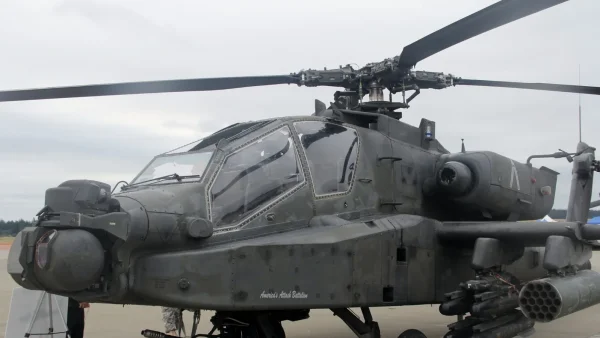
The Army awarded Boeing a long-term contract to ensure its AH-64 Apache helicopters are ready for any mission through 2030 – a fact that shows how central the aircraft is to modern combat aviation. The Defense Department lists the fixed-price amount as $2,728,234,918, and the Army Contracting Command at Redstone Arsenal, Alabama, gave it to Boeing after Boeing was the only company to bid in an online request.
Although some first reports said nearly $2.3 billion, the official notice of the award said $2.728 billion. Work, what needs to be done, and money will be set by separate orders, and the work is to be finished by December 31, 2030. The main idea is simple: to get the best possible readiness, dependability, and availability from one of the Army’s most important planes.
This includes extensive maintenance, repair, and rebuilding of the body, gearboxes, and rotor blades. It also includes keeping the avionics working, handling spare parts, giving engineering help, and providing the technical information needed to keep the fleet safe and the same across the board.
The upkeep is designed for the newer models, including composite rotor blades, better split-torque gear transmissions, improved digital links, and the ability to work with unmanned aircraft. These improvements let the AH-64E do well in difficult and dangerous areas.
Why it matters for Army readiness
The fixed price means costs are predictable and encourages good work. It makes it easier for the Army to plan its budget and makes sure units around the world get the support they need.
The Apache is seen as one of the most powerful attack helicopters in the world. Since it first went into service in 1984, the fleet has flown for more than 5.3 million hours – more than 1.3 million of those in battle – and there are over 1,300 Apaches used by the United States and its allies.
Capabilities that keep the Apache lethal
The Apache’s side-by-side cockpit lets both people in the crew fly and fight. It has a survival kit with radar and laser warning systems, jamming, and infrared defenses meant for very dangerous situations.
Newer models – the AH-64D and AH-64E, in particular – have the AN/APG-78 Longbow fire control radar over the main rotor. This lets them find and identify targets in all weather and through things on the battlefield that block vision.
AH-64E Apache specs at a glance
The Integrated Helmet and Display Sighting System lets the crew control the 30 mm M230 chain gun with head movements. The Apache can carry AGM-114 Hellfire missiles, 70 mm rockets – including APKWS – and air-to-air missiles to defend itself.
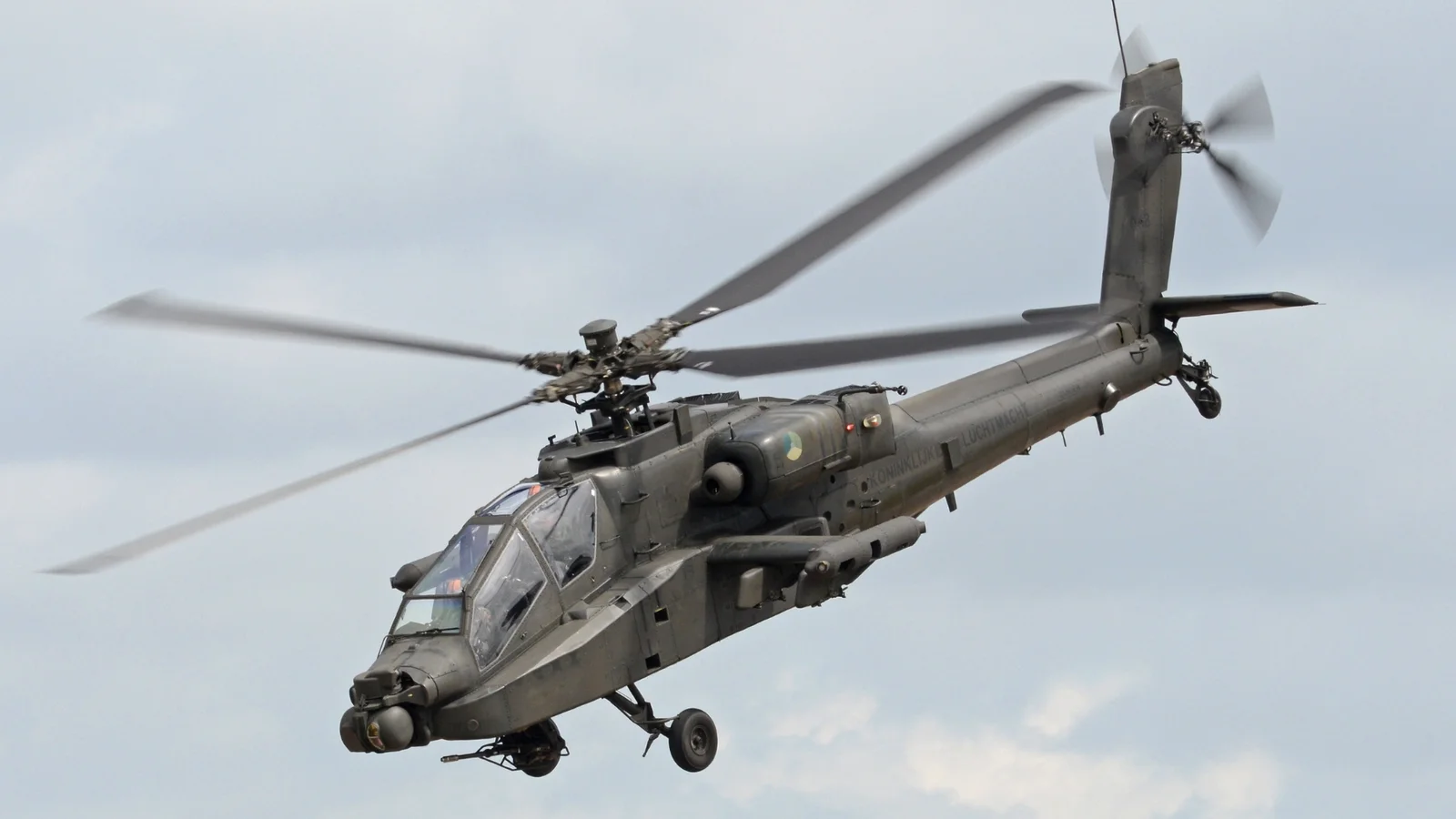
Recent live-fire exercises showed the AH-64E’s ability to fight unmanned aerial systems using 30 mm ammo with a proximity fuse. Two General Electric T700 engines give it power and can keep it in the air a long time, and long-range targeting increases how far away the crew can be and how safe they are.
Alignment with modernization and allied demand
The upkeep contract goes with a separate award of nearly $4.7 billion for new AH-64E helicopters, training systems, and equipment for foreign militaries, like Poland. These two programs together show that both making and maintaining the Apache are still key priorities.
Boeing supports operators around the world with training, logistics based on performance, and work with other companies in the industry. A large site in Hyderabad, run with Tata Advanced Systems, makes Apache bodies, which makes supply lines stronger and helps control the costs over the Apache’s life.
Technology roadmap and open architecture
The AH-64E Version 6 has better sensors, fire control, and software, which improves understanding of the situation and how well it can hit targets. A modular, open systems design makes it easier to add new weapons, avionics, and mission tech without big changes to the design.
This design fits with the Army’s Multi-Domain Operations idea, letting the Apache share data with ground troops, manned planes, and unmanned aircraft. Crews can control UAVs, which expands surveillance and improves finding and attacking targets.
Industrial base and policy implications
Long-term upkeep helps keep the defense industry stable, makes sure parts are available, and keeps special skills from being lost. A predictable schedule of orders lowers risk and helps keep to a schedule – which is very important for planes that must be ready quickly.
For people who plan for defense, the contract is about both policy and mechanics: it shows a continued investment in abilities that have been proven, while still keeping the ability to add new tech over the plane’s life.
With this upkeep package going until 2030, the Army is really betting on a plane that mixes firepower, the ability to survive, and digital links. For Boeing and allies who use it, the contract sends a clear message: the Apache is still a key part of modern air power, and its readiness won’t be taken for granted.