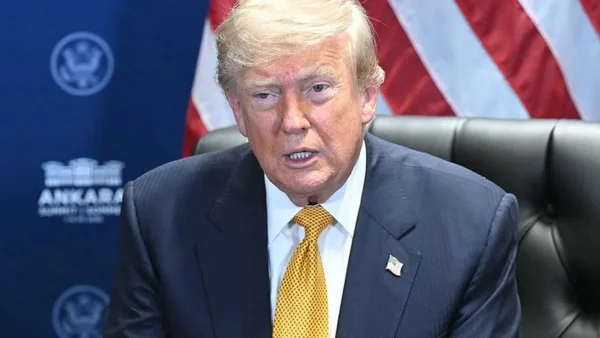
Donald Trump has warned that the US military will launch unprecedented strikes on Iran if Tehran assassinates him, a claim he posted on Saturday as tensions spiked. Yet any response would rest with Vice President JD Vance in the event of Trump’s death, not an automatic trigger, according to constitutional rules.
Trump framed his warning as a deterrent against what he called long-standing Iranian threats to kill him. The push-and-pull between a public pledge of force and the legal limits on presidential orders sets up a high-stakes test of deterrence, continuity, and control.
What Trump claimed
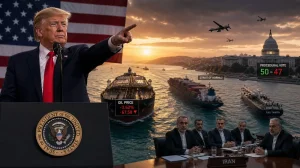
In a post on his social platform, Trump wrote: ‘1000 Missiles are Locked and Loaded and aimed at the Islamic Republic of Iran, with thousands of more to immediately follow, should the Iranian Government act on its threat… to assassinate, or attempt to assassinate… the sitting President of the United States of America, in this case, ME!’
He added: ‘Orders have already been given, and the U.S. Military is ready, willing, and able, for a one year period of time, subject to extension, to completely decimate and destroy all areas of Iran – PRAISE BE TO ALLAH!’
Trump has also said any strikes would occur ‘at levels they’ve never seen before.’ His language signals intent to deter, but it does not create a self-executing mechanism if he is killed.
What would actually happen under US law
There is no automatic, pre-authorised system that unleashes US force if a president is assassinated. The 25th Amendment transfers full presidential powers to the vice president immediately upon a president’s death.
If Trump were killed, JD Vance would become commander in chief at once and could authorise, alter, or cancel any military plans. Prior directives from a deceased president would not bind the new president.
Continuity plans, not automatic strikes
US continuity-of-government arrangements exist to preserve constitutional authority in national emergencies. These plans ensure leadership transfer. They do not permit automatic military retaliation or a so-called dead man’s switch.
Here is how succession and authority would work if the worst happened:
– Power moves to the vice president immediately
– The new president alone controls military decisions
– Prior instructions do not bind the successor
Iran’s vow and rising risks
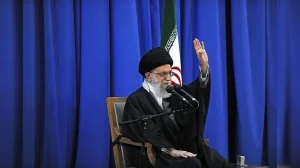
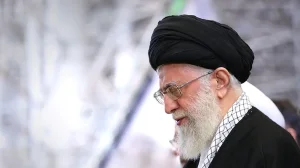
Hours after Trump’s post, Iran’s supreme leader, Mojtaba Khamenei, vowed on state television to avenge the killing of his father, Ayatollah Ali Khamenei, who died in the initial US and Israeli strikes that began the war in late February. He said: ‘This revenge is the will of our nation and must certainly be carried out.’
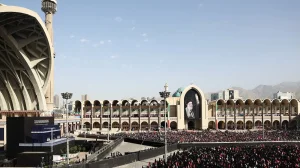
Funeral events across Iran this week featured posters and banners calling for the killing of Trump and Israeli Prime Minister Benjamin Netanyahu. The rhetoric on both sides has hardened, raising the risk of miscalculation.
Signals, stakes and unanswered questions
Trump’s threat is best read as signalling: it seeks to raise the cost for Tehran of any move against him. But under US law, any retaliation would be a decision for JD Vance if succession occurred, not a pre-set military sequence.
The White House did not immediately answer questions on Saturday about what would happen to Trump’s orders if he were killed. That silence underscores the core point of US governance: plans may be prepared in advance, but only a sitting president can pull the trigger.
For now, two messages collide. Trump is attempting to deter with certainty and scale. Iran’s leadership is promising revenge as a national duty. Between them sits the US constitutional chain of command, which ensures continuity but rejects automatic war. What follows will depend less on prior posts than on the next decision-maker.