In India, not many religious songs are as popular or as effective as the Hanuman Chalisa. People say it in their homes, at temples, and while traveling, and they value it as a way to be brave, to understand things clearly, and to be safe through God’s help. This song of forty verses mixes religious beliefs, poetry, and good advice for life into a simple thing you can do every day that millions of people depend on. and it’s something they can do every day.
Who Hanuman Is, and Why He Matters
Hanuman represents being completely dedicated to someone, being strong, being loyal, and being brave enough to do what needs to be done. In the story of the Ramayana, he completely gives himself to Lord Rama and is incredibly courageous. Because he is the son of Vayu, the wind god, and Anjana, he has speed, lots of energy, and is always willing to serve.
In Indian culture, people turn to Hanuman when life gets really hard. He’s also thought of as a god of intelligence and paying attention, helping you make quick, morally correct decisions when a lot is on the line.
What the Hanuman Chalisa Is
The Hanuman Chalisa is believed to have been written by Tulsidas, a poet and saint who lived in the 1500s. A “chalisa” is just a set of forty verses, and the Hanuman Chalisa has two pairs of two lines (called couplets) that begin and end it. Most of the verses are “chaupais” – four line sections – and they quickly go through all of Hanuman’s good qualities and what he did.
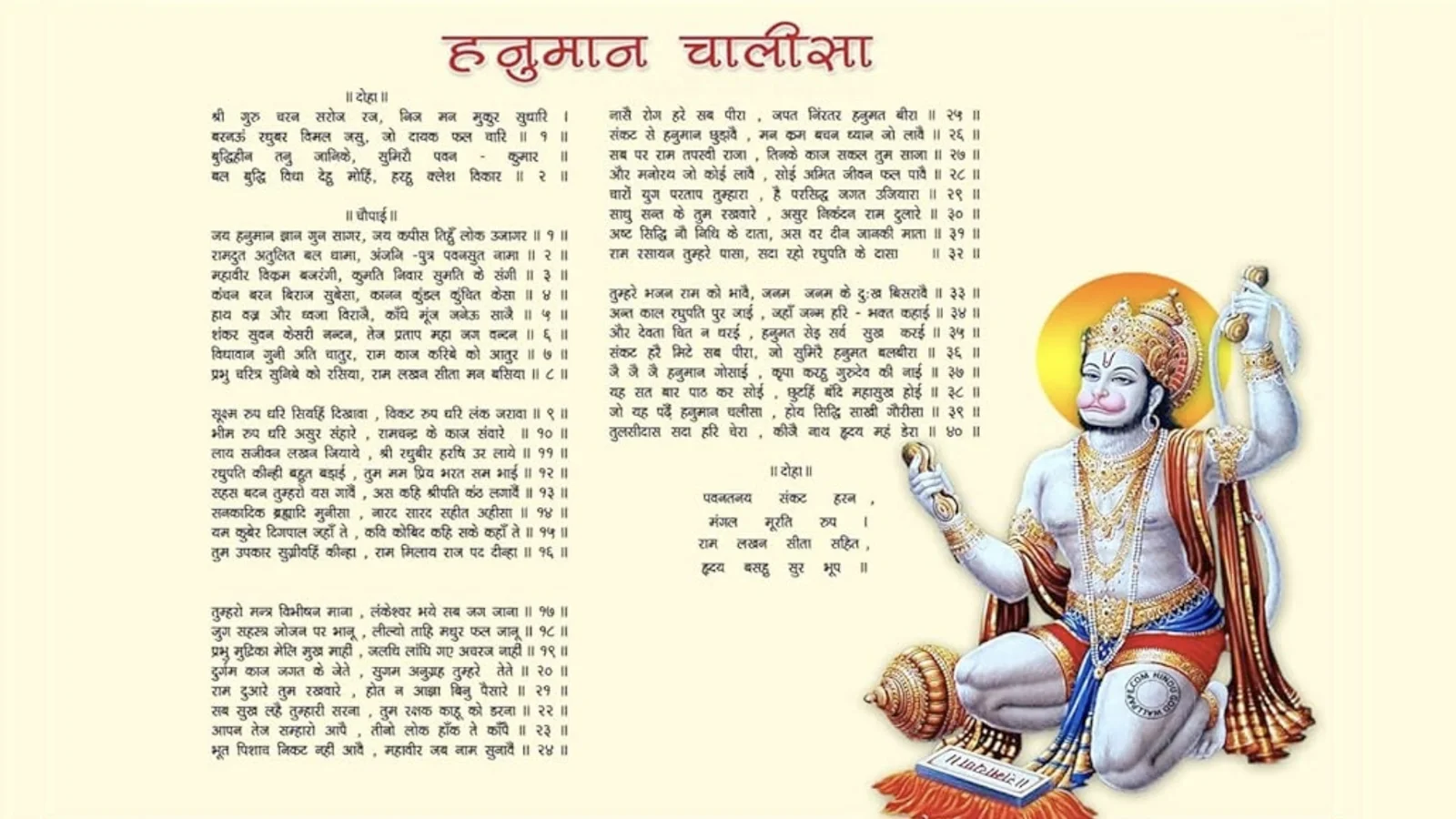
Hanuman Chalisa Meaning, Explained
The first and last of those pairs of lines praise God and ask for blessings. Verses 2 through 38 tell about Hanuman’s service to Rama, his bravery, his wisdom, and his kindness. A very important verse says how Hanuman remembers how strong he is, but instead of being proud, he uses that strength to help people.
The poem praises Hanuman as a huge ocean of knowledge and goodness, the brave protector, and Rama’s servant who never gets tired. It says that being humble, having self-discipline, and being devoted are the source of true strength. The Chalisa reminds us that power becomes holy when you have a reason for it and are able to control yourself.
Several lines describe his different appearances and amazing accomplishments: the small size he used to comfort Sita, the frightening form he took when he burned the city of Lanka, and the huge size he had when he defeated demons. The way he quickly jumped to get the medicine to save Lakshmana shows how he acts decisively, and with kindness.
But the Chalisa isn’t just a retelling of a story; it’s a guide to what’s happening inside you. It helps your mind to remember to be brave when you’re scared, to help others when you’re thinking too much about yourself, and to be clear-headed when you’re confused. In this way, it is Bhakti Yoga in action: devotion as a way to get moral strength and spiritual freedom.
Spiritual Significance and Divine Importance
In the Bhakti tradition, the Chalisa is both a prayer and a powerful chant. It says that if you take shelter with Hanuman, you’ll be stable, focusing on the name of Rama will make your reasons for doing things pure, and really remembering Rama will change problems into something positive. The song shows you how to get from being upset to trusting, and from doubting to doing things with self-control.
It also describes what the best relationship between a worshiper and God should be. Hanuman’s whole being is based on serving others, not being in charge. This is different from what many people think: true greatness comes from being humble and completely dedicated to doing good.
Benefits of Chanting the Hanuman Chalisa
People of all ages, over many years, have talked about the obvious and less obvious ways the Chalisa has helped them. People who use it commonly find that it feels like a shield against bad things happening, lessens worry, makes them more confident when things get hard, improves how well they can concentrate, helps them bounce back from emotional setbacks and feel hopeful, gives them a helping hand with decisions, leads to peaceful relationships, and encourages healthier habits and ways to deal with stress. Psychologically, repeating a prayer rhythmically can calm your nerves, start good habits, and turn your focus from being scared to knowing your purpose.
How to Start: Practical Tips
To do it, you should listen to and repeat a recording, one line at a time. Knowing what the lines mean makes your dedication and focus stronger. Say each syllable of the words clearly and at a regular speed. Doing it every day, even for only 15 or 20 minutes, gets you going. Choose a specific time of day to do it, and morning or evening are good choices. A teacher can help you with how to say it and the rhythm. And remember to be patient, you’ll improve with steady practice, not by rushing.
When to Chant, and How Often
Lots of people say it every day, and Tuesday and Saturday are especially popular. Some people do it in a pattern each week, while others say the whole thing every morning. The important thing is to be sincere and do it consistently, not quickly.
You could light a lamp, sit looking east, and start with the first short poem (the doha). Sit up comfortably, and put your phone away. Finish with a quiet moment or a quick thankful prayer.
Hanuman Chalisa and Sade Sati
In Vedic astrology, Sade Sati is a period of about seven and a half years when Saturn passes through certain points in your chart, and is linked to difficulties, delays, and learning from your past actions. Many people use the Hanuman Chalisa during this time to find strength and stability. Tradition says Hanuman’s help can lessen the harsh effects of Saturn.
Those who are devoted often say the Chalisa every day, particularly on Saturdays, and do it along with doing good deeds: giving sesame oil, feeding people in need, or volunteering. These actions show the qualities Saturn seems to reward: being humble, self-disciplined, fulfilling your responsibilities, and behaving ethically.
It’s best to not expect instant results. Saying the Chalisa isn’t an immediate solution. Instead, it helps you to have a way of thinking that faces challenges with patience, honesty, and bravery.
Frequently Asked Meaning Highlights
The Chalisa has forty verses because that length helps you memorize it and gives it a natural rhythm, creating a full experience of devotion. Its central idea is that strength should be used for what is right. True devotion, not your ego, unlocks all of your potential. And humility is important because Hanuman’s power really shows when he remembers why he’s doing things, not how impressive he is.
A Note on Language and Translation
The original Hanuman Chalisa is in Awadhi-Hindi and has a beautiful musical quality, but English versions can help you understand it. If you say it in English, make sure your intention is pure and your attention is focused. If you use the original, concentrate on both saying it correctly and what it means.
Integrating the Chalisa Into Daily Life
You can say it before work to focus on your goals, during your commute to keep your mind from wandering, or in the evening to relax. Do it with a small act of kindness. Write down one line that stood out to you, and one thing you will do that day. With time, devotion turns into something you do, and doing it shapes who you are.
Conclusion
Simply put, the Hanuman Chalisa is a guide for courageous people. It praises a god who transforms strength into service, intelligence into protection, and devotion into fearless love. Saying it with belief and concentration calms your mind, strengthens your resolve, and reminds you that true heroism is in humility.
If you’re trying to grow spiritually, clear your head, or be brave during a difficult time like Sade Sati, the Chalisa is a firm support. Say it slowly, really understand it, and let its rhythm move you from fear to courage.