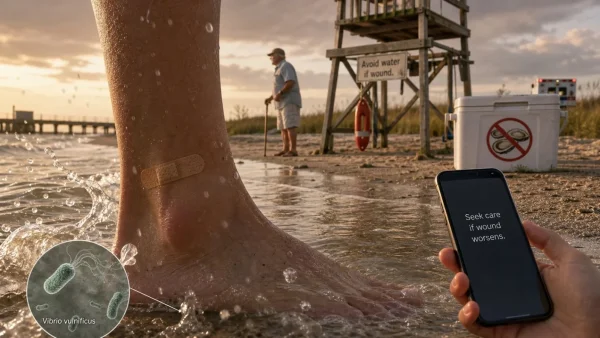
Beachgoers have been given an urgent advisory by the state following reports of nine infections and five fatalities this year from Vibrio vulnificus, all traceable to open wounds and the sea. With numbers up during the height of beach season, health officials are asking one straightforward question: is your skin completely healed before you go wading in?
What happened in Louisiana
The Department of Health has put on record nine cases of Vibrio vulnificus for 2026, five of them fatal. In each instance the patient had an underlying medical condition and a wound that came into contact with seawater.
For the state, these are not typical figures. In prior years one would expect to see roughly seven cases and a single death in the same timeframe. That increase has led to an alert aimed at those with recent surgery, piercings, tattoos or any kind of scrape or cut.
Why seawater and small wounds can be a dangerous mix
You will find Vibrio vulnificus in the wild in brackish water or warm saltwater. As the coast warms up between May and October, the bacteria become more plentiful.
It is not a matter of casual contact with the ocean. The danger is when the bacteria make their way through a break in the skin, no matter how minor. The CDC notes such an entry can result in a serious infection and quick complications.
Symptoms to act on quickly
At first it may appear to be a run-of-the-mill skin infection, so context is key. If a cut is getting worse after some time in the saltwater, it should be seen to right away, particularly for someone with a chronic ailment.
After being in the seawater or having raw seafood, look out for:
– Pain, warmth, swelling or redness about a wound
– Any discharge or change in colour at the site
– A fever as a skin infection makes its way across the body
– Symptoms that deteriorate in a matter of hours
– Chills and fever accompanied by low blood pressure
– Lesions that blister
Then there are digestive issues from undercooked or raw shellfish. The CDC says one might experience watery diarrhoea, vomiting, nausea, stomach cramps and fever. In some instances an infection can develop into septicemia, a bloodstream condition that becomes life-threatening in short order.
Who faces higher risk and why it matters
While anyone is susceptible to illness, it is those with underlying conditions who are more prone to severe cases. According to the CDC, the risk is elevated for individuals with a compromised immune system or those suffering from HIV, thalassemia, diabetes, cancer or liver disease. And it is a very real danger, not one to be dismissed. The agency’s own figures put the mortality rate for V. vulnificus at roughly 20 per cent, with some patients succumbing in as little as a day or two of onset. In more serious instances, a patient may need to be admitted to intensive care; if the tissue damage is too great, amputation becomes an option.
How to lower your risk around seafood and seawater
One can take preventive measures well before arriving at the shore. For anyone with a new tattoo, piercing, surgical incision or an open cut, the prudent thing to do is to stay out of saltwater and brackish water until the area has completely healed. Should you have no choice but to be exposed, make sure to cover up with a waterproof bandage.
Washing with soap and clean water is the first order of business if a wound comes into contact with the sea. The CDC is clear on this: any exposure to raw seafood and its juices, or to the water itself, warrants a thorough cleaning of the skin. Those who handle raw seafood ought to be vigilant about preventing cuts and washing their hands and work surfaces.
Then there is the matter of what is on the plate. Raw or undercooked oysters and the like are vectors for Vibrio. The FDA would have you cook them thoroughly; freezing will not do the job in its place. Cross-contamination in the kitchen should be avoided at all costs.
If symptoms appear: what to tell your doctor
Any sign of fever, or a coastal wound that turns red, warm, discoloured or painful, calls for urgent medical attention. Put your provider in the picture regarding any recent contact with raw shellfish or saltwater. Prompt treatment, whether that means antibiotics, hospitalisation or surgery to excise infected tissue, is key to survival.
You will see “flesh-eating bacteria” in the headlines when necrotizing fasciitis is involved, and for good reason. Health authorities will point out, however, that V. vulnificus does not in fact consume flesh; rather, the severity of the infection causes the tissue to die, which is where the moniker comes from.
For the most part, officials say, people in the sea do not end up with severe illness. The present cases suggest a more contained risk profile, one involving open wounds in warm coastal waters and pre-existing conditions. As we move from May through October and the water warms, a few sensible steps can ensure a safer trip to the coast. Have a waterproof covering at hand, inspect your skin for any unhealed breaks and be wary of raw oysters.
The alert from Louisiana is not meant to keep you away from the coast. It is simply a reminder to know how to protect yourself in the water, when to let a wound heal and when to get to a doctor in a hurry. Make the right call and act in time, and the likelihood of a bad case of Vibrio is diminished.