The polished lobby of a luxury hotel is designed to communicate one thing: everything is under control.
But recent food-safety inspections across Bengaluru’s premium hotels have raised an uncomfortable question—does that same standard always extend behind the kitchen doors?
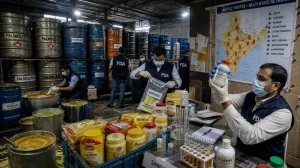
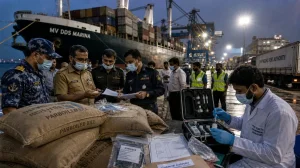
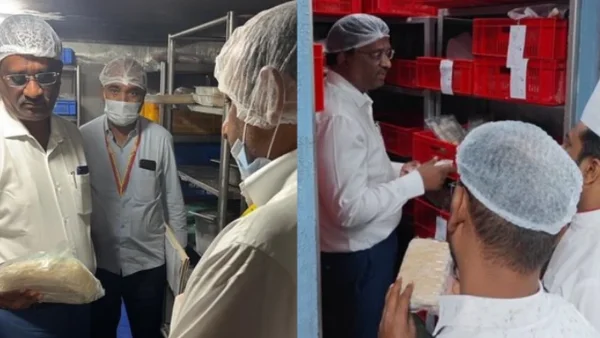
During inspections of 26 three-star and five-star hotels, Karnataka’s Food Safety and Drug Administration reportedly found expired food, rotten meat, fungal growth on vegetables and other food-safety violations. More than 500 kg of unsafe food was seized, with samples sent for laboratory analysis and further action proposed wherever violations are confirmed.
Among the establishments named in reports were Four Seasons, Shangri-La, Taj Yeshwantpur, Radisson Blu and other luxury properties.
And that raises a very simple question:
If consumers are paying five-star prices, why should they have anything less than five-star food safety?
What Did Officials Find?
The inspections reportedly uncovered a disturbing range of food-storage and hygiene violations.
At The Lalit Ashok, officials reportedly seized and destroyed 76 kg of meat, 200 kg of vegetables and 32 litres of expired milk.
At Shangri-La Bengaluru, around 15 kg of meat was seized.
At Four Seasons Hotel Bengaluru, officials confiscated 19 kg of meat.
At Taj Yeshwantpur, authorities reportedly seized around 72 kg of meat and fish.
One of the largest recoveries was reported at Radisson Blu (The Atria), where officials seized about 105 kg of expired food, including chicken, meat, fish and vegetables.
These findings reportedly included not only expired products but also concerns involving storage, labelling, segregation and hygiene practices.
The Five-Star Paradox
This is where the story becomes bigger than a food raid.
A luxury hotel sells an experience.
Guests aren’t simply paying for food. They are paying for:
hygiene,
service,
quality,
safety,
presentation,
and trust.
A ₹2,000 dinner is not supposed to come with a complimentary side dish of “expired milk and fungus.”
Of course, finding spoiled ingredients in a kitchen does not automatically prove that they were served to customers. That distinction matters.
But the mere presence of such material raises a serious question:
Why was it there in the first place?
Who Failed the Kitchen’s Quality Checks?
A five-star hotel does not operate with a single person buying ingredients and throwing them into a kitchen.
There are procurement teams.
There are storage managers.
There are chefs.
There are inventory systems.
There are food-safety protocols.
There are supervisors.
There are internal audits.
So when expired or visibly spoiled ingredients are discovered, the question shouldn’t stop at:
“Who owns the hotel?”
It should also be:
“How many internal checks failed before government inspectors arrived?” That is where accountability becomes important.
Food Safety Cannot Have a VIP Category
Whether food is being sold at a ₹50 roadside eatery or a ₹5,000 luxury restaurant, the basic principle remains the same:
Unsafe food is unsafe food.
The FSSAI framework exists to regulate food businesses and protect consumers, and enforcement is carried out through the relevant authorities. (FSSAI)
In fact, recent enforcement actions elsewhere have shown that food-safety violations are not limited to small establishments. Mumbai authorities recently suspended food licences at several establishments after inspections found serious hygiene problems.
That makes regular inspections particularly important.
The Inspection Itself Is Good News—But It Shouldn’t End There
There is another side to this story.
The fact that officials conducted surprise inspections and seized and destroyed unsafe stock is evidence that enforcement can work.
Authorities reportedly collected food samples for laboratory testing, and legal action is expected wherever violations are confirmed.
But consumers should ask what happens next.
Will there be:
penalties?
licence action?
repeat inspections?
public disclosure of confirmed violations?
accountability for responsible personnel?
A raid creates headlines.
Consistent enforcement creates safer kitchens.
The Sarcasm Writes Itself
Five-star hotel:
Five-star lobby.
Five-star room.
Five-star menu.
Five-star bill.
And then the food inspector walks into the kitchen:
“Where is the sixth star? Oh… apparently it’s fungus.”
Jokes aside, food safety is one area where luxury branding should mean higher standards, not simply higher prices.
But Let’s Not Jump to the Worst Conclusion
It would be irresponsible to claim that customers at these hotels were definitely served rotten food unless authorities establish that.
The reported findings concern food and ingredients discovered during inspections.
Laboratory testing and official investigations will determine whether additional violations occurred.
The hotels named in reports should also have an opportunity to respond to the specific findings and demonstrate what corrective measures have been taken.
That is what separates a news report from a social-media accusation.
What Should Happen Next?
1. Complete the laboratory testing
Any samples collected should be tested promptly, with the results made available where legally appropriate.
2. Identify responsibility
If violations are confirmed, authorities should determine whether they resulted from negligence, poor inventory management or deliberate disregard of food-safety rules.
3. Repeat inspections
A hotel shouldn’t become compliant for one week because an inspection team arrived.
Follow-up inspections are essential.
4. Strong penalties for repeat offenders
If an establishment repeatedly violates food-safety rules, penalties should escalate.
5. Better transparency
Consumers deserve to know whether serious violations were confirmed and what action was ultimately taken.
The Bigger Question for Bengaluru
Bengaluru is one of India’s biggest technology and hospitality hubs.
Its restaurants and hotels serve thousands of residents, tourists and business travellers every day.
The city therefore needs a food-safety system that does not depend entirely on viral videos or surprise raids.
Inspection should be routine. Compliance should be continuous.
And luxury establishments, precisely because they charge premium prices and serve large numbers of people, should face particularly strong expectations regarding food handling.
Final Take: Five Stars Should Mean Five-Star Accountability
The Bengaluru inspections are a reminder that a beautiful dining room tells us very little about what happens in the kitchen.
The reported seizure of expired food, meat and vegetables does not prove that customers were served those products.
But it does raise legitimate questions about inventory control, kitchen hygiene, internal supervision and regulatory enforcement. (The New Indian Express)
Because when someone pays a premium for a meal, they’re not merely buying presentation.
They’re buying trust.
And trust shouldn’t expire before the milk does.