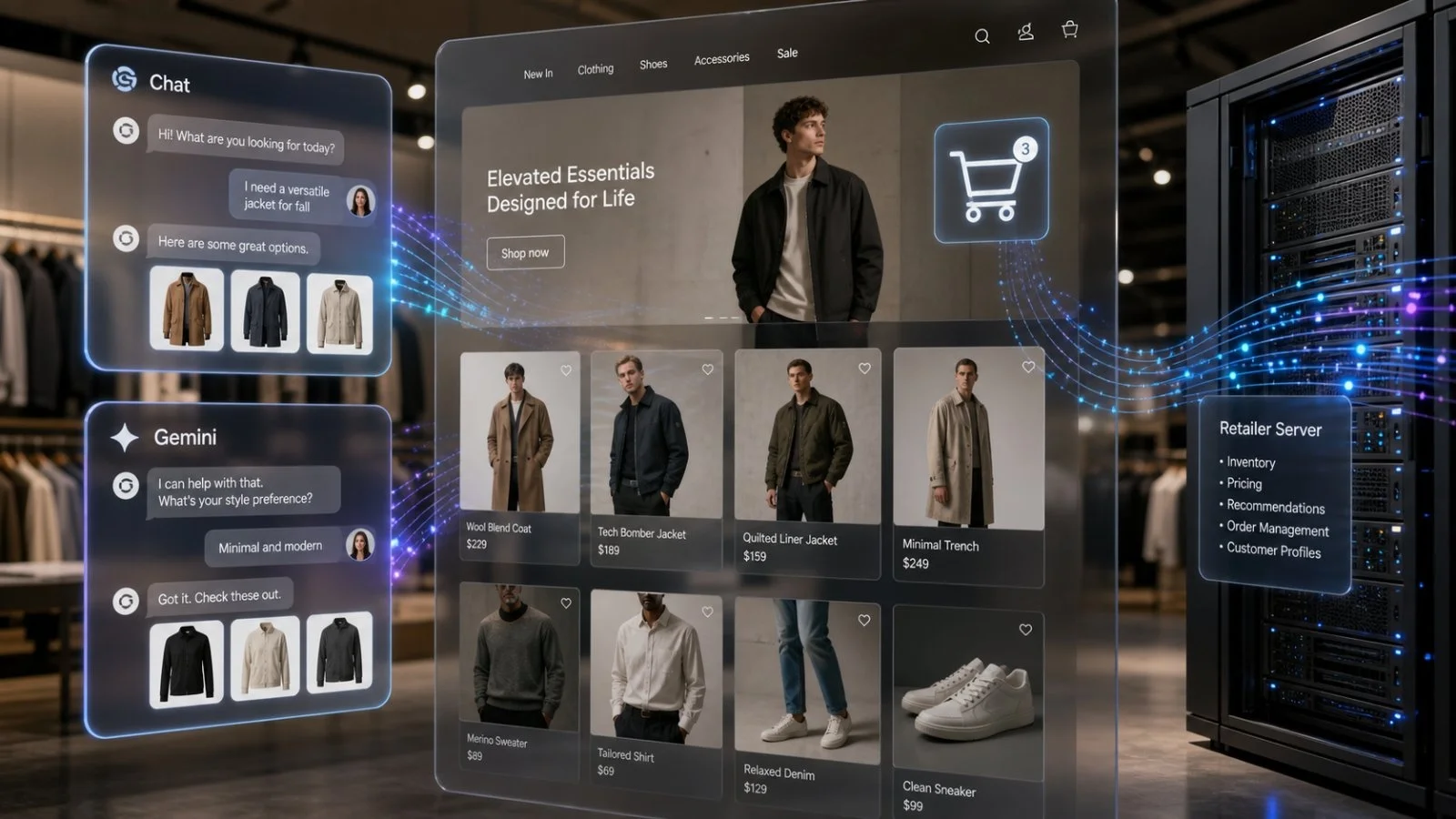
In some ways, ChatGPT and Gemini have become the go-to for shopping advice, and that alone is enough to change the rules of ecommerce. You will find retailers vying for visibility in AI chats even as they are determined to keep the checkout process on their own turf, where the data from those transactions can be put to work generating repeat business.
This is no longer a matter of what if. Juniper Research has shoppers putting $8 billion out this year once they are pointed to retail sites by AI agents like Anthropic’s Claude or Gemini. And according to Adobe Analytics, 41% of U.S. consumers turned to generative AI for their online shopping back in June.
There is value in that kind of traffic. In fact, Adobe’s numbers show an AI-referred visitor will bring in 41% more revenue per visit than one coming in the old-fashioned way. It presents brands with something of a conundrum: a new avenue for growth and a data question to answer at the same time.
One could say companies like Walmart, Wayfair and Ulta Beauty are quietly overhauling their pages so that their wares come up in chatbot responses. Yet for all the optimising they do for AI discovery, many are insistent that the last click be made on their platform to safeguard first-party insights.
Why this matters now
The shopping journey has taken on a more conversational tone. A chatbot will put you in touch with answers to specific questions rather than simply ranking pages by links and keywords as a search engine does. That puts pressure on retailers to put product descriptions in plain English and reorganise their catalogues accordingly.
A couple of figures speak to the momentum:
– Juniper Research is forecasting $8 billion in spending from AI referrals.
– 41% of shoppers made use of generative AI in June, per Adobe.
– Revenue per visit is 41% higher when the visitor comes from an AI service.
For the consumer it is about speed and fewer open tabs. For the retailer it is a different sort of SEO entirely; in a single reply from a chatbot, it is the clarity and context of your attributes that will determine if you are recommended.

How retailers are adapting
Ulta Beauty is already reaping the benefits. The firm is seeing ‘double the conversion and intent’ from those who discover its offerings via Gemini or ChatGPT. They have been in talks with Google to integrate Ulta Beauty Rewards and shopping carts into the AI side of things.
But Ulta has no intention of ceding the checkout. “We always want to be wherever our guest is,” says Josh Friedman, head of digital and e-commerce. “Whether it is Facebook, an affiliate or Google search, there is a tax… I don’t think this is any different.” Cloud providers would agree with that approach. Vince Koh, global head of digital commerce at Amazon Web Services, notes that when a purchase is made on the brand’s site, the retailer keeps a direct line to the customer.
That is the counsel AWS is giving to clients like Tapestry’s Kate Spade: use the AI platforms for marketing, but ensure your own site remains the best place to buy. Take a customer on the Kate Spade site looking for a $380 suede bucket bag; the brand is in a position to put together recommendations that fit both the budget and the style of the shopper. Koh would say that is the kind of advantage most retailers can point to. They have an understanding of their wares and clientele that a general AI tool simply does not, and they put that to work building loyalty and making the buying journey more relevant.
Platforms shift, retailers hold the checkout
The platforms are adjusting as well. OpenAI did away with Instant Checkout in March, the feature that allowed purchases via ChatGPT. Now the emphasis is on product discovery and enabling marketplaces like Etsy to handle their own checkouts. It is a move that makes sense given consumer habits.
“Users who come to us from ChatGPT will generally go back to our site to close out the transaction,” Rafe Colburn noted of Etsy. “It is the beginning of a deeper relationship, not one that is always going to be intermediated by the bot.” You see the same dynamic with specialist services.
The Knot is making sure its vendors show up in ChatGPT, yet it steers couples to book their venues and invitations on the company’s own platform where all the planning data is kept. “LLMs are just another place to start your search or plan,” said CEO Raina Moskowitz. “But we have 30 years of data to help people put a wedding together. Being visible in an AI chat is important, but so is owning the transaction.”
What shoppers gain and what comes next
There is no denying the utility of a conversational search for a buyer. A chatbot can be asked for a gift within a certain price or a bag to suit a particular look and will put together a shortlist in a fraction of the time it takes to scroll through pages.
Retailers are making sure the content they put out there is accurate. And shoppers can count on seeing more of their loyalty benefits in these chat interfaces; Ulta has been integrating rewards and carts into Gemini, for instance. Three things should pick up pace: retailers overhauling product pages for AI, better on-site search than you get from a generic tool, and new ways to link loyalty and cart functions in a conversation.
The playbook is fairly clear. Let the AI do the heavy lifting on discovery and intent, then bring the customer back to a brand-owned checkout. Apply what you know about their past purchases and basket size to make the sale. It is performance marketing, only in dialogue. Consumers seem at ease with the division of labour. Use a chatbot for curation and inspiration, but go to the retailer’s website when it is time to tap-to-buy.
That way the retailer retains control of the data and the shopper gets better guidance. The lines are drawn in a constructive fashion. AI agents are key traffic partners now and retailers are reengineering their content to accommodate the flow while protecting the last mile where the margins are. What follows will be down to business rather than theory.
As the feeds get sharper and AI answers improve, the first recommendation will carry more weight than the tenth result. For the brand, it is game on. For the shopper, there is less noise.