Even though people are deeply upset, Hong Kong will have a ‘patriots only’ election on Sunday, and there are a lot of questions about who is responsible for the worst fire in the city for many years. Officials are trying to balance following the usual timelines for government with the fact that people are very shocked.
A city grieving after the Tai Po inferno
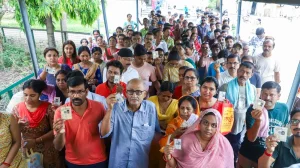
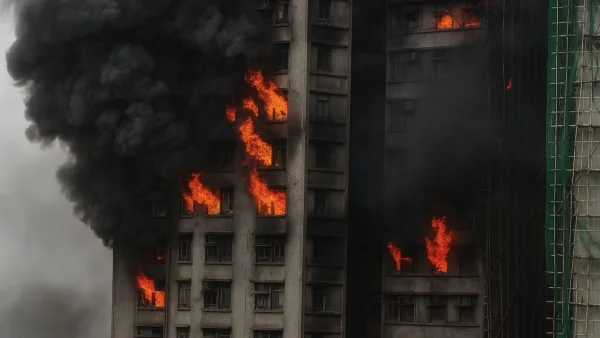
The fire completely destroyed Wang Fuk Court in Tai Po, and at least t56 people were killed, with the number possibly going up to 159 after experts have checked things properly. Families are still finding out who their loved ones were. Throughout the area, people are remembering the dead and can’t believe what happened.
Investigators say the fire was made much worse by cheap, flammable materials used in the building. Renovation netting and foam boards helped the fire to spread, and it went quickly across the bamboo structure around the buildings. The fire spread so quickly and was so large that it was very difficult for people to get away or for rescuers to help.
Because of this, officials have told buildings undergoing major work to remove the netting right away. Several construction bosses and managers have been arrested and accused of being responsible for the deaths. More arrests are happening because of suspected problems with the fire alarms in the building. Investigators looking into corruption are also checking if renovation contracts were unfairly awarded.
Why the election is going ahead
John Lee, the Chief Executive, says the election must happen to keep the government running smoothly. He says the new members of the Legislative Council need to quickly start working on rebuilding after the fire, improving safety, and helping the families affected. He said, “We must get things moving forward before our sadness can make us stronger.”
Although official campaigning has stopped as a sign of respect, election meetings have cautiously started again. The candidates are keeping a low profile. Regina Ip, a member of the Legislative Council, said they have put aside their posters, and admits that fewer people will vote because so many are upset.
Groups that support the government say that if the election is delayed, there will be no Legislative Council. The government also says the law requires them to hold the election soon as the current members’ term is ending. They are making it clear that the government must continue to function, even while people are sad.
Mourners push back against business-as-usual
In Tai Po, the election seems far away. A sign from a major pro-government group near the burned building made people at the memorial angry. Trent Heung, who arrived early to put flowers down, said, “To be honest, it’s really annoying. I don’t think it’s respectful.” Other people have told officials to focus on looking after the people who survived and the families of those who died, rather than on the political show of an election.
People want to know why the checks on the building work failed. Officials have admitted that flammable materials were used during the renovations, and people are asking why these weren’re spotted during inspections. Joyce Fong, a local resident, said, “The whole system has lots of signs of problems and failures. And yet they are still having elections? What’s the point?”
Since the fire, police have held several people, including a former local councillor and a student who called for an independent investigation. They were both later released on bail. National security officials have said they will deal with anyone who tries to use the tragedy to cause trouble, and have promised to act against anything that could make things unstable.
Electoral reforms reshape the playing field
This Sunday’s election is the second city-wide election since Beijing changed the election system in 2021. These changes reduced the number of seats directly elected by the public from 35 to 20 (in a 90-seat council), and made sure candidates are thoroughly checked to make sure they are safe from a national security point of view. The remaining seats are filled by a small group of people, which gives more power to those who already support the government.
Now, it is a crime to publicly say people should not vote, because of the new rules. People who used to vote for the ‘pan-democrats’ (who generally oppose the government) have mostly not voted since the changes. In 2016, 58.3% of people voted, but in 2021 this dropped to 30.2%, the lowest number ever for a Legislative Council election.
This year, the number of people registered to vote has fallen again to approximately 4.13 million (down from 4.47 million in 2021). Experts don’t expect a big increase in the number of people voting. The central government thinks the number of voters is an important sign of how legitimate it is. But for many residents, it is a test of whether they trust the government.
Low-key campaigns and a heavy security footprint
The candidates have mostly avoided discussing who is to blame for the fire. Several candidates in Tai Po and those working in the building industry have refused to be interviewed, saying it is against the election rules. A leading pro-government party has said it’s important to fill the seats quickly to avoid a gap in government.
Officials will provide buses to take people from the area affected by the fire to the polling stations. A large number of police will be at the polling stations, because of security concerns and the sad mood. The government has warned against anyone trying to stop the election.
What is at stake on election day
How many people vote will show what people think of the government. If the number is the same as or lower than in x2021, it will show that people are becoming even more disappointed, especially in the areas closest to the fire. If more people vote, it will support the government’s claims of stability and having the backing of the public.
There’s a lot at stake in terms of policy. The new members of the Legislative Council will have to deal with important questions: how to make building safety rules stricter, how to control what materials are used for renovations, how to make sure professionals are held responsible, and how to regain people’s trust in inspections. There will be a lot more examination of how maintenance contracts are checked for corruption and how public money is used for large repairs.
People will push for open investigations, quicker updates to building codes, and a clearer idea of who is responsible for things when things go wrong for developers, building companies and the people who manage the buildings. Those who survived will want real help, including housing, money, counselling and help to rebuild their community.
A test of governance and empathy
The government has said it will keep the government working and get justice for the victims. This promise will be judged not only by arrests or meetings, but by noticeable changes to scaffolding, at building sites, and in how the city plans for emergencies.
The memorials show their own story. People have tied together lines of paper cranes and left messages of remembrance near Wang Fuk Court. Residents say the area has become a way to remember the people who died. They are asking for the truth, for people to be held to account, and for improvements so that something like this never happens again.
Hong Kong’s legislative election is happening in the shadow of all of this. The city wants to see that officials understand how people feel, and that this understanding is followed by effective government. Whether Sunday’s vote will restore confidence, or make the division between those in power and the public even worse, will depend on what happens after the votes are counted.