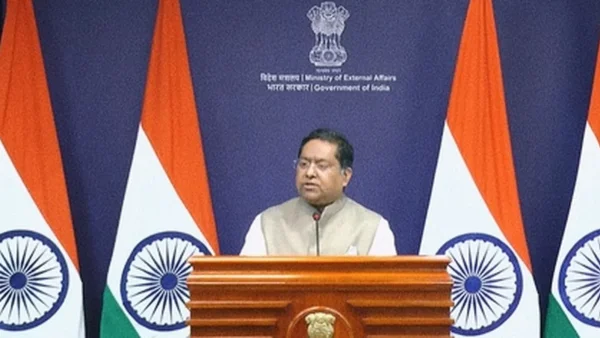
In a move to put out a new diplomatic fire, India has roundly rejected Asif Ali Zardari’s comments on Indian religious sites as both unwarranted and absurd. The Ministry of External Affairs (MEA) says the President has no standing to make such claims, which have only served to put a finer point on a dispute that mingles local redevelopment with cross-border posturing.
What set things off
It all comes down to a notice put in front of the people at the Ganj Shaheeda mosque, just by the door of Varanasi’s Kashi railway station, telling them to be out by June 20. Word is the notice is part of a plan to open up some land for the station’s expansion.
You have to go back a few days to see where this is coming from. Under the watch of heavy security and with a court order in hand, officials tore down the Azgaib Shaheed Mazar and a nearby mosque on the station grounds in a land row. Zardari made his displeasure known, saying he was worried about the fate of old Muslim sites and hinting that this kind of thing is a recipe for trouble.
He told India to put a stop to it and to mind its minorities and the culture we have in common. In doing so, he has been true to form for Islamabad, wading into affairs that New Delhi would have you believe are none of their business.
How India is handling it
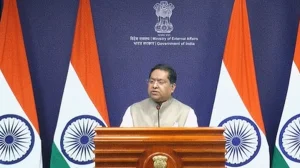
“We categorically reject the President of Pakistan’s remarks,” said MEA’s Randhir Jaiswal. He left no room for doubt: Zardari has no locus standi here, and his foray into our internal matters is without any facts to back it up.
Jaiswal also found the whole thing laughable when you consider Pakistan’s own abysmal human rights track record, which is something the rest of the world is well aware of. He put forward the view that there is a long tradition of going after and victimising people of different faiths in Pakistan.
The MEA sees it as a political move, one born of the kind of bigotry and hatred that drives policy in Pakistan. They say Zardari is operating on unconfirmed info, and they have been in this position before with similar allegations.
Where each side stands
This is more than a case of a local project; it is a tussle over rights and what is being left behind. India’s line is that if the courts have ordered it, it is an internal matter of law. For Pakistan, it is a chance to put a spotlight on the treatment of minorities.
New Delhi has noted it is not the first time they have had to deal with ungrounded criticism from across the border on these types of issues. By bringing up human rights on the other side of the line, India is trying to take the wind out of Zardari’s sails.
Here is how you can sum up the two sides:
– India: You have no right to say that, and it’s not your place
– India: We know what your record on rights is like
– Pakistan: Leave our religious sites alone
– Pakistan: Stand up for the minorities and our shared history
With the Railway’s June 20 deadline, there is a sense of urgency. What is happening at a station as well-known as the one in Varanasi has been enough to turn a matter of land clearance into a heated debate in no time.
What to look for
All eyes will be on how the authorities carry out the clearance at the railway and what the court order means in practice. If either side makes another statement, we may be in for a long-running spat between the neighbours.
For the moment, India is trying to shut the door on outside opinions, while Pakistan is determined to keep the focus on the issue. That divide is what is setting the tone in diplomacy right now.