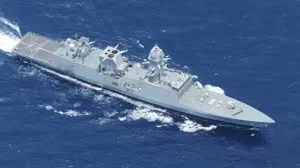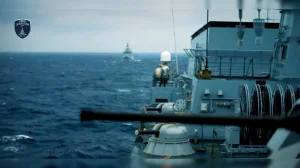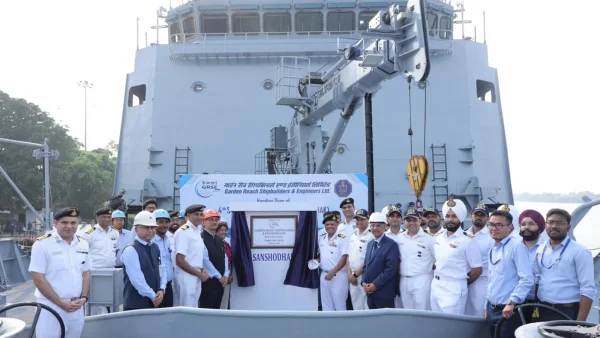
It is no small thing: by revealing the ‘Sanshodhak’ crest, the Navy has made a point of its strategy to own the hydrographic space with platforms of our own making. As the final vessel in the SVL line-up, it is an extension of the Aatmanirbhar Bharat ethos, and the Navy says the crest stands for the whole of what we do in hydrographic ops.
A brief note on X was all it took to introduce the crest, which is underpinned by the Sanskrit ‘maargsy netaa, saagrsy vettaa’ – in plain terms, ‘Leading the Way, Mastering the Oceans.’ The Navy is touting this as evidence of where we stand in shipbuilding, with kudos to Garden Reach Shipbuilders & Engineers for their part in it.
Why the crest matters now
You could say the timing is right for both operations and policy. When you have over 80 per cent of the cost in indigenous make-up, as with ‘Sanshodhak’, you are not as exposed to imports and you keep a firm hand on the kind of data that matters at sea.
Hydrography doesn’t make for flashy headlines, but it is what you rely on for safe navigation, for planning and for opening up ports. This is how India is making its case to be in the driver’s seat in the Indian Ocean Region.
Programme milestones and timelines
The Ministry of Defence has the numbers: ‘Sanshodhak’ (Yard 3028) was in the hands of the Navy as of 30 March 2026. It came out of GRSE in Kolkata, with the Warship Design Bureau at the helm of the project.
We were on to the four-ship SVL deal from 30 October 2018. Then you had INS Sandhayak, INS Nirdeshak and INS Ikshak being put in service on 3 February 2024, 18 December 2024 and 6 November 2025 to show the class was coming of age.
With the keel down in June 2022 and the launch a year later, ‘Sanshodhak’ has been through its paces in harbour and at sea before being handed over. It’s a build-to-delivery process you can count on.
Capabilities aimed at faster data and safer seas
These are survey ships for the coast and beyond. They chart the way into port, figure out the channels and pull in oceanographic and geophysical information for the defence and for civilian ends.
‘Sanshodhak’ is fitted out for the job. You will find a Data Acquisition and Processing System, DGPS for long-range work, a Digital Side Scan Sonar, and both an AUV and an ROV among the tools on board.
At 110 metres and some 3400 tons, the ship has the heft to it. Two diesels see to it that she can put in more than 18 knots when needed to cover ground in a survey.
What it signals for industry and operations
For the Navy, the delivery is a case in point for the Government’s Aatmanirbhar Bharat. It is also a matter of MSMEs and the rest of the industry working together to put complex tonnage in the water and raise the bar for readiness in the IOR.
There is more to the crest than a ceremony; it is a way of branding a mission that has to serve both the military and the civilian side. Whether it is for a secure shipping lane or top-tier data, ‘Sanshodhak’ is there to close the gap between the survey and what you do with it.
Key developments at a glance
This is what the Navy and the MoD have on the record:
– The Indian Navy has put the ‘Sanshodhak’ crest on show
– 30 March 2026: date of delivery from GRSE, Kolkata
– Over 80 per cent of the cost is in local content
– 30 October 2018: the day we inks the contract for the four SVLs
INS Sandhayak, Nirdeshak and Ikshak have already shown what the class is about. Now that ‘Sanshodhak’ has rounded out the group, the Navy’s hydrographic side is done with the building and can get on with the work.
As the Navy put it on X, this is India’s shipbuilding in a nutshell. And with ‘Leading the Way, Mastering the Oceans’ to go by, the crest is a good summary of the intent behind the whole programme.