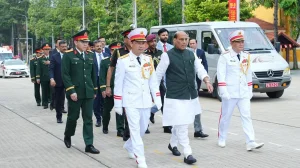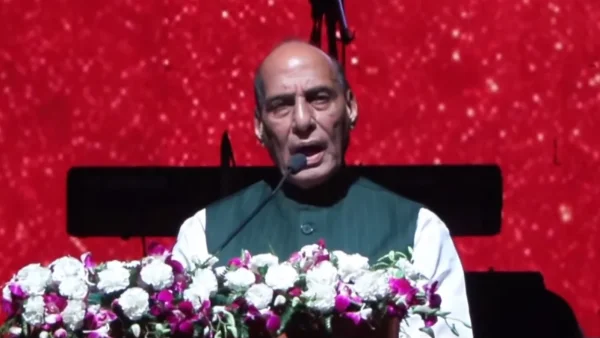
That’s when the rubber meets the road for the two countries’ security relationship and his Australian counterpart, Deputy Prime Minister and Defence Minister Richard Marles, will be co-chairing the session. The Ministry of Defence has it down as an opportunity to get some real movement on the Indo-Pacific front.
It’s not just about the date. Since we first sat down in Australia back in October 2025, the level of consultation has ratcheted up. Both sides are after numbers they can point to. Put simply, officials want to use this to firm up the kind of shared objectives that can be put into practice by our forces and in the industry.
What they’re looking to put on the table
The ministers will be going over what has been done since the first one and where there is room to do more. You can count on the agenda to be a mix of military and industrial matters, plus some hard-nosed regional analysis to inform how we plan together.
We don’t do things for the sound of our own voices. The idea is to get the processes in order so things happen with less friction. It’s about making sure the policy side of things actually feeds into the training, logistics and tech that keep us ready and able to respond.
Some of the key items
Before they open up the field, the negotiators are set to zero in on a couple of high-impact spots. As you’ll hear from the top, the job is to make what is already working better and get out of the way of any red tape that is holding us back.
These are the ones you will see come up:
– Making the services more of a team across the board
– Some hands-on cooperation on maritime security
– A more involved role for the defence industry, including co-production
– A look at how the security landscape is shifting, here and abroad
There is more on the line these days
With the way bilateral engagement has taken off, there is an onus on the ministers to put some lasting structures in place. We only have to look at the 10th Defence Policy Talks in New Delhi earlier this month; both sides were there to size up new ways to build on our partnerships in the industry and at sea.
Make no mistake, the annual Dialogue we put in place in 2025 has made for sharper talks and let New Delhi and Canberra know where they stand with each other. This time around, we want to see that trust show up in joint activities we can do again and again.
The drills tell the story
Our military exercises have been getting more involved. For the first time in 2025, we were part of Talisman Sabre and Puk Puk in Australia, which is a step up in how we are engaging operationally.
On the water, we have been in on fleet reviews and the like with Milan and Kakadu. It is all about being in sync and having the right standards when it comes to a contingency.
Industry is now at the heart of it
If you want a partnership that can hold up, you need to be tied in on the manufacturing and tech side. We have put in place some venues to make sure our companies and governments are on the same page.
We had a roundtable in Sydney in 2025 and another in New Delhi during the Raisina Dialogue. They gave us some ideas. Now we will be in New Delhi to figure out how to make them a reality.
Looking at the Indo-Pacific
For us, Australia is a must-have in our view of an Indo-Pacific that is open and free. That is the lens we look through for everything from sharing info to building up our capabilities.
By putting it under the umbrella of the Comprehensive Strategic Partnership, we are trying to make sure it endures, no matter who is in office or which department is in charge. We want to move the needle on defence without compromising on stability in the region.
Where to look for signs of success
Will the ministers come out with some practical moves to speed things along? That is the question. If we see some firm dates on the calendar for joint work and a clearer path for the industry, you can be sure we are done with the talking and onto the doing.
Assuming the dialogue does what we think it will and cements our position, the next thing is to put it to the test. In the end, the results on the ground and in the factories will be the only proof that counts.