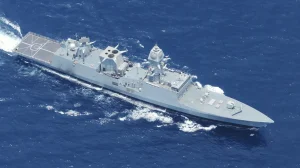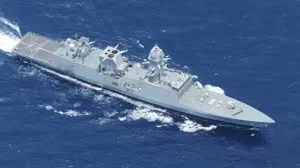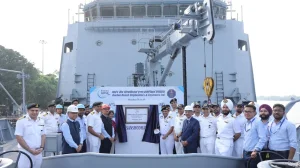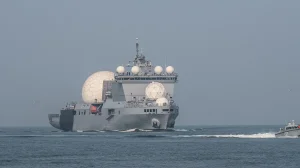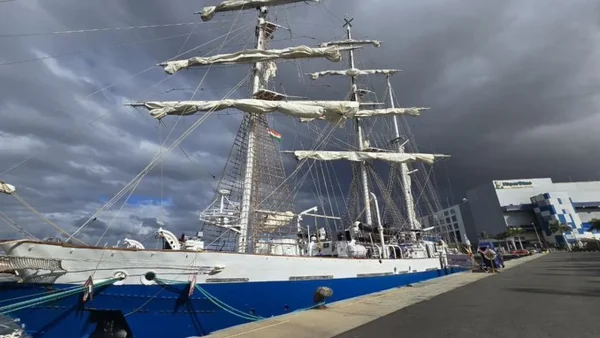
On April 30th at Mazagon Dock Shipbuilders Limited in Mumbai, the Navy received INS Mahendragiri, a domestically built stealth frigate. This is the sixth ship of Project 17A, and it was delivered less than 17 months after INS Nilgiri in December 2024. The warship has advanced weapons, sensors and automated systems, increasing its combat ability and showing India’s ‘Aatmanirbharta’.
Those in charge say this delivery is a very important step forward in designing and building warships in India. The next generation of these ships will give the Navy a stronger ability to deal with changing dangers in all kinds of sea situations.
Capability boost with next-gen design
INS Mahendragiri, designed by the Warship Design Bureau and watched over by the Warship Overseeing Team in Mumbai, is a huge improvement over previous ships in terms of stealth, how well it can survive damage, and its fighting strength. It was built using a technique of putting all the parts together at once and was delivered on time.
Compared to the earlier Shivalik-class frigates, the Project 17A ships have more advanced weapons and sensors. They are set up to do many different types of missions, so they can quickly change from fighting ships on the surface to fighting aircraft or submarines.
Propulsion, sensors, and combat systems
INS Mahendragiri has a Combined Diesel or Gas propulsion system, which means it uses both a diesel engine and a gas turbine. Each one turns a propeller that can be adjusted, and all of this is managed by a modern Integrated Platform Management System to make the ship run efficiently.
The Ministry of Defence states that the ship’s weapons and sensors are designed for fighting in all kinds of sea battles. The Ministry also points to the improvements in how it avoids being found, how much is automated, and how well it survives, all of which work together to make it more effective in combat at sea.
Here is what the defence ministry emphasised about Project 17A frigates:
– Versatile multi-mission platforms for evolving maritime challenges
– Quantum leap in design, stealth, firepower, automation
– A symbol of Aatmanirbharta in warship building
Pace of deliveries under Project 17A
Mahendragiri is the sixth Project 17A frigate to be given to the Navy in under seventeen months since INS Nilgiri was given over on December 20th, 2024. It’s known as Yard 12654 and is the fourth of its class built at Mazagon Dock.
Officials say this consistent speed of building shows that India is improving in naval design, shipbuilding, and engineering. It also shows the program is being managed well and is on schedule with the Navy’s needs.
Key program milestones, as stated by officials:
– Six Project 17A ships delivered in under 17 months
– First handover was INS Nilgiri on December 20, 2024
– Mahendragiri built at Mazagon Dock, Yard 12654
Recent milestones
INS Taragiri, a stealth frigate, was formally added to the Navy on April 3rd. INS Dunagiri, built at Garden Reach Shipbuilding and Engineers Ltd, was delivered on March 30th in Kolkata, demonstrating continued progress at different shipyards.
Make in India impact and industry scale
Project 17A is made up of approximately 75% parts from India and has strong connections to many industries. Officials state that over 200 MSMEs were involved in the project, giving work to about 4,000 people directly and more than 10,000 indirectly.
Officials add that delivering Mahendragiri once again shows the Navy’s focus on 'Aatmanirbharta‘. The way the supplies for this class of ship are obtained demonstrates that India is now able to use complicated technologies, from how the ship is powered and managed to its sensors and combat systems.
Operational significance for the Navy
Because of INS Mahendragiri now being in service, the Navy is even more prepared to deal with the changing dangers at sea. Its improved stealth, better combat systems, and ability to handle many different missions strengthen our ability to deter enemies and keep our seas secure.
Officials say that the Project 17A ships are built to handle the problems we have now and expect to have in the maritime world. Now that Mahendragiri is delivered, it’s expected to be a major part of protecting India’s interests in the area and continuing to improve the Navy’s abilities at sea.