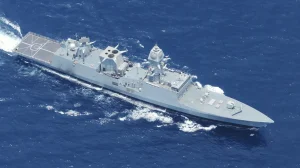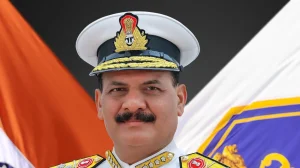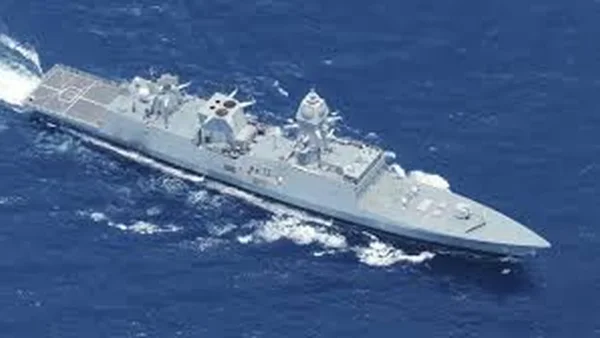
INS Taragiri will officially become part of the Navy at a ceremony in Visakhapatnam. This is another step in the Navy’b effort to get a newer and better fleet of ships. Defence Minister Rajnath Singh will be in charge of the ceremony, and the Navy Chief, Admiral Dinesh Kumar Tripathi, will be the host.
Commissioning and Ceremony
The addition of INS Taragiri shows how important the Navy thinks it is to be prepared for action, as the challenges in the seas of this region are changing. The ceremony itself emphasizes how vital the eastern coastline is, and how the Navy is becoming stronger in the Indo-Pacific.
During the event, people will show off what INS Taragiri can do and how much the Navy’s modernization has come along. The companies and smaller businesses that helped build the ship and put its systems together will also be praised.
Project 17A and Indigenous Shipbuilding
INS Taragiri is the fourth of the Project 17A ships; it is a 6,670-tonne warship built by Mazagon Dock Shipbuilders Limited in Mumbai and is very difficult to detect. It demonstrates how successful the ‘Make in India’ program has been in making advanced naval ships and systems.
Over 75% of the parts for the ship were made in India, showing that India’s defense industry is growing up. More than 200 very small to medium sized businesses provided parts and services, which has created jobs and strengthened the supply chain.
Design, Stealth and Propulsion
The ship has a smoother shape and is designed to be on the radar less, so it is more likely to survive in dangerous waters. This means it can carry out a wide range of missions in many areas while being harder to find.
INS Taragiri uses a Combined Diesel or Gas (CODOG) engine, which combines speed and the ability to stay at sea for a long time. This allows it to get to places quickly and then do long patrols, being useful for fighting on the surface, protecting other ships, and being sent away for extended periods.
Advanced Weaponry and Combat Systems
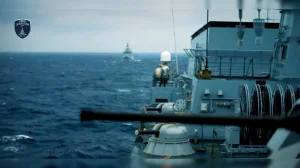
INS Taragiri has a strong group of weapons including supersonic missiles that go to a target on the surface and medium-range missiles for aircraft or missiles in the air. It also has specialized equipment for fighting submarines, to deal with underwater threats in the region.
All of these systems work together with a modern Combat Management System. This system combines information from the ship’s sensors and weapons, allowing for fast decisions. The result is a ship that can find, follow and attack many different threats quickly and in a coordinated way.
Strategic Impact on Eastern Seaboard and Indo-Pacific
Having INS Taragiri makes the Indian Navy much better at protecting shipping routes and dealing with emergencies along the eastern coast. As the Indo-Pacific becomes a place of more and more competition, more of these hard-to-detect warships will help to discourage conflict and show India’s strength in the region.
But INS Taragiri isn’t just for fighting. It can also help with humanitarian aid and disaster relief, patrol the seas to make them secure, and do exercises with the navies of other countries. Its launch means the Navy is more able to rely on itself, show its strength, and provide stability in a changing marine area.
The ship is a success for both technology and government policies. It brings together investment in things made in India, the involvement of industry and a clear goal. As INS Taragiri begins its service, the Indian Navy gets a modern, multipurpose warship which will help with preparedness and maritime security for many years.